AgiBot Overtakes Unitree as Top Humanoid Robot Vendor
AgiBot shipped ~8,400 humanoid robots in H1 2026 to take 44% of the global market, passing Unitree. China now makes 97% of all humanoids. The numbers explained.

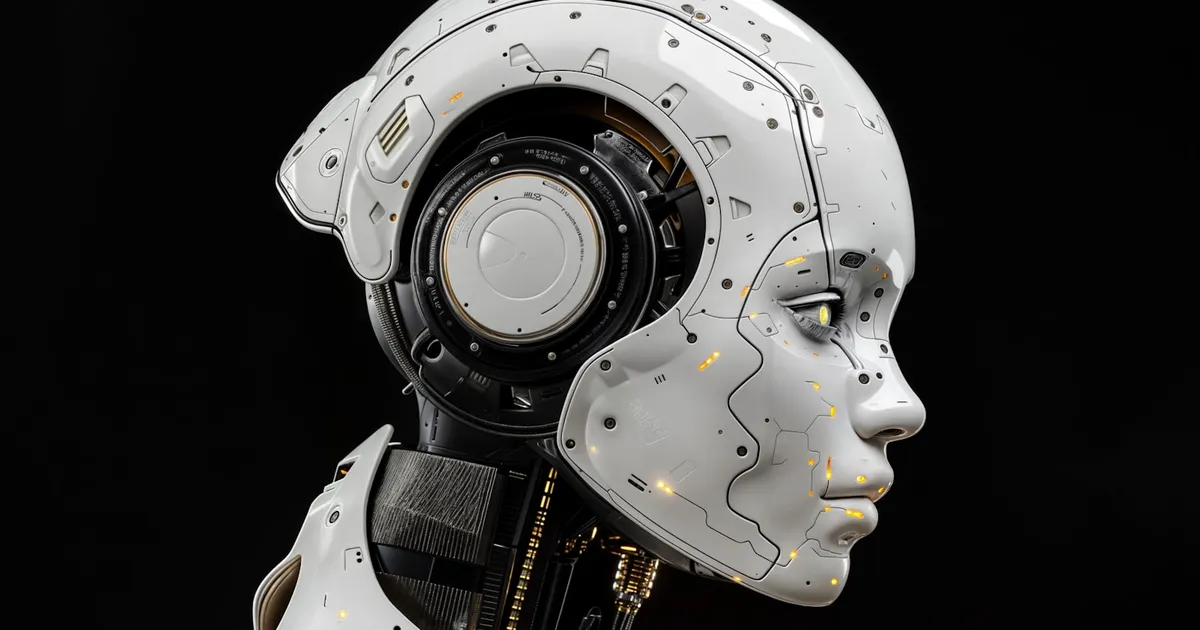
The race to lead the humanoid-robot industry has a new front-runner, and it is not the company most people know. According to a market report published this week by research firm Smart Analytics Global (SAG), Shanghai-based AgiBot shipped roughly 8,400 humanoid robots in the first half of 2026, capturing about 44% of global shipments and overtaking Hangzhou-based Unitree Robotics, which shipped around 5,900 units for a 31% share. The reshuffle at the top came as the whole category scaled at a pace that would be implausible in almost any other hardware business.
The figures, reported on August 11, 2026 and echoed by outlets including Bloomberg, People’s Daily, and TechNode, put hard numbers on a shift that has been building all year: humanoid robots are moving out of demo videos and into commercial deployment, and Chinese manufacturers are doing the overwhelming majority of the shipping.
The numbers behind the shakeup
SAG pegs total global humanoid-robot shipments at 19,100 units in the first half of 2026 — a 272% jump from the same period a year earlier. That growth is the headline, but the composition of it is what matters strategically. AgiBot and Unitree together accounted for roughly 75% of every humanoid shipped worldwide, a near-duopoly at the top of a field that includes dozens of well-funded challengers.
AgiBot’s rise was the steepest. The company’s shipments surged an estimated 562% year over year, powered by a deliberately broad product lineup rather than a single flagship. Its catalog spans full-size bipedal A-series humanoids, compact X-series units, and wheeled G-series robots — a portfolio built to hit different price points and use cases at once, from research labs to factory floors to commercial-service settings. AgiBot said it crossed a cumulative milestone of 15,000 robots shipped by June 2026, a figure that underscores how quickly the company has industrialized.
Unitree, for its part, did not shrink — it was simply outrun. The company that shipped more humanoids than anyone in 2025 and became the first pure-play humanoid maker to go public still grew its volumes; it just grew them more slowly than a rival expanding off a smaller base. Slipping from first to second in a market this young is less a verdict on Unitree than a signal of how contested the top of the field has become.
China makes almost all of them
The single most striking number in the SAG report is not about any one company. Chinese vendors accounted for more than 97% of all humanoid robots shipped globally in the first half of 2026, and Chinese buyers absorbed roughly 85% of demand. In other words, humanoid robotics is — for now — an overwhelmingly domestic Chinese industry, both in who builds the machines and who buys them.
That dominance rests on a supply chain the country spent two decades assembling for electric vehicles, drones, and consumer electronics: actuators, reduction gears, sensors, batteries, and the contract-manufacturing muscle to turn a prototype into thousands of units. Applied to humanoids, that industrial base lets Chinese firms drive down bill-of-materials costs and iterate hardware at a cadence Western startups have struggled to match. Analysts cited alongside the report argued that supply-chain depth and a vast, permissive domestic testing market are the structural advantages carrying Chinese vendors abroad.
The application mix reinforces the “it’s getting real” narrative. SAG estimates that more than 70% of the robots shipped in the half went into industrial and commercial deployments rather than demonstrations or research — a shift from novelty toward utility, however early. Whether these machines are yet earning their keep on factory lines is a separate question, but the units are moving from labs into buildings where they are meant to do work.
AgiBot’s other race: the IPO
AgiBot’s shipment lead arrives as the company pursues a public listing that would make it one of the most valuable robotics names on any exchange. Founded in 2023 and co-founded by Peng Zhihui — a former Huawei “genius youth” program recruit whose viral engineering projects built him an online following — AgiBot has moved from startup to shipment leader in under three years.
The company has kicked off a Hong Kong IPO process, hiring three joint sponsors — Citic Securities, CICC, and Morgan Stanley — to shepherd the deal. Reported valuation targets have ranged widely, from an earlier band around US$5–6.4 billion to more recent reports of an ambition as high as US$20 billion (roughly HK$156 billion), with the company expected to sell 15–25% of its shares and potentially raise more than US$1 billion. AgiBot’s cap table reads like a who’s-who of Chinese capital: backers reportedly include Tencent, HongShan, Hillhouse, BYD, and Lenovo Capital, among others.
The dueling listings frame the sector’s moment. Unitree only just priced its Shanghai STAR Market IPO at a roughly $9 billion valuation, leaning on its status as a rare profitable robot company. AgiBot is chasing a listing on volume leadership and growth. The two deals give public markets, for the first time, live price tags on the two companies that build three of every four humanoids on Earth — part of a broader wave of Chinese venture and public capital rotating back into AI and robotics.
Where Western makers stand
The report’s China-heavy math is, by construction, a statement about who is shipping — and by that measure, U.S. names barely register. Tesla’s Optimus and Figure’s humanoids remain in limited pilot production, prioritizing capability demonstrations and internal deployments over unit volume. Their bet is that the hard part of humanoid robotics is not manufacturing but general-purpose intelligence — the software that lets a robot handle unstructured tasks it was never explicitly trained for. On that axis, shipment counts say little; a warehouse full of robots that can only do one scripted motion is a different achievement from one machine that can improvise.
The gap has also become a policy flashpoint. The United States recently moved to bar new imports of Chinese humanoid robots, citing national-security concerns about machines packed with cameras, microphones, and network connectivity operating inside American facilities. That echoes the trajectory of drones and telecom gear, where Chinese cost and volume leadership eventually collided with Western security politics. It also means the world’s largest humanoid vendors may be increasingly walled out of one of the world’s largest potential markets — a constraint that shapes where this industry’s money and machines can actually flow.
The intelligence layer that Western firms are betting on is advancing in parallel, and not only in the U.S. Efforts like Google DeepMind’s whole-body humanoid control research point at the software frontier that will ultimately decide whether these machines are useful generalists or expensive single-taskers. Shipments prove you can build the body; they do not prove the brain is ready.
What it means
AgiBot passing Unitree is a milestone for a specific company, but the more durable signal is the shape of the market underneath it. Humanoid robotics in 2026 is a Chinese-manufactured, Chinese-bought industry scaling faster than almost anyone forecast, with two firms controlling three-quarters of global volume and both racing to convert that lead into public-market capital.
Who wins: AgiBot, which turns shipment leadership into IPO momentum and a war chest to widen its lead; China’s robotics supply chain, which gets validated at scale; and buyers who benefit from falling prices as volume compounds. SAG’s projection of roughly 60,000 units this year and 500,000 by 2030 implies the cost curve has real room to run.
Who should be cautious: anyone reading shipment share as the whole story. Volume leadership in a market that is 97% domestic and heavily subsidized by an eager home base does not automatically translate into global dominance — especially with the U.S. import ban carving off a major market and with the intelligence problem still unsolved. Unit counts today measure manufacturing, not autonomy.
What to watch next: AgiBot’s IPO terms and whether the market blesses a valuation an order of magnitude above its earlier band; utilization data showing whether the 70%-plus of robots sold into industrial settings are actually productive or parked; how far the U.S. import restrictions spread among allies; and, above all, whether Western labs’ software bet or China’s hardware bet proves decisive. For the mechanics of how these listings work, see our explainer on what an IPO is, and for the unit economics underneath the hype, our look at humanoid robot economics.
Keep reading
 Kurumi · · 6 min read
 China VC Fundraising Rebound: $35B for AI and Robots
Chinese VC firms are raising about $35 billion across 60-plus new dollar funds, the biggest wave since 2023, chasing AI, robotics and chip startups.
 Kurumi · · 5 min read
 Moonshot AI IPO: Hong Kong Filing, $50B Valuation
Moonshot AI confidentially filed for a Hong Kong IPO, targeting about $3B on the strength of its Kimi K3 model and a $50 billion private valuation. Here's the breakdown.
Kurumi · · 5 min read Unitree Robotics IPO: Price, Valuation, Humanoid Bet
Unitree priced China's first humanoid-robot IPO at 150.80 yuan a share, raising about $904M on Shanghai's STAR Market at a ~$9B valuation. The numbers explained.