China VC Fundraising Rebound: $35B for AI and Robots
Chinese VC firms are raising about $35 billion across 60-plus new dollar funds, the biggest wave since 2023, chasing AI, robotics and chip startups.
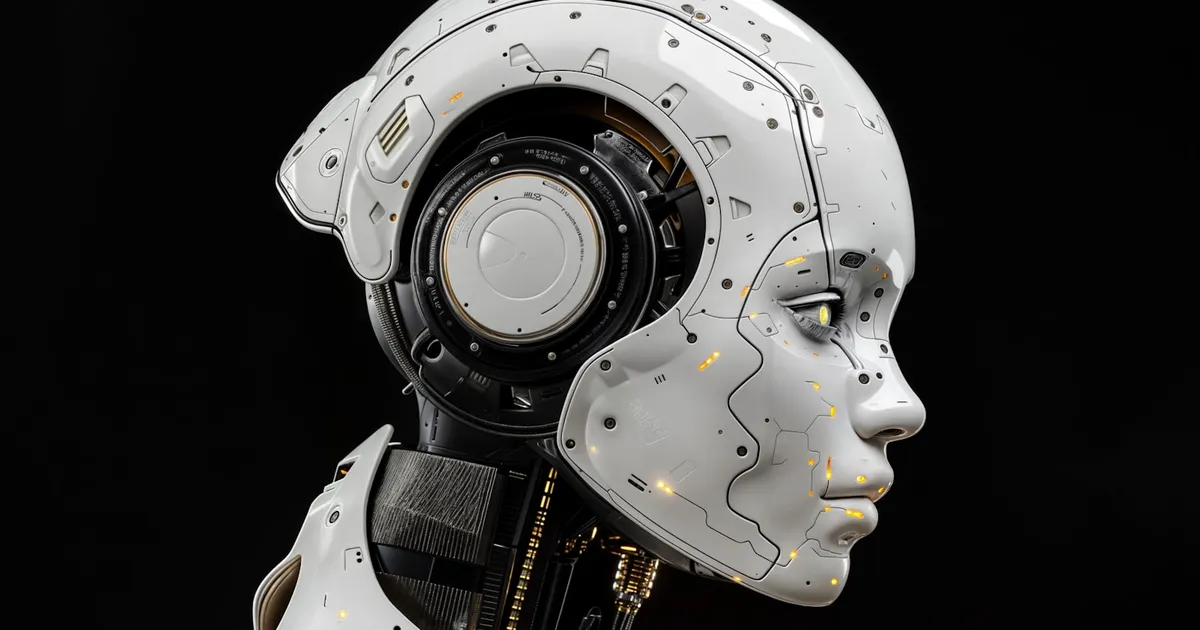
After nearly three years in the cold, China’s venture-capital industry is raising money again — and the pitch decks all point in the same two directions. Chinese firms are seeking roughly $35 billion across more than 60 new dollar-denominated funds, according to reporting from Bloomberg, in what would be the largest fundraising wave since the country’s VC market seized up in 2023. Of those vehicles, about 40 are traditional venture funds, with the rest weighted toward later-stage and growth strategies. The unifying theme is unmistakable: the capital is chasing artificial intelligence and robotics.
The rebound marks a decisive turn for an ecosystem that spent years being written off. A combination of regulatory crackdowns, geopolitical friction over technology, a drought of viable exits, and a broad repricing of startup valuations had frozen fundraising and pushed many Western limited partners to the sidelines. That freeze is now thawing, and the catalyst is a run of high-profile breakthroughs from China’s domestic AI and robotics champions that has convinced investors the country can build globally competitive technology despite U.S. export controls.
Three years in the cold
The scale of the prior downturn is what makes the current wave notable. Dollar-denominated fundraising by Chinese managers had collapsed from its 2021 peak as the exit window slammed shut — few Chinese companies could list in New York, Hong Kong’s market was moribund, and mainland IPO approvals slowed to a trickle. Without exits, limited partners saw no returns; without returns, they stopped committing to new funds. The cycle fed on itself.
Two forces have begun to break it. The first is a reopening of exit routes, with a string of successful listings restoring some confidence that money put into Chinese startups can eventually come back out. The second, and larger, is a change in the story investors are being sold. For much of the downturn, the narrative was that China’s technology sector was a policy risk to be managed. In 2026, the narrative is that China is producing frontier-caliber AI models and the most advanced humanoid-robot supply chain in the world — assets too strategically important, and too fast-growing, to ignore.
What changed: AI and robots
The proximate trigger is a series of headline raises that reset expectations for how much capital Chinese AI companies can command. Moonshot AI closed a larger-than-anticipated $3.5 billion round in late July that valued the company at $35 billion, a figure that would have been unthinkable during the freeze. It followed DeepSeek’s blockbuster financing earlier in the year, which vaulted the low-cost model developer into the ranks of the world’s most valuable AI startups and demonstrated that Chinese labs could ship frontier-class models at a fraction of Western training budgets.
Those two names function as proof points for the entire fundraising cycle. If a Chinese foundation-model company can reach a $35 billion valuation and another can rival U.S. labs on benchmarks while spending far less, the argument goes, then the sector deserves a fresh pool of dedicated capital. The enthusiasm mirrors — with a lag and a China-specific twist — the record venture flows that dominated the first half of 2026 globally, where AI absorbed the overwhelming majority of every dollar deployed. What is new is that Chinese managers now believe they can raise against that same thesis at scale.
The embodied-AI cluster
If AI models are the headline, robotics is the sector where China’s funding density is most striking. Venture capitalists poured $3.3 billion into Chinese robotics startups across 126 deals in the first quarter of 2026 alone, and by mid-year China’s embodied-AI companies had raised roughly 43.8 billion yuan. Globally, robotics startups have already pulled in about $18.8 billion in 2026 — surpassing the roughly $15 billion raised across all of 2025 with more than four months still to go — and a large share of that is Chinese.
The result is a dense cluster of well-capitalized humanoid and embodied-AI companies with few parallels anywhere. Late-stage financings have flowed to names including X Square Robot, Spirit AI, GigaAI, RobotEra, EngineAI, LimX Dynamics, and Noetix Robotics, and Bloomberg reported that two Chinese robot makers were valued at more than $2.9 billion in recent rounds. The standout is AgiBot, which shipped more than 5,100 humanoid robots in 2025 — a claimed 39% of the global market — and has raised over $725 million from a blue-chip syndicate spanning CICC, CITIC Securities, Morgan Stanley, and Sequoia China. The presence of bulge-bracket banks and state-linked funds on those cap tables signals that this is no longer a niche bet but a national industrial priority.
The capital is being drawn by the same physical-AI thesis animating investors elsewhere: that general-purpose robots become viable once AI models can handle perception, planning, and dexterous control. The economics of humanoid robots still hinge on driving per-unit costs down through manufacturing scale — precisely the game China’s supply chain is built to win, and a reason domestic funds see an edge that Western rivals may struggle to match.
Dollars, yuan, and the geopolitical overhang
A crucial detail is that the new wave is heavily dollar-denominated, a deliberate choice that says as much about ambition as it does about mechanics. Dollar funds can more easily back companies with global aspirations and offshore structures, and their return signals to international limited partners that Chinese venture is investable again. Raising them, however, means navigating a fraught cross-border environment: U.S. scrutiny of outbound investment into Chinese AI and semiconductors, export controls on advanced chips, and the ever-present risk that geopolitics reroutes capital overnight.
That tension frames the sectors the money is targeting — generative AI, AI infrastructure, semiconductor design, and robotics — which are exactly the technologies at the center of the U.S.–China competition. The same capital fueling China’s model labs and robot makers sits alongside a state-backed push into domestic AI infrastructure measured in the hundreds of billions, part of a broader drive toward self-sufficiency in the compute and chips that Washington has tried to restrict. For investors, the appeal is a set of fast-growing companies insulated from Western competition inside a massive home market; the risk is that the same walls could trap capital on the wrong side of a widening divide.
What it means
The return of Chinese VC fundraising is one of the clearest signs yet that the AI investment boom is a genuinely global phenomenon, not a Silicon Valley one. A $35 billion target across dozens of new funds does not, on its own, close the gap with U.S. venture flows — but it reverses a multi-year contraction and re-arms a domestic ecosystem that had been starved of fresh capital just as its AI and robotics companies hit their stride.
The winners are immediate: China’s frontier-model labs and its humanoid-robot cluster now have a deeper pool of patient money to draw on, reducing their dependence on strategic corporate backers and state funds alone. The open questions are the familiar ones. Exits remain the industry’s structural weakness — a wave of fundraising eventually needs a wave of liquidity to validate it, and the IPO channels that could provide it are still recovering. And the geopolitical overhang has not eased; dollar funds investing in Chinese AI and chips operate in a regulatory gray zone that could tighten at any moment. What to watch next is whether this capital converts into real listings and returns, or whether it becomes another cycle of paper valuations built on a thesis the exits never catch up to. For now, the money is flowing again — and it is betting on models and machines.
Keep reading
 Chisato · · 6 min read
 AgiBot Overtakes Unitree as Top Humanoid Robot Vendor
AgiBot shipped ~8,400 humanoid robots in H1 2026 to take 44% of the global market, passing Unitree. China now makes 97% of all humanoids. The numbers explained.

 Kurumi · · 5 min read
 Moonshot AI IPO: Hong Kong Filing, $50B Valuation
Moonshot AI confidentially filed for a Hong Kong IPO, targeting about $3B on the strength of its Kimi K3 model and a $50 billion private valuation. Here's the breakdown.
Kurumi · · 5 min read Unitree Robotics IPO: Price, Valuation, Humanoid Bet
Unitree priced China's first humanoid-robot IPO at 150.80 yuan a share, raising about $904M on Shanghai's STAR Market at a ~$9B valuation. The numbers explained.