Unitree Robotics IPO: Price, Valuation, Humanoid Bet
Unitree priced China's first humanoid-robot IPO at 150.80 yuan a share, raising about $904M on Shanghai's STAR Market at a ~$9B valuation. The numbers explained.
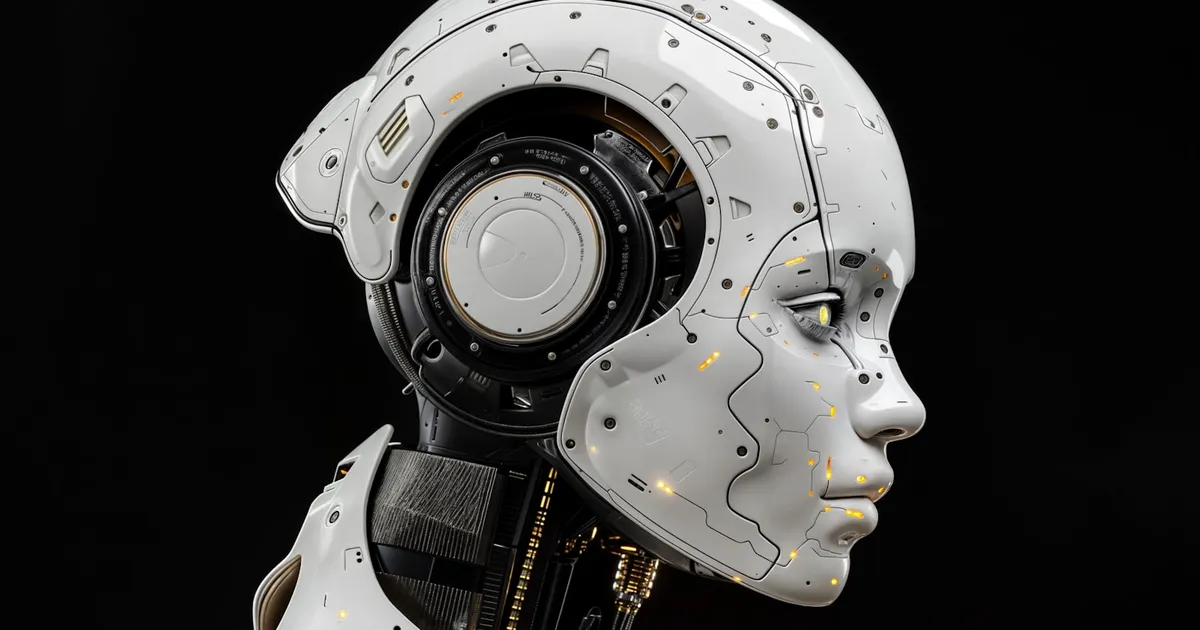
The humanoid-robot industry just got its first hard price tag on a public exchange. On August 6, 2026, Hangzhou-based Unitree Robotics — legally Hangzhou Yushu Technology — priced its initial public offering on Shanghai’s STAR Market at 150.80 yuan per share, according to an exchange filing. The sale covers 40.4 million shares, or roughly 10% of the company’s enlarged capital, raising about 6.1 billion yuan — approximately $904 million — and making Unitree the first pure-play humanoid-robot maker to list on China’s A-share market.
The pricing lands well above where bankers had penciled it in just weeks ago, a signal of how much investor appetite has built around the sector.
The numbers behind the offering
At 150.80 yuan a share across roughly 404 million total shares post-listing, Unitree’s implied market value comes in near 61 billion yuan, or about $9 billion. That is a striking figure for a company that only filed its application on March 20 and cleared regulatory registration 104 days later — a record-fast timeline for a STAR Market debut.
It is also a meaningful step up from earlier expectations. In late July, Chinese investment banks widely modeled a raise closer to 4.2 billion yuan (about $622 million) at a valuation near 40 billion yuan, with the issue price projected “above 100 yuan.” The final 150.80-yuan print sits roughly 50% higher than that anchor, reflecting strong preliminary demand during the pricing inquiry that opened August 5. Offline and online subscriptions are scheduled to open August 10, with payment due August 12 and allocation results expected around August 14.
Unitree laid out where the money goes. Proceeds are earmarked across four buckets: 2.022 billion yuan for intelligent-robot model research and development, 1.11 billion yuan for robot-body development, 445 million yuan for R&D on new robot products, and 624 million yuan to build out an intelligent-robot manufacturing base. The split tilts heavily toward software and models rather than just hardware — a tell about where Unitree thinks the value is migrating.
A profitable robot company, which is rare
What separates Unitree from most of its Western peers is that it makes money. The company reported 2025 revenue of 1.699 billion yuan and adjusted net profit attributable to shareholders of roughly 590 million yuan, a net margin north of 35%. Its core businesses carried a gross margin above 60%.
Unitree also shipped more robots than anyone. According to its prospectus, the company delivered more than 5,500 humanoid robots in 2025, ranking first globally by unit volume. Humanoid robots generated 868 million yuan of revenue last year — 51.78% of the total — overtaking the quadruped robots and motor components that built the company’s early business to become its single largest segment.
That profitability is the headline contrast investors keep drawing. In the United States, humanoid startup Figure AI has been valued near $39 billion in private rounds while generating little to no revenue. Unitree is coming public at roughly a quarter of that valuation while actually shipping product and booking profit — a very different risk profile, and a very different story to underwrite.
The growth question hanging over the deal
The bull case is not without a caveat, and it showed up in the most recent numbers. Unitree’s revenue growth slowed to about 40% in the first half of 2026 — impressive by most standards, but a sharp deceleration for a company whose narrative rests on exponential adoption of general-purpose robots. Bears will argue that a 40%-growth business priced near $9 billion is being valued on a future that has not yet arrived; bulls will counter that Unitree is the only scaled, profitable operator in a category the market believes could be enormous.
This tension — real profits today versus a valuation that only makes sense on tomorrow’s volumes — is the same one that runs through every attempt to price the sector, as our look at humanoid robot economics explored. Unitree’s listing is the first time public markets get to weigh in with actual capital rather than private-round marks.
Why the STAR Market, and why now
The venue matters. Listing on Shanghai’s STAR Market — China’s answer to a tech-heavy growth board — keeps Unitree’s shares onshore and accessible to domestic investors, and slots it alongside a wave of hard-tech Chinese debuts. It follows memory-chip maker CXMT’s blockbuster STAR Market debut and a broader rebound in Chinese venture funding flowing back into AI and robotics. For Beijing, a marquee robotics champion pricing at a premium on a domestic exchange is exactly the kind of self-reliance showcase policymakers have been pushing.
The timing also rides a global surge of interest in putting humanoid makers on public markets. In the US, Agility Robotics is heading public through a $2.5 billion SPAC merger to fund its Digit warehouse robot. Unitree is beating it to a listing — and doing so as a company that is already profitable, not one promising to get there.
What it means
Unitree’s IPO is the first real, market-set valuation for a humanoid-robot business, and that makes it a reference point far bigger than the deal itself. Every private humanoid startup — from Figure to Agility to the dozens of Chinese challengers — now has a public comparable, and it is one that trades on profits and shipped units rather than pitch-deck projections.
Who wins: Unitree, obviously, which converts first-mover status into cheap growth capital and a currency for future deals. Early backers get liquidity, and China’s robotics ecosystem gets a flagship listing that validates the whole category. The premium pricing suggests domestic demand for the story is intense.
Who should be cautious: anyone extrapolating a straight line from here. A ~$9 billion valuation on a company growing 40% with under 2 billion yuan of revenue prices in years of continued acceleration and margin durability. If humanoid adoption in factories and services arrives slower than the hype — or if price competition from the many well-funded rivals compresses those 60% gross margins — the stock will feel it. A first-day pop is likely given the demand; the harder test is the second year, when Unitree has to grow into the number.
What to watch next: the August 14 allocation results and first-day trading for the market’s verdict; first-half margin trends to see whether that 40% growth came at the cost of profitability; and whether Unitree’s IPO cracks the door open for other Chinese hard-tech and robotics names — and pressures US peers like Figure to justify richer private marks against a live, profitable public benchmark. For a primer on the mechanics of going public, see our explainer on what an IPO is.
Keep reading

 Kurumi · · 5 min read
 Moonshot AI IPO: Hong Kong Filing, $50B Valuation
Moonshot AI confidentially filed for a Hong Kong IPO, targeting about $3B on the strength of its Kimi K3 model and a $50 billion private valuation. Here's the breakdown.
 Chisato · · 6 min read
 AgiBot Overtakes Unitree as Top Humanoid Robot Vendor
AgiBot shipped ~8,400 humanoid robots in H1 2026 to take 44% of the global market, passing Unitree. China now makes 97% of all humanoids. The numbers explained.
Kurumi · · 6 min read China VC Fundraising Rebound: $35B for AI and Robots
Chinese VC firms are raising about $35 billion across 60-plus new dollar funds, the biggest wave since 2023, chasing AI, robotics and chip startups.