Gemini Robotics 2: Google's Whole-Body Humanoid AI
Google DeepMind released Gemini Robotics 2, a three-model suite that controls humanoids feet-to-fingertips, plans multi-step tasks, and adapts to new robots in hours.
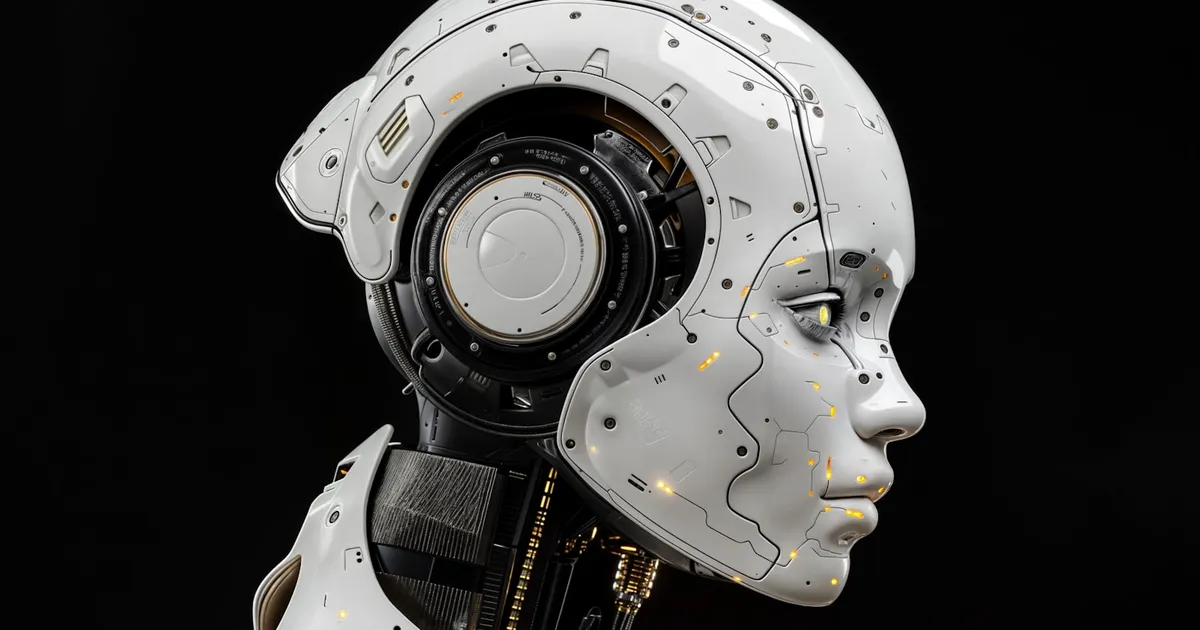
Google’s most capable AI is learning to walk. On Thursday, July 30, 2026, Google DeepMind released Gemini Robotics 2, a family of models that can control a humanoid robot from its feet to its fingertips, coordinate several machines at once, and adapt to a body it has never seen in a matter of hours. It is the clearest sign yet that the largest AI labs now treat the physical world — not just the chat window — as the next frontier for their frontier models.
The release comes a little over a year after DeepMind first put Gemini “into the physical world” with the original Gemini Robotics models, which mostly handled a robot’s upper body and hands. The sequel adds legs. Where the first generation reached, grasped, and folded, Gemini Robotics 2 can direct an entire humanoid — legs, torso, arms, and fingers — under a single policy, letting a robot walk across a room, crouch, balance, and manipulate objects while reasoning through a task that unfolds over several minutes.
Three models, one physical stack
Gemini Robotics 2 is not a single model but a suite of three, each aimed at a different layer of the problem of turning intelligence into motion.
- Gemini Robotics 2 (VLA) is the vision-language-action model — the part that converts what a robot sees and is told into motor commands. According to DeepMind, it can drive full humanoids “from feet to fingertips” as well as other bi-arm robots, and handles dexterous manipulation on both multi-finger hands and simpler parallel grippers. This is the piece that actually moves the machine.
- Gemini Robotics ER 2 is the embodied reasoning model, a vision-language model that acts as the high-level brain. It talks to humans, builds an understanding of the physical scene in front of it, and plans multi-step tasks that can last several minutes — the difference between “pick up the cup” and “clear the table, then set it for dinner.”
- Gemini Robotics On-Device 2 is built for settings where a robot cannot depend on network latency or connectivity. It runs locally, is natively multi-embodiment, and inherits the motion-transfer techniques from the earlier Gemini Robotics 1.5. DeepMind reports it can adapt to a new bi-arm robot body “in a few hours,” typically with fewer than 200 examples — a striking claim for a field where retraining a policy for new hardware has historically meant weeks of data collection.
Together, the three models describe an architecture that has become the consensus design for embodied AI: a slower, deliberative reasoning layer that decides what to do, feeding a faster action layer that decides how to move, with an on-device option for latency-critical or disconnected deployments.
What it can actually do
DeepMind showed the system running on Apptronik’s Apollo 2 humanoid, among other platforms. In one demonstration, a single model checkpoint drove Apollo 2 fitted with two different hands plus a Franka Duo gripper — evidence for the “one brain, many bodies” pitch. In another, the robot was directed to pick up a watering can, walk across a room, and set it on a lower shelf, a sequence that requires perception, locomotion, balance, and a careful placement all chained together.
The company also published task lists that read like household chores: organizing shelves, tying bags, and replacing lightbulbs. Those are exactly the long-horizon, contact-rich jobs that have humbled robots for decades, and the demos are meaningful precisely because they string several of them together rather than showing a single canned grasp.
DeepMind was unusually candid about the limits. Its own figures show the robots remain slow and clumsy at the fiddliest tasks. On a benchmark with the Apollo 2 platform, the model succeeded at picking objects 68.4% of the time from a table, 45.7% from the floor, and 76.3% from a shelf. Those are respectable numbers for general-purpose manipulation across varied heights, but they are not the near-perfect reliability a warehouse or a home would demand. Picking from the floor — which forces the robot to bend, shift its weight, and reach low without toppling — remains the hardest case, and the sub-50% score shows why whole-body control is a genuinely different problem from arm-only manipulation.
Why whole-body control matters
For most of the last decade, AI lived on screens. The models that captivated the industry were text and image systems, and even the first wave of “robot foundation models” mostly bolted a language model onto a fixed arm. Adding the lower body changes the character of the problem. A humanoid that walks has to maintain balance while it reaches, absorb the momentum of its own limbs, and plan motions that don’t tip it over — all in real time, all while the reasoning layer is still deciding what the goal is.
Unifying that under one policy is the technical bet here. Rather than stitching together a separate walking controller, a separate grasping controller, and a separate planner — each with its own failure modes at the seams — Gemini Robotics 2 aims to let one model coordinate the whole body toward a task. If that approach holds up outside curated demos, it collapses a large amount of robotics engineering into a single learned system, much as end-to-end learning reshaped speech and vision.
It also fits a broader industry pattern. The economics of putting a general-purpose robot to work are finally being taken seriously, a shift we examined in the economics of a humanoid robot, where mass-market units are being floated at roughly $20,000–30,000. Cheap-enough hardware plus a capable-enough brain is the combination the field has been waiting for, and the brain has been the harder half. A model that can be dropped onto different bodies with a few hundred examples is, in effect, an attempt to make that brain a commodity that any robot maker can license.
The competitive picture
Gemini Robotics 2 lands in a crowded and suddenly serious market. Tesla, Figure, and a wave of Chinese manufacturers are racing to ship humanoids, and the strategic question is whether the value accrues to the body or the brain. DeepMind’s multi-embodiment framing is a clear play for the brain — a bid to be the multimodal AI layer that a fleet of otherwise-dumb robots runs on, regardless of who builds the chassis.
That mirrors how the software side of the AI race has unfolded. Google has spent 2026 pushing its Gemini 3 family across consumer apps, developer tooling, and enterprise cloud, and extending that franchise into robotics keeps the model at the center of the stack. It is the same logic that makes an AI agent valuable in software — a general system that can be pointed at many tasks — applied to atoms instead of bits.
What it means
Gemini Robotics 2 does not make humanoid robots useful today. The benchmark numbers make that plain: a machine that drops nearly half the objects it tries to pick off the floor is a research platform, not a warehouse worker. The honesty about those limits is welcome, and it should temper any suggestion that general-purpose home robots are imminent.
What the release does signal is where the frontier is moving. The largest AI labs have concluded that the next big gains may come from embodiment — from models that perceive, reason, and act in the physical world — and they are pouring frontier-scale resources into it. Whole-body control under a single policy, plus fast adaptation to new hardware, are exactly the capabilities that would let one company’s model become the default operating system for an entire class of robots.
The near-term winners are the robot makers. If DeepMind’s models can be adapted to a new body in hours, a hardware startup no longer has to build a world-class AI team to have a competitive robot; it can focus on actuators, cost, and reliability and license the intelligence. That lowers the barrier to entry for humanoids and raises the stakes for whoever controls the brain. The risk for those hardware makers is the same one that has haunted every platform era: if the model is the value, the body becomes a low-margin shell.
What to watch next is the gap between demo and deployment. The tell will not be another polished video of a robot watering a plant, but success rates climbing toward the high 90s on the awkward cases — picking from the floor, recovering from a stumble, working for hours without a reset. Until those numbers move, Gemini Robotics 2 is a landmark research release and a statement of intent. Whether it becomes the Android of robots depends on whether the clumsiness in DeepMind’s own charts is a temporary limit or a durable one.
Tagged
Keep reading

 Chisato · · 5 min read
 Grouped-Query Attention (GQA) Explained: MHA vs MQA vs GQA
Grouped-query attention shares key and value heads across groups of query heads, shrinking the KV cache with little quality loss. GQA vs MHA and MQA.
Chisato · · 5 min read Constrained Decoding: How LLMs Output Guaranteed JSON
Constrained decoding masks invalid tokens at each step so an LLM can only emit output matching a grammar, regex, or JSON Schema. How it works and its limits.
Chisato · · 5 min read LLM Logprobs Explained: Token Probabilities in Practice
Logprobs are the log probabilities an LLM assigns to each token it generates. What they mean, how to read them, and practical uses like classification.