a16z Machine Age Fund: $1.1B for AI's Hardware Layer
Andreessen Horowitz raised $1.1 billion for its Machine Age Fund to back chips, data centers, and robotics — the physical buildout behind the AI boom.
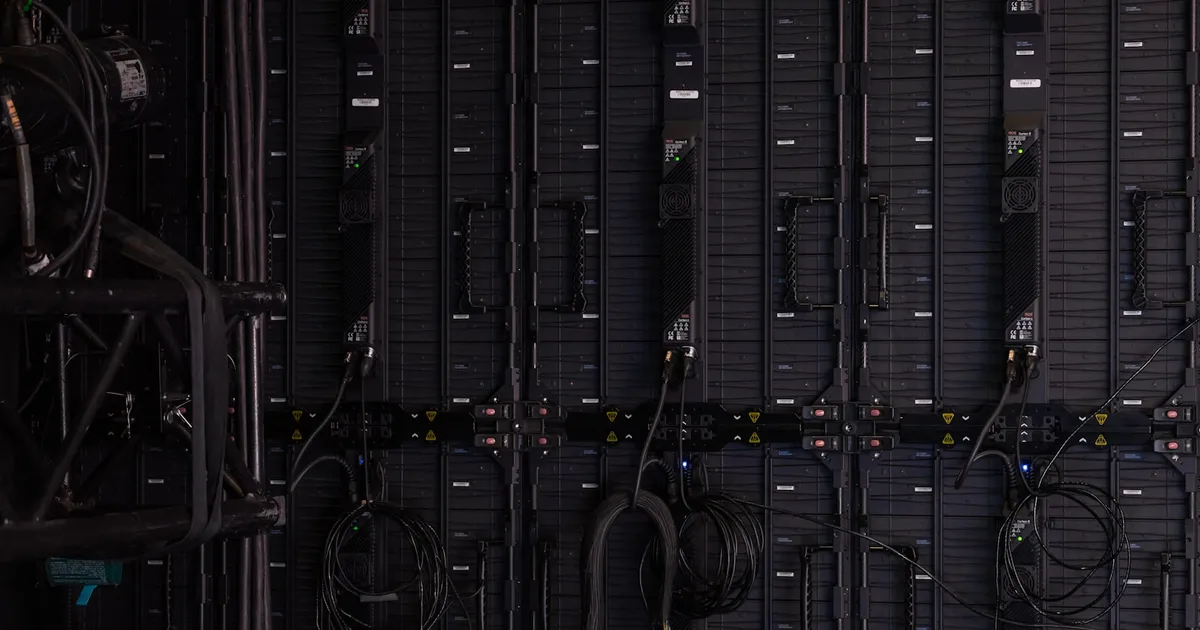
Venture capital is following the money into concrete, copper, and silicon. On August 28, 2026, Andreessen Horowitz said it had raised a $1.1 billion fund — the Machine Age Fund — to back the physical infrastructure that artificial intelligence runs on. The firm framed the raise as a bet on the layer of the AI stack that has become the industry’s binding constraint: not the models or the apps, but the chips, memory, networking, data centers, and power that make them run.
What the fund will buy
The Machine Age Fund is explicitly a hardware and infrastructure vehicle. Andreessen Horowitz said it will invest across the compute foundation that AI depends on — chips, memory, networking, and storage — as well as the complete systems built on top of it, from data centers to robotics to home AI appliances. The firm also flagged edge AI hardware as a priority, the class of devices that run models locally rather than round-tripping to the cloud.
The thesis is a supply-side one. In its announcement the firm argued that surging AI demand is running into “the wall of today’s supply chain capability, and the limits of physics and computer science,” and described the moment as a “once-in-a-generation opportunity” to rearchitect the stack “as platforms, all the way down to the electricity.” Its framing was blunt: “It’s time to open the throttle and accelerate the physical buildout of AI: the strongest tool ever developed for solving problems and bestowing abundance.”
That “down to the electricity” phrasing is the tell. As AI training and inference clusters scale, individual server racks are approaching one megawatt of power draw, turning what used to be an IT problem into an energy-and-industrial one. The fund is positioned to invest along that whole chain — the silicon, the systems that house it, and the power and cooling that feed it.
Who is running it
The fund sits within the firm’s American Dynamism practice, which invests in domestic industrial technology, defense, and manufacturing. David Ulevitch and Erin Price-Wright, who lead much of Andreessen Horowitz’s hardware and U.S. manufacturing work, are the partners most closely associated with the effort. American Dynamism already runs a separate $1.18 billion fund focused on industrial and national-interest technology, and the Machine Age Fund extends that hardware-first posture squarely into the AI buildout.
The move also fits a firm-level pattern of leaning into AI infrastructure and policy. Co-founder Marc Andreessen has been among the most vocal Silicon Valley advocates for accelerating AI, a stance visible in his role on a federal AI task force. The Machine Age Fund puts capital behind that worldview.
Why the physical layer, and why now
The raise reflects where the scarcity — and therefore the returns — have migrated. For much of the current cycle, venture attention concentrated on models and consumer software. But the bottleneck has moved downstream to the physical layer, where demand for GPUs, high-bandwidth memory, networking gear, and power has outrun supply. That scarcity is the through-line behind the memory supercycle reshaping the chip market and the economics of AI data centers, where power availability and construction timelines have become the gating factors on how fast capacity comes online.
The scale of demand is set by the hyperscalers. Microsoft, Google, Amazon, and Meta are collectively expected to deploy on the order of $700 billion in capital expenditure in 2026, the bulk of it aimed at AI data centers — a spending wave detailed in the hyperscaler capex boom. Andreessen Horowitz is betting that a buildout of that magnitude can support a generation of new suppliers and systems companies underneath the giants, from novel chip and interconnect designs to the robotics that will increasingly build and operate the facilities themselves — a market underscored by the shifting lead in humanoid-robot shipments.
There is also a portfolio logic to a dedicated hardware fund. Infrastructure and deep-tech companies tend to be capital-intensive, slower to scale, and different in risk profile from software startups. Ring-fencing them in a purpose-built vehicle lets the firm underwrite longer development timelines and heavier balance-sheet needs without distorting the return math of a general fund — the same reason chipmakers and AI labs have increasingly turned to dedicated financing structures, from strategic stakes to large bond sales, to fund the buildout.
The risk in the thesis
The counterargument is concentration and cyclicality. Betting on the physical layer means underwriting companies whose fortunes are tied to a capital-spending cycle set by a handful of hyperscalers. If AI infrastructure spending slows — because model demand disappoints, monetization lags, or the economics of data-center returns come under scrutiny the way they did during this summer’s market wobbles — the hardware layer is where the pain lands first and hardest. Suppliers with long lead times and heavy capital needs have the least room to adjust when orders soften.
Timing is the other hazard. Deploying $1.1 billion into capital-intensive companies at a moment of peak enthusiasm risks funding at elevated valuations, and hardware bets take years to mature. The firm is wagering that the buildout is structural and durable rather than a spike — a reasonable read given current demand, but one that assumes the AI infrastructure cycle has years left to run.
What it means
Capital is chasing the constraint. The Machine Age Fund is a clear signal that the smart money sees the returns migrating from AI software to AI infrastructure. When one of the industry’s largest venture firms raises a dedicated $1.1 billion vehicle for chips, data centers, and robots, it is pricing in a multi-year buildout and telling founders where it wants to deploy.
It validates a hardware-startup wave. A fund this size, aimed explicitly at the physical layer, gives oxygen to a category — semiconductors, interconnects, power, cooling, robotics — that traditional venture has historically underweighted because of its capital intensity. Expect more specialized infrastructure funds to follow, and more founders to pitch picks-and-shovels rather than another AI app.
The winners are suppliers to the buildout, the losers are anyone exposed to a spending air pocket. Companies selling into the hyperscaler capex wave stand to benefit from both demand and a deeper capital pool. The vulnerability is a demand slowdown: a fund concentrated in the physical layer is, by construction, a leveraged bet on AI infrastructure spending staying high.
Watch two things next. First, where the fund actually deploys — the specific chip, power, robotics, and data-center companies it backs will reveal which parts of the physical layer Andreessen Horowitz thinks are most underbuilt. Second, whether hyperscaler capex guidance holds through the next few earnings cycles, since that spending is the demand curve the entire thesis rests on. The bet is that AI’s bottleneck is now physical, and that the returns will accrue to whoever helps break it.
Tagged
Keep reading
 Kurumi · · 6 min read
 Gimlet Labs Raises $300M at $3B for Inference Cloud
Gimlet Labs raised $300M at a $3B valuation in a Series B led by a16z to scale its multi-silicon inference cloud for agentic AI. The backers, the tech, the stakes.
 Kurumi · · 6 min read
 Broadcom Q3 2026 Earnings: AI Chips Triple, Stock Dips
Broadcom's fiscal Q3 2026 revenue hit a record $29.6B as AI chip sales more than tripled to $16.7B, but light Q4 guidance sent the stock lower.
Kurumi · · 6 min read Cerebras Q2 2026 Earnings: Cloud Revenue Up 281%
Cerebras' Q2 2026 cloud revenue jumped 281% on the OpenAI ramp and it raised full-year guidance, yet the stock fell. The numbers, the RPO, and the warrant math.