MetaX Files for Hong Kong IPO in China GPU Race
Chinese GPU designer MetaX has confidentially filed for a Hong Kong IPO, targeting a listing by end-2026 after a 693% Shanghai debut. The details and the anti-Nvidia push.
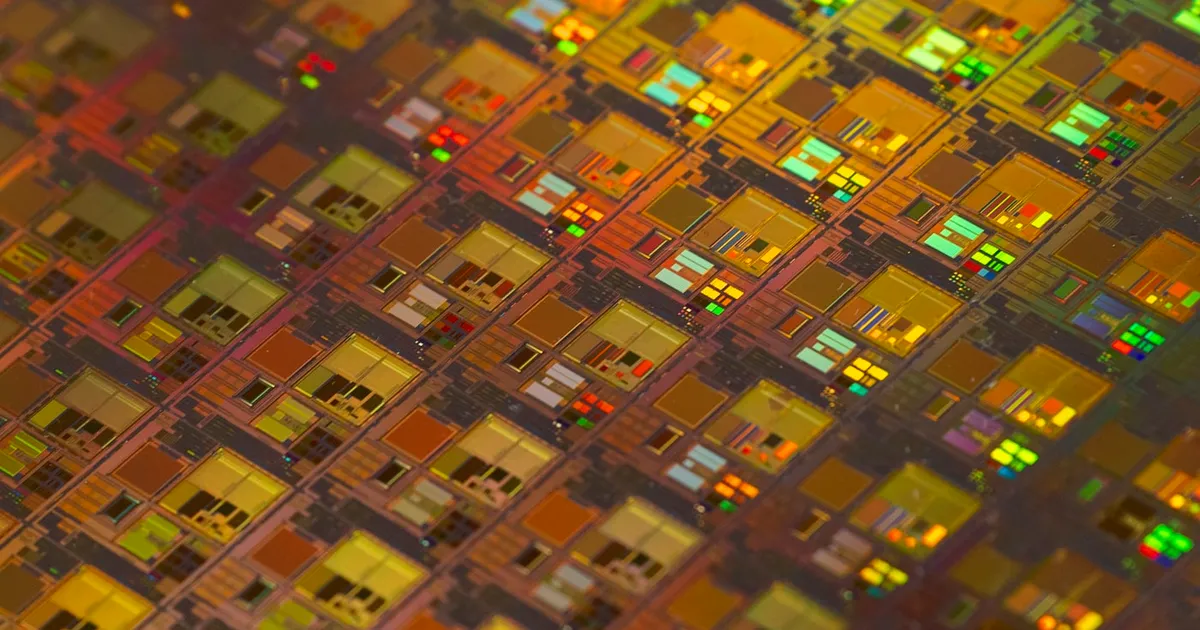
Another of China’s Nvidia challengers is heading for the public markets. MetaX, a Shanghai-based designer of graphics processing units, has confidentially filed for a listing in Hong Kong, targeting an initial public offering by the end of 2026, according to people familiar with the matter. The company is working with Huatai International on the potential share sale, which would give one of Beijing’s favored domestic chip designers a fresh war chest to fund its assault on Nvidia’s grip on Chinese data centers.
The filing extends a remarkable run for MetaX and a broader fundraising wave sweeping through China’s homegrown AI-chip industry. It comes just seven months after the company’s explosive debut on Shanghai’s Star Market — and against a backdrop of Beijing pressuring Chinese AI firms to wean themselves off American silicon.
The details
MetaX’s Hong Kong plan is still in a confidential phase, meaning terms are not yet public, but the outlines are known. In June 2026, the company said it planned to issue H shares equal to no more than 5% of its enlarged capital, with proceeds earmarked for next-generation GPU development, its software ecosystem, supply-chain investments, and potential acquisitions. A Hong Kong listing would give MetaX access to international capital and a hard-currency currency for deals — advantages a purely mainland listing cannot fully provide.
The move follows one of the most eye-popping IPOs of the past year. MetaX went public on the Star Market on December 17, 2025, raising 4.2 billion yuan — about $596 million — at an IPO price of 104.66 yuan per share. The stock closed its first day at 829.90 yuan, a gain of just under 693%, a debut that captured the speculative fervor surrounding anything tied to China’s domestic AI-chip ambitions.
Why MetaX matters to Beijing
MetaX is one of a small group of Shanghai chip designers that China is counting on to loosen Nvidia’s hold on its data centers. As Washington’s export controls have tightened and Beijing has leaned on domestic buyers to prefer local suppliers, these firms have moved from fringe players to strategic priorities almost overnight.
The company designs GPUs aimed at AI training and inference — the workloads where Nvidia has been effectively irreplaceable. Chinese buyers have spent years navigating restrictions on Nvidia’s most powerful accelerators, and even where imports have been approved, the political direction is clear: Beijing wants a credible homegrown alternative, and it wants one soon. That policy tailwind is a large part of why capital is flooding into companies like MetaX, and why their valuations have detached from anything resembling current revenue. Readers new to the hardware can start with our explainer on what a GPU is and why these chips sit at the center of the AI race.
A fundraising wave
MetaX is not filing in isolation. Its planned listing comes amid a surge of capital-raising by China’s AI chipmakers, with peers Biren Technology, Iluvatar CoreX, and Moore Threads all listing in Shanghai or Hong Kong since late 2025. The pattern is consistent: a domestic GPU designer, backed by state-linked investors and buoyed by policy, taps public markets at a valuation that prices in years of hoped-for growth rather than present fundamentals.
The rush reflects both opportunity and urgency. Building competitive AI silicon is enormously capital-intensive — it requires sustained R&D spending, access to advanced manufacturing, and a software stack that can lure developers away from Nvidia’s entrenched CUDA ecosystem. Public listings are one of the few ways these companies can raise the sums required, especially as private funding, while abundant, has limits. The listings also serve Beijing’s goal of building a deep, self-sustaining domestic chip industry rather than a handful of subsidized champions.
The competitive field is crowded and growing. Beyond the GPU designers, China’s broader effort spans custom accelerators from DeepSeek’s in-house inference chip to Huawei’s Atlas superpods, each attacking a different slice of the AI-hardware stack. What unites them is a shared mandate: reduce dependence on a single American supplier before the next round of export controls lands.
The valuation question
The 693% first-day pop that greeted MetaX in December is a feature of this market, not a bug — and it is also its central risk. Chinese AI-chip stocks have traded on narrative and policy support as much as on shipments or profits, and the gap between market capitalization and commercial reality is wide. A Hong Kong listing exposes MetaX to a more international, arguably more skeptical investor base than the retail-heavy Star Market, which could produce a very different reception.
For MetaX, the calculus is straightforward: raise money while the window is open. AI-chip enthusiasm has been intense but volatile, and the sector has already seen sharp reversals, including a broad semiconductor selloff earlier this month that reminded investors how quickly sentiment can turn. Filing confidentially now preserves flexibility on timing while positioning the company to move when conditions favor a sale.
What it means
MetaX’s Hong Kong filing is less about one company than about the machine Beijing is building. China has decided that dependence on Nvidia is a strategic vulnerability, and it is using every available lever — policy pressure on buyers, state-linked funding, and now a steady stream of public listings — to stand up a domestic alternative. Each IPO channels fresh capital into the effort and, just as important, signals to the market and to Washington that the project has momentum.
The winners, at least for now, are the domestic designers and their early backers, who get to raise money at valuations that Western chip startups could only dream of. The loser, in the long run, is Nvidia’s share of the Chinese market — not because MetaX or its peers have caught up technically, but because Beijing is determined to buy domestic regardless, and capital is following that mandate.
The open question is whether the money produces competitive silicon or merely a well-funded also-ran. Designing a GPU that rivals Nvidia’s is one thing; building the software ecosystem and manufacturing access to make it usable at scale is another, and that is where China’s champions still lag. What to watch is how international investors price MetaX when the confidential filing goes public — the Hong Kong order book will be a cleaner read on whether the world believes China’s chip story, or just Beijing does. Either way, the parade of listings is unlikely to slow: for China’s AI-chip industry, going public has become both a funding strategy and a statement of intent.
Tagged
Keep reading

 Kurumi · · 4 min read
 CXMT IPO: China Memory Chipmaker Soars 470% on Debut
ChangXin Memory (CXMT) raised $8.6B in Asia's biggest IPO of 2026, then jumped ~470% on its Shanghai STAR Market debut. What the listing means for global DRAM.
Kurumi · · 5 min read Moonshot AI IPO: Hong Kong Filing, $50B Valuation
Moonshot AI confidentially filed for a Hong Kong IPO, targeting about $3B on the strength of its Kimi K3 model and a $50 billion private valuation. Here's the breakdown.
 Kurumi · · 5 min read
 SMIC Q2 2026 Earnings: Profit Jumps 262%, Stock Rises
SMIC's Q2 profit surged 262% to $479M as revenue rose 36% and margins expanded, sending the Chinese foundry's Hong Kong shares up as much as 6.4%.