SambaNova Raises $1B at $11B, Lands JPMorgan
AI chipmaker SambaNova closed the first tranche of a $1B Series F at an $11B valuation and named JPMorgan Chase as an on-prem inference customer. The details.
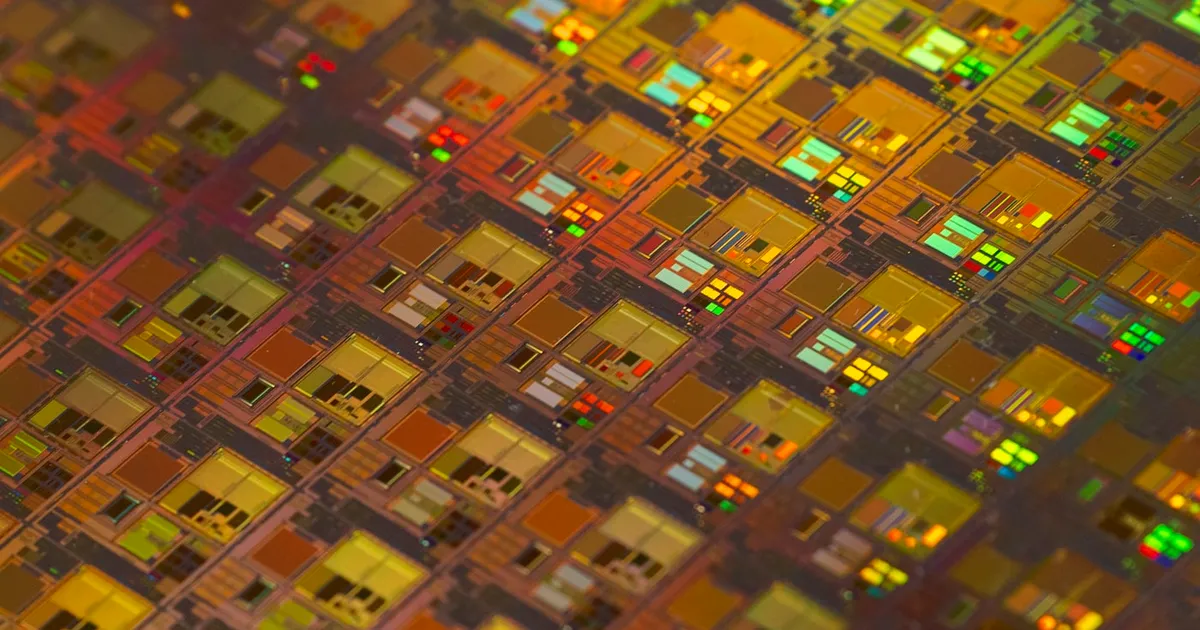
An Nvidia challenger just put two numbers on the board at once. On July 8, 2026, at the RAISE summit in Paris, AI hardware startup SambaNova disclosed the first close of a $1 billion Series F that values the company at $11 billion post-money — and, in the same breath, named JPMorgan Chase as an inference-infrastructure customer. The funding and the marquee logo land together, and the pairing is the story: capital plus a flagship enterprise deployment, at a moment when the market is hunting for anyone who can serve AI models without an Nvidia GPU in the loop.
The round
The Palo Alto company said the $1 billion is a first close, led by growth investor General Atlantic, with a roster that includes T. Rowe Price, Capital Group, funds managed by BlackRock, Intel Capital, the Qatar Investment Authority, Battery Ventures, and Seligman Ventures. CEO Rodrigo Liang told reporters that “in the next few weeks, a few more investors will be coming in, and the second close is likely to finish up” — leaving room for the round to grow beyond the initial billion.
The pace is the notable part. The Series F arrives roughly five months after SambaNova raised a $350 million Series E in February, the round that accompanied the unveiling of its SN50 system. Going back to the well this quickly, at a valuation lifted to $11 billion, is a vote of confidence from investors that demand for non-Nvidia inference silicon is real and near-term — not a bet on a distant roadmap.
SambaNova sits in a crowded field of Nvidia challengers, but it has taken a distinct architectural path. Rather than a GPU, its chips use a reconfigurable dataflow architecture — the company calls the part an RDU — designed to keep large models resident in memory and stream data through the compute fabric, an approach it argues is better suited to inference than a general-purpose graphics processor. That is the same wager other purpose-built accelerators are making: that running models, not training them, is where the volume and the margin increasingly live.
Why JPMorgan matters more than the money
For a company at SambaNova’s stage, a named customer like JPMorgan Chase is arguably worth more than the headline valuation. Under the multi-year agreement, the bank will run SambaNova’s SN40L and SN50 systems for secure, on-premises AI inference — keeping production AI workloads behind its own walls, with full control over the data and an auditable trail of how models are used.
Liang did not undersell it. “Having JPMorgan Chase decide they’re going to use SambaNova for their inference solution is a big deal,” he said, framing it as a signal to the sector: “It sends a message to the banking industry that it’s time not to completely depend on cloud services.”
That last line is the strategic core of the announcement. The default assumption of the AI build-out has been that enterprises rent compute — GPUs, models, or both — from a hyperscaler. A regulated bank choosing to deploy inference hardware inside its own data centers cuts against that grain. For institutions bound by data-residency rules, model-governance requirements, and a low tolerance for sending customer information to a third party, on-prem inference is not nostalgia for owned infrastructure; it is a compliance and control decision.
The on-prem inference thesis
The economics have shifted in a way that makes owned inference hardware defensible again. Training a frontier model still demands the largest, most interconnected clusters of high-end GPUs, where the rent-from-a-cloud model makes sense. But inference — the stage where a trained model actually answers a query — is a steadier, more predictable workload. When a bank knows it will run the same set of models against a known volume of internal traffic for years, the case for buying purpose-built systems and amortizing them strengthens against the case for paying per-token cloud rates indefinitely.
Inference is also where memory bandwidth, not raw compute, tends to be the binding constraint — a chip is only as fast as the memory feeding its weights, which is why high-bandwidth memory has become the industry’s scarcest resource and why the broader memory supercycle is squeezing every hardware roadmap. A vendor that can deliver competitive tokens-per-second on an on-prem box, without a hyperscaler in the path, has a genuine pitch to any customer for whom zero-trust data handling is non-negotiable.
Banks are the archetypal such customer. Financial institutions were among the earliest and most cautious adopters of generative AI precisely because their data is sensitive and their regulators are watchful. A large bank standing up its own inference stack is the kind of reference deployment that others in the industry study before they move.
The competitive backdrop
SambaNova is not raising into a vacuum. Nvidia remains the overwhelming default for both training and inference, with a hardware-plus-software moat that has proven durable across cycles. AMD is pushing its MI400 line as the closest general-purpose alternative, and Nvidia’s own next-generation Rubin platform is designed to keep the performance ceiling out of reach. Meanwhile a wave of custom silicon — from hyperscaler in-house accelerators to standalone inference startups, and even reported efforts by model labs like DeepSeek to design their own inference chips — is converging on the same target SambaNova is chasing.
What distinguishes SambaNova’s July disclosure is that it paired the capital with proof of demand. Plenty of accelerator startups can point to benchmarks; fewer can point to a top-five U.S. bank running the systems in production. In a market where investors have grown wary of AI hardware stories that are all roadmap and no revenue, a named enterprise customer is the scarcer asset.
What it means
Read this as a demand signal for a specific slice of the market: enterprise inference that does not run in someone else’s cloud.
Who benefits. SambaNova, obviously — a fresh billion and a reference customer that de-risks the next sales cycle. More broadly, the entire class of purpose-built inference vendors gains from a regulated bank validating the on-prem thesis; JPMorgan’s choice becomes a data point every rival can cite. Enterprises with strict data-governance needs benefit from having a credible alternative to renting everything.
Who’s exposed. At the margin, the hyperscalers’ assumption that all serious AI compute eventually flows through their clouds. One bank keeping inference in-house is not a reversal of the cloud era, but it is a reminder that the most regulated, most data-sensitive customers may route around it — and those customers are lucrative. Nvidia is insulated for now, since much on-prem hardware still uses its chips, but every credible non-GPU deployment chips slightly at the premium its dominance commands.
What to watch. Whether SambaNova’s second close materially lifts the round and the valuation in the coming weeks, as Liang suggested it would; whether other banks and regulated institutions follow JPMorgan into on-prem inference, or treat it as a one-off; and whether SambaNova can convert a marquee logo into recurring, disclosed revenue. The line between “a bank is piloting our systems” and “a bank has standardized on our systems” is the line between a strong reference and a durable business — and this announcement, encouraging as it is, sits closer to the first than the second.
Tagged
Keep reading
 Chisato · · 4 min read
 Wafer-Scale Integration Explained
Wafer-scale integration builds one giant chip from an entire silicon wafer instead of cutting it into dies. How it works and its tradeoffs.
 Kurumi · · 6 min read
 Gimlet Labs Raises $300M at $3B for Inference Cloud
Gimlet Labs raised $300M at a $3B valuation in a Series B led by a16z to scale its multi-silicon inference cloud for agentic AI. The backers, the tech, the stakes.
 Kurumi · · 6 min read
 Broadcom Q3 2026 Earnings: AI Chips Triple, Stock Dips
Broadcom's fiscal Q3 2026 revenue hit a record $29.6B as AI chip sales more than tripled to $16.7B, but light Q4 guidance sent the stock lower.