OpenAI Project Camellia: $30B Georgia AI Data Center
OpenAI unveiled Project Camellia, a 3.2GW data center near Savannah, Georgia. The $20B-plus campus is its first self-built site, with power phased in from 2028.
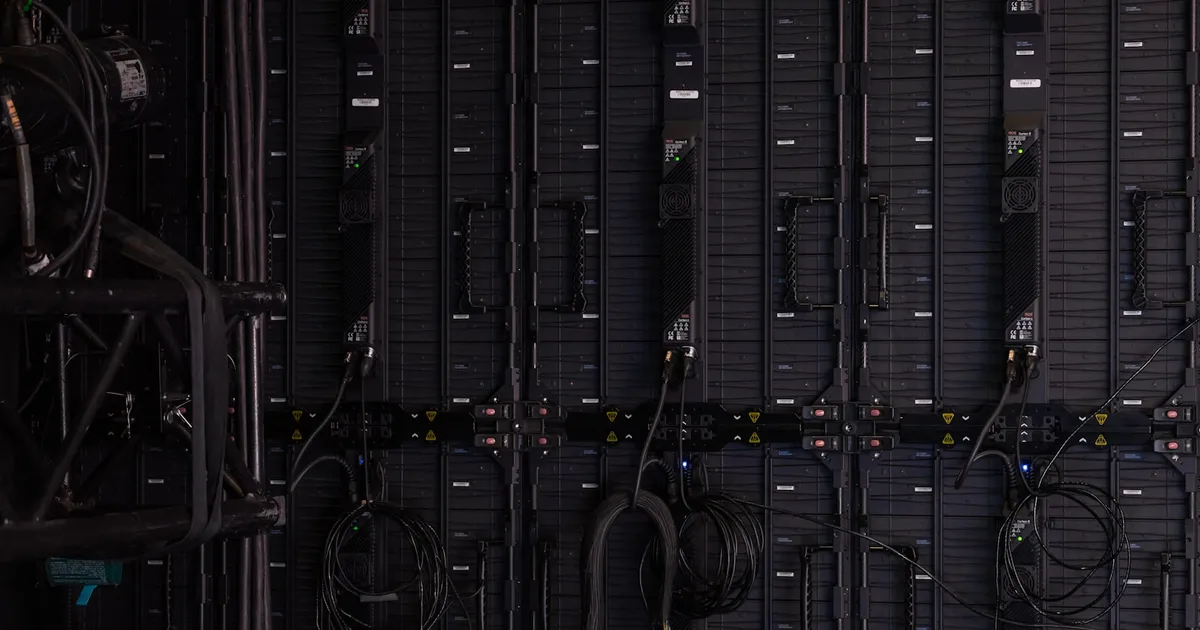
OpenAI has unveiled its most ambitious infrastructure project to date: a 3.2-gigawatt data center campus in Effingham County, Georgia, that the company says represents at least $20 billion in private investment and could cost more than $30 billion at full build-out. Announced on July 22, 2026 and code-named Project Camellia, the campus is OpenAI’s first self-built data center — a marker of how far the company is moving toward owning the physical layer of its compute rather than renting it.
The scale is difficult to overstate. At 3.2 gigawatts, Project Camellia would draw enough electricity to power more than two million homes, and it ranks among the largest private capital investments in the history of coastal Georgia. It arrives days after OpenAI launched its enterprise agent platform, Presence, underscoring a two-front strategy: build the software that sells to businesses, and build the infrastructure to run it.
What OpenAI announced
The campus will sit within the 2,600-acre Savannah Gateway Industrial Hub, a site already zoned for industrial use, and will comprise four buildings covering roughly 101 acres of that footprint. It is located just outside Rincon, about 25 miles northwest of Savannah. OpenAI expects the first facilities to come online in 2028, and the project is projected to create around 400 long-term jobs once operational.
Power will come from Georgia Power, which will deliver the full 3.2 gigawatts in phases between 2028 and 2032 — a multi-year ramp that reflects both the sheer size of the electrical load and the reality that grid capacity of this magnitude cannot be switched on at once. Sachin Katti, OpenAI’s vice president of compute strategy, is the executive credited with the more-than-$30-billion full build-out estimate, up from the $20 billion in initially committed investment.
Project Camellia sits inside OpenAI’s broader Stargate infrastructure program, the umbrella effort to secure the compute the company argues its models will require. Notably, OpenAI has not yet named a finance or development partner for the Georgia campus — a gap that leaves open how the enormous capital bill will ultimately be structured, a question that increasingly defines the AI buildout.
The cooling and water question
Data centers of this size live or die on two resources: power and water. OpenAI is trying to get ahead of the second. The company says Project Camellia will use a closed-loop water system for cooling, which recirculates water rather than continuously drawing and evaporating it. OpenAI argues the design will avoid diverting water from local communities and will not raise the temperature of nearby water sources — a direct response to the friction hyperscale projects have generated in water-stressed regions.
The choice is deliberate. Conventional evaporative cooling can consume millions of gallons a day at a campus this size, and water has become the flashpoint in community fights over data centers across the country. By committing to a closed-loop design and publishing community-facing materials up front, OpenAI is signaling that it learned from the backlash others have faced. For a deeper look at the resource math behind these projects, see our explainer on AI data center economics.
Why OpenAI is building its own
For most of its history, OpenAI leased compute — first through Microsoft Azure, then through an expanding roster of cloud and chip partners, including a 10-gigawatt partnership with Nvidia. Project Camellia marks a shift toward vertical integration: owning the buildings, negotiating directly for power, and controlling the physical roadmap rather than waiting in a cloud provider’s queue.
The logic mirrors the rest of the industry. Training and serving frontier models has turned compute into a strategic asset, and the companies with the deepest model ambitions are increasingly unwilling to let that capacity be rationed by third parties. That is the same calculus driving the broader hyperscaler capital-spending boom, the wave of chip and memory supply deals, and the scramble for the next generation of accelerators like Nvidia’s Rubin platform. Owning the campus also gives OpenAI leverage over the one input it cannot manufacture: electricity.
Power is the real bottleneck
The 2028-to-2032 delivery schedule is the tell. The constraint on AI infrastructure in 2026 is no longer chips or capital — it is grid capacity and the timeline to build it. Georgia Power’s phased delivery reflects the years of transmission, generation, and interconnection work required to stand up gigawatts of new load, and it is why OpenAI’s “2028 launch” describes a beginning, not a finished campus.
That same pressure is reshaping the map of where AI gets built. Utilities are warning of surging data-center electricity demand, some jurisdictions are pushing back — New York imposed a hyperscale data center moratorium — and companies are hunting for sites with available power, from Meta’s Alberta campus in Canada to industrial parks like Savannah Gateway that come pre-zoned and grid-adjacent. Georgia’s combination of industrial land, an accommodating utility, and state incentives is precisely what makes it attractive.
What it means
Project Camellia is a statement about where the AI race is being decided: not only in model benchmarks, but in megawatts, acreage, and interconnection queues. By committing to its first self-built campus, OpenAI is betting that owning infrastructure — not just buying it — is the durable advantage in a market where compute is the binding constraint.
Who wins. Georgia and the U.S. domestic-infrastructure push get a marquee project, 400 long-term jobs, and one of the largest private investments coastal Georgia has seen. Georgia Power gains an anchor load that justifies generation and transmission investment. OpenAI gains control over its own compute destiny and a template it can replicate — the Stargate program is explicitly designed to scale beyond any single site.
Who bears the risk. The financing is the open question. OpenAI has not named a development or finance partner, and a $30 billion build-out is an enormous commitment for a company still spending heavily to stay at the frontier. The multi-year power ramp means the capital goes out well ahead of the compute coming online, and any slip in model demand, grid timelines, or partner appetite would strand expensive, half-built capacity. Local communities, meanwhile, will judge the closed-loop water pledge against what actually gets built.
What to watch next. The financing structure is the first signal — whether OpenAI funds Camellia on its own balance sheet, through Stargate partners, or via the kind of off-balance-sheet vehicles now common across the sector. Watch Georgia Power’s phased-delivery milestones, whether the closed-loop cooling holds up under scrutiny, and how many more self-built campuses OpenAI announces. If Camellia is the first of many, it confirms that the company’s ambitions have outgrown the cloud it was born in — and that the AI buildout’s next chapter will be written in concrete and copper as much as in code.
Tagged
Keep reading
 Chisato · · 5 min read
 Nvidia Australia AI Factories: 2 GW Buildout by 2027
Nvidia lined up eight Australian data center operators to build up to 2 GW of AI factory capacity by 2027, roughly doubling the nation's compute footprint.
 Chisato · · 6 min read
 Anthropic Theseus Venture: Macquarie, GIC Build Data Centers
Anthropic, Macquarie and GIC formed Theseus Infrastructure to develop and lease US data centers to Anthropic as anchor tenant. Here's the breakdown.
 Kurumi · · 5 min read
 OpenAI Lifts Compute Spending Forecast to $750 Billion
OpenAI raised its planned compute and cloud spending through 2030 to about $750 billion, up from $600 billion, as new Oracle, AWS, and Azure deals stack up.