Meta's $10B Alberta Data Center: Canada AI Buildout
Meta is building its first Canadian data center, a 1-gigawatt AI campus in Alberta, backed by a new 932 MW gas plant. The scope, the power problem, and why it matters.
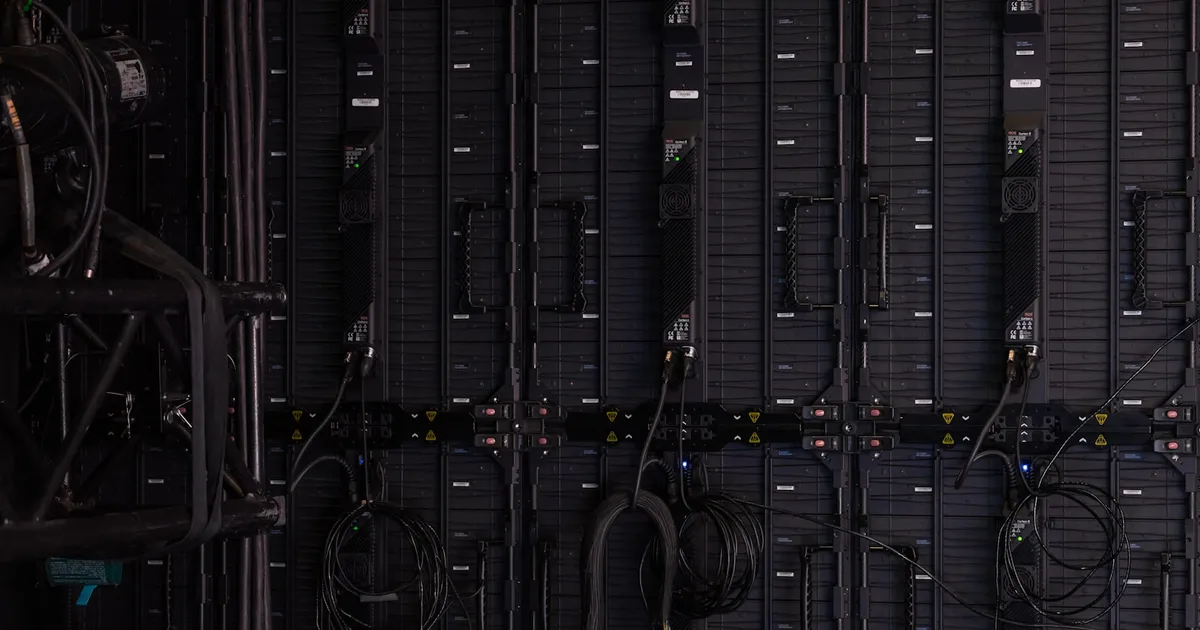
Meta Platforms is planting its first data center on Canadian soil, and it is doing so at the scale that now defines the AI era. In an announcement the week of July 8, 2026, the company said it will invest at least $10 billion — with total project costs the company has put at more than $13 billion — to build a 1-gigawatt AI data-center campus in Sturgeon County, Alberta, northeast of Edmonton in the province’s Industrial Heartland. It will be Meta’s 33rd data center worldwide and its first in Canada.
The project’s headline number is not the dollar figure but the power figure. A gigawatt of continuous draw is roughly the consumption of 750,000 households, and securing that much electricity — not pouring concrete or buying chips — is the part of the deal that reveals where the industry’s real constraint now sits.
The scope of the build
The Sturgeon County complex will span roughly 270,000 square meters, an area the company compares to nearly 33 football fields. Meta says the facility will use a closed-loop, liquid-cooled system paired with dry cooling designed to eliminate operational water use — an increasingly common design choice as data centers face scrutiny over water consumption in the communities that host them.
On the economics for the province, Meta and Alberta officials cite:
- Roughly 3,000 jobs during the construction phase.
- More than 300 permanent highly skilled technical positions once the campus is operational.
- An estimated contribution of nearly 250 million Canadian dollars annually to the local economy through taxes and other payments, per Alberta government figures.
The company has not committed to a firm start date, saying only that the campus will come online “in the next few years.” That vagueness is itself telling: at this scale, the schedule is gated less by construction than by power delivery and grid interconnection.
The power problem, solved with a gas plant
The most consequential detail is how Meta intends to feed the site. The 1-gigawatt campus comes paired with the construction of an entirely new 932-megawatt natural gas-fired power plant built to serve it. Rather than wait for the grid to catch up, Meta is effectively bringing its own generation.
That choice puts a fine point on a trend we’ve tracked as electricity became the binding constraint on AI expansion — the same dynamic behind surging data-center electricity demand. When a hyperscaler cannot source a gigawatt of firm power from the existing grid on its timeline, it builds the generation itself, and in Alberta’s gas-rich Industrial Heartland the fastest firm-power answer is a new gas plant. It is a pragmatic engineering decision and, for a company with public sustainability commitments, a complicated one: a closed-loop cooling design that eliminates water use sits alongside nearly a gigawatt of new fossil-fueled generation.

Where it fits in Meta’s compute plan
The Alberta campus is one node in a much larger expansion. Meta has told employees it aims to roughly double its data-center computing power, targeting on the order of 14 gigawatts of capacity by 2027, and it is building the silicon to fill those buildings: the company’s in-house Iris AI accelerator enters production in September, designed with Broadcom and manufactured by TSMC to handle Meta’s internal AI workloads.
Meta is also monetizing the buildout from both ends. Beyond training its own models, the company has moved to rent out excess AI compute — turning infrastructure it built for itself into a revenue line, a strategy that only makes sense if you are building capacity faster than your own products can consume it. A new 1-gigawatt campus is exactly the kind of asset that supports both the internal roadmap and the external cloud ambition.
The capital behind it
A $10-billion-plus single-site commitment does not come out of petty cash, and Meta’s funding reflects the industry-wide shift toward debt-financed infrastructure. The company tapped the investment-grade bond market for roughly $25 billion this year, following a $30 billion deal last October — part of a broader wave in which Amazon raised $25 billion and Alphabet secured about $85 billion through an equity offering. Combined AI outlays from Amazon, Alphabet, Microsoft, and Meta are on track to top $700 billion in 2026.
That backdrop is what makes the Alberta project a bellwether rather than a one-off. It is the physical expression of the AI capex boom: borrowed capital converted into land, steel, cooling loops, and — the scarce input — firm electricity.
What it means
Meta’s Canadian debut reads as a snapshot of where the AI infrastructure race actually gets decided.
Power is the product constraint now, not chips. Meta could presumably buy the accelerators to fill a gigawatt of racks; what it cannot easily buy is a gigawatt of firm, on-schedule electricity from an existing grid. The decision to build a dedicated 932 MW gas plant is the clearest signal in the announcement — when generation is the bottleneck, the hyperscalers become power developers. This is the on-the-ground reality beneath the economics of AI data centers.
Winners: Alberta, which lands thousands of construction jobs, hundreds of permanent roles, and a recurring tax base; the gas and power-equipment supply chain feeding the new plant; and Meta itself, which secures scarce capacity on its own timeline. The tension: environmental and community stakeholders now weighing a water-neutral cooling design against nearly a gigawatt of new fossil generation, and a Canadian grid absorbing a very large new load.
What to watch next. Whether the gas-plant model becomes the template for hyperscaler expansion in power-rich regions; how quickly the campus actually energizes, given that the “next few years” timeline hinges on generation and interconnection rather than construction; and whether Meta routes any of this capacity into its external compute-rental business. As the buildout increasingly runs on borrowed money, the returns question follows every gigawatt: capacity like this almost always gets used eventually — the open issue is how fast, and who holds the asset when the cycle turns.
Tagged
Keep reading
 Chisato · · 6 min read
 Meta Cloud Business: Selling AI Compute to Rival AWS
Meta is building a cloud business to sell its excess AI computing power, taking on AWS, Azure, and Google Cloud. Here's the plan and why the stock jumped.
 Chisato · · 5 min read
 Alibaba Cloud Launches First Brazil Region
Alibaba Cloud opened its first South American region in São Paulo, with two data centers and planned agentic AI services, part of a $53B infrastructure push.
Chisato · · 6 min read Google's $15B India Data Center Faces Water Protests
Google's $15B Visakhapatnam AI data center with Adani faces legal challenges and protests over water use and a nearby wildlife sanctuary. What's at stake.