Meta-BlackRock $14B El Paso Data Center Venture
Meta and BlackRock formed a roughly $14B venture to build an El Paso AI data center, with BlackRock owning 80%. Inside the off-balance-sheet financing structure.
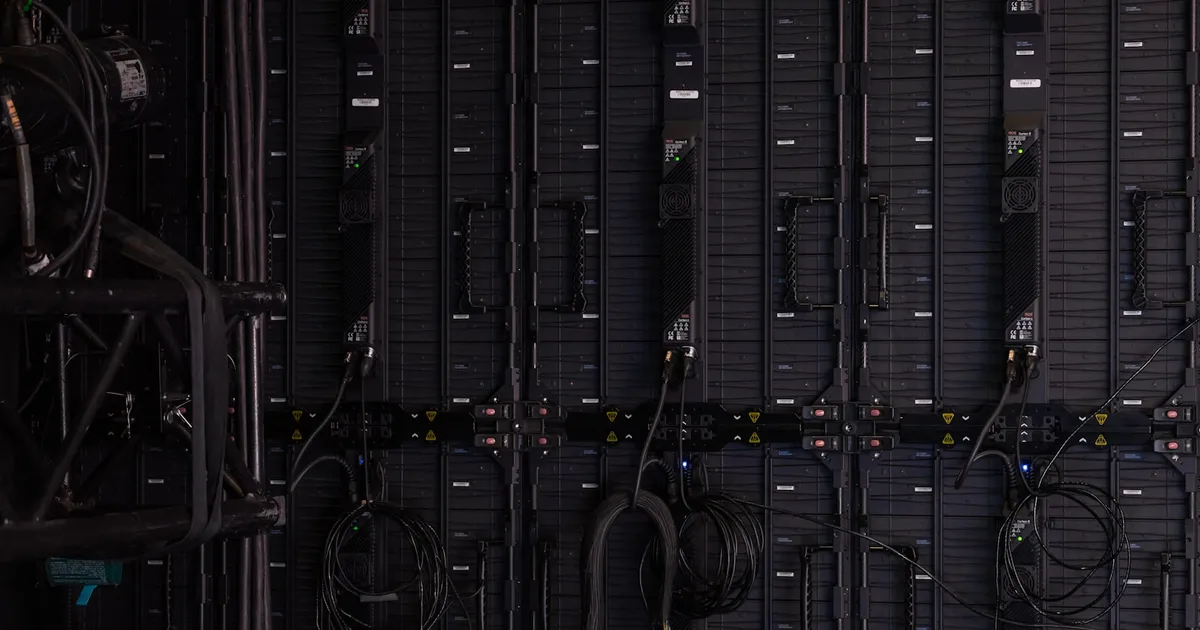
The financial engineering behind the AI buildout is getting as much attention as the compute itself. On July 28, 2026, Meta Platforms and BlackRock announced a strategic venture to develop and operate a large data center campus in Northeast El Paso, Texas, a project valued at roughly $14 billion. The structure of the deal — who owns it, who funds it, and who ultimately uses it — is a case study in how the largest technology companies are financing an AI infrastructure program that has outgrown their own balance sheets.
The structure of the deal
The venture pairs an operator with an owner. BlackRock-managed funds will take an 80% ownership stake; Meta will retain the remaining 20%. That inversion is the point: the company that will actually run the campus and consume its compute holds a minority equity position, while an asset manager holds the majority.
The contributions break down along those lines. Meta contributes land and in-progress construction assets worth about $2.3 billion — the physical head start on a campus already under way. BlackRock makes a cash contribution of about $4.9 billion, a portion of which is financed through roughly $12.5 billion in debt raised at the venture level. To square the equity split against the assets each side is putting in, Meta also receives a $1 billion distribution from the venture.
Crucially, Meta does not walk away from the facility. It will lease the entire campus back from the venture under agreements with a four-year initial term and four options to extend, giving Meta operational flexibility over a possible 20-year horizon. Meta further backstops the arrangement with residual value guarantees (RVGs) carrying an aggregate threshold of about $13 billion that declines over time — a promise that limits the venture’s downside if the assets are worth less than expected at the end of the lease.
Why structure it this way
On paper, Meta could simply build and own the campus outright, as it has done for years with its self-managed data centers. The reason to bring in a partner like BlackRock is balance-sheet management. By holding only 20% of the equity and leasing the facility rather than owning it, Meta can access an enormous block of AI-ready capacity while keeping much of the associated debt and capital cost off its own balance sheet, carried instead by the venture and its outside investors.
That matters because the numbers have become staggering. Meta’s own capital spending has climbed into the range where financing choices materially affect reported free cash flow and leverage. Off-balance-sheet ventures let a hyperscaler convert a lumpy, multi-billion-dollar construction bill into a smoother stream of lease payments, while transferring a meaningful share of the financing risk to partners who want long-dated, contracted, infrastructure-like returns. For BlackRock, the appeal is the mirror image: a hard asset with a creditworthy tenant — Meta — locked into long leases and backstopped by residual value guarantees, exactly the kind of stable, yield-bearing exposure its infrastructure and private-credit funds are built to hold.
The residual value guarantees are the hinge that makes the risk transfer palatable to both sides. They cap how much of the asset-value risk BlackRock’s funds actually bear, which is what lets the venture raise $12.5 billion in debt against the project on attractive terms. In effect, Meta rents capacity and retains much of the tail risk, while BlackRock supplies the capital and books the ownership.
A financing playbook, not a one-off
The El Paso venture is not an isolated arrangement; it is the latest instance of a financing playbook that has spread rapidly across the hyperscalers in 2026. Faced with AI capital budgets that individually run into the hundreds of billions, the largest technology companies have turned to private capital, joint ventures, and special-purpose financing to fund the physical layer of the buildout without absorbing all of it directly.
The logic is the same everywhere the pattern appears: pair a technology company that needs compute and can sign a long lease with an asset manager or private-credit pool that wants contracted, infrastructure-grade cash flows. The technology company gets capacity and preserves balance-sheet flexibility; the financier gets a durable yield anchored to one of the most creditworthy tenants in the world. Meta has pursued capacity through multiple channels this way, from large compute-lease arrangements to owned campuses like its Canadian data center in Alberta. The El Paso deal formalizes the outside-capital version of that strategy at scale.
The backdrop is the broader capex arms race now defining hyperscaler spending, where combined AI-related capital expenditure across the largest cloud players is on track to exceed $700 billion this year. As those figures climb, so does the incentive to move the associated debt off the corporate balance sheet — which is precisely why deals structured like El Paso are proliferating.
What the campus is for
Behind the financial structure sits a straightforward physical purpose: AI compute. The El Paso campus is designed to deliver on the order of a gigawatt of capacity, the scale of power and cooling now required to house the dense GPU clusters that train and serve frontier models. Location choices for these campuses increasingly turn on the same constraints — available power, land, water for cooling, and grid interconnection — which is why Texas, with its independent grid and permissive development environment, has become a magnet for hyperscale construction.
That capacity feeds Meta’s own AI ambitions, from the models powering its consumer products to the compute it makes available to partners. The economics of these facilities — how much it costs to build a gigawatt, how quickly it can be filled with paying workloads, and how long the equipment inside stays useful — are ultimately what determine whether the financial structures wrapped around them pay off.
What it means
The Meta-BlackRock venture is a window into how the AI buildout is actually being paid for. The compute story gets the headlines, but the capital-structure story is where the risk lives. By taking a 20% stake, leasing back the campus, and backstopping it with residual value guarantees, Meta secures a gigawatt of capacity while pushing most of the debt onto a venture that BlackRock’s funds own — a deliberate choice to preserve balance-sheet flexibility as capital budgets balloon.
Who wins. Both sides, if AI demand holds. Meta gets capacity without a $14 billion line item on its own books; BlackRock’s funds get a long-dated, contracted asset with a blue-chip tenant. The arrangement is engineered so each party takes the slice of risk it is best positioned to hold.
The risk. Off-balance-sheet does not mean risk-free. Meta’s residual value guarantees mean it still absorbs much of the downside if the assets underperform, and the venture carries $12.5 billion in debt whose service depends on Meta honoring long leases. If AI compute demand softens or the equipment inside depreciates faster than expected, the guarantees convert a clean-looking structure into a real liability.
What to watch. Whether this structure becomes the template. If more hyperscalers route gigawatt-scale campuses through BlackRock-style ventures, a growing share of the AI buildout’s debt will sit outside the reported balance sheets of the companies driving it — a shift that makes the sector’s true leverage harder to read, and one that regulators and credit analysts are only beginning to scrutinize.
Tagged
Keep reading
 Chisato · · 5 min read
 Nvidia Australia AI Factories: 2 GW Buildout by 2027
Nvidia lined up eight Australian data center operators to build up to 2 GW of AI factory capacity by 2027, roughly doubling the nation's compute footprint.
 Kurumi · · 6 min read
 Fluidstack Hits $18B Valuation on AI Data Center Boom
Fluidstack, an Oxford-founded neocloud backed by Google, has reached a roughly $18 billion valuation on the back of a ~$50B Anthropic deal and Google TPU hosting.
Kurumi · · 5 min read Crusoe Hits $30B Valuation in $3B AI Data Center Raise
AI data center builder Crusoe raised over $3 billion at a $30 billion valuation, roughly tripling its worth in ten months as Mubadala and others piled in.