China H200 Approval: Nvidia Chips for AI Firms
China is preparing to let Alibaba, ByteDance, and DeepSeek buy Nvidia's H200 — but capped under 200,000 chips. The reversal, the conditions, and what it means.
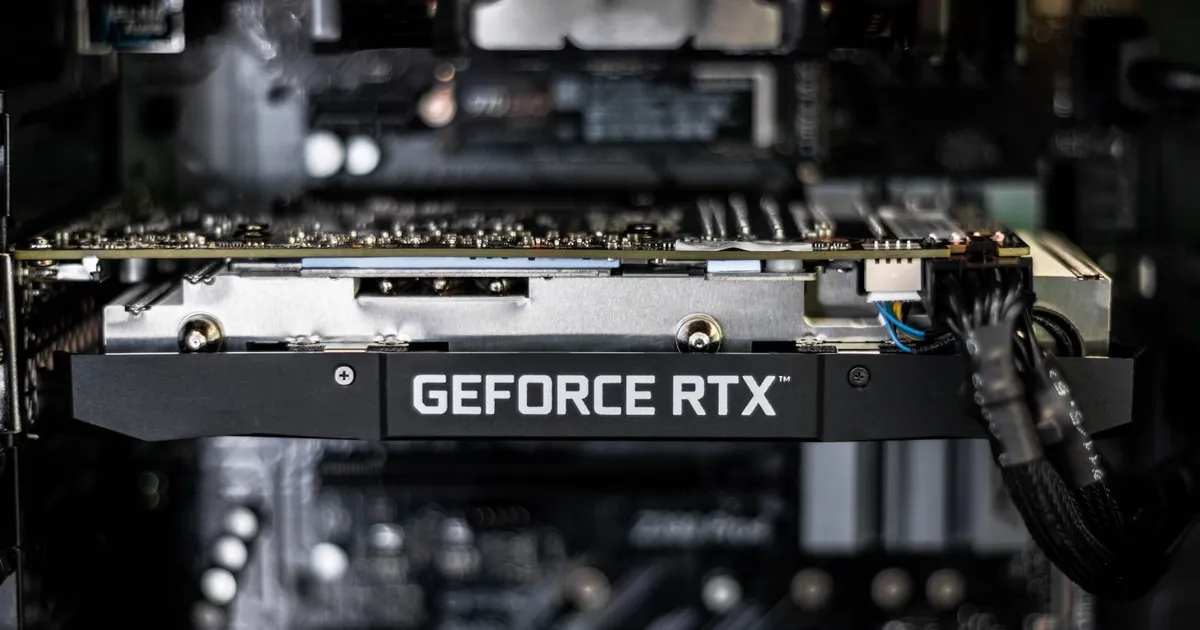
Beijing is preparing to unwind one of its own restrictions on artificial-intelligence hardware. According to reports first published by Bloomberg and The Information on July 8, 2026, Chinese regulators have told the country’s leading AI companies — including Alibaba, ByteDance, and DeepSeek — that they may soon receive conditional approval to purchase Nvidia’s H200 GPU, the export-approved chip that Beijing had until now blocked its own firms from buying. No final policy has been announced, and officials describe the plan as still under review, but the shift would mark a notable reversal in China’s push for domestic chip self-sufficiency.
The reversal, in context
The H200’s path into China has been unusually tangled. In early 2026, Washington took the rare step of approving the H200 for export to China — a loosening of U.S. controls that Nvidia had lobbied for. But rather than let its national champions load up on American silicon, Beijing restricted Chinese firms from buying the chips, part of a deliberate campaign to steer demand toward homegrown accelerators and reduce reliance on Nvidia’s ecosystem.
That created an unusual standoff: the chips were legal to sell into China from the U.S. side, but effectively barred on the Chinese side. The reported easing would relax Beijing’s half of that blockade. Chinese officials have reportedly informed tech giants that they can apply for conditional approval, provided they meet specific requirements — a middle path between full self-sufficiency and open-market access to Nvidia’s most capable exportable part.
Analysts framing the move to the South China Morning Post called it a potential “game changer” for China’s AI industry, describing the easing as a way to “temporarily ease the frontier training bottleneck” that domestic chips have not yet closed.
The strings attached
This is not an open door. According to TrendForce and multiple reports, the approvals come with hard limits:
- A volume cap. Total approvals are expected to come in at fewer than 200,000 chips — less than half of what Chinese firms are said to have requested earlier this year. Demand, in other words, far outstrips what regulators are willing to green-light.
- Justification requirements. Companies seeking approval must specify how many chips they need and detail their intended use, giving Beijing case-by-case control over who gets frontier compute and for what.
- A review process. The framework remains under review, and no company has confirmed a completed purchase. The reported approvals describe intent and eligibility, not shipped hardware.
The structure tells you a lot about Beijing’s calculus. Rather than a blanket reversal, it is a rationed, supervised release — enough to relieve the most acute compute shortages at the frontier labs, but not so much that it undercuts the domestic chip industry China has spent years and enormous sums building. It is the same instinct visible in China’s broader $295 billion AI infrastructure push: keep the domestic ecosystem central while selectively importing what it cannot yet make.
Why the H200 specifically
The H200 matters because of what it carries. It is the memory-heavy successor in Nvidia’s Hopper generation, built around large pools of high-bandwidth memory that make it well suited to both training and, especially, large-scale inference. For AI labs running enormous models, HBM capacity and bandwidth are often the binding constraint — the reason a GPU can or cannot hold a frontier model’s weights and serve them quickly.
China’s domestic accelerators — from Huawei’s Ascend line to a growing field of startups — have narrowed the gap on raw compute, and firms like DeepSeek have designed their own inference silicon to route around import limits. But domestic HBM supply and the software maturity of CUDA-class ecosystems remain weak points. The H200 is a pragmatic bridge: it lets Chinese labs train and serve at the frontier now, while the domestic stack keeps maturing.
That is also why the cap stings. At fewer than 200,000 units spread across Alibaba, ByteDance, DeepSeek, and any other approved buyers, no single firm gets the tens of thousands of chips it would take to fully close the gap with U.S. hyperscalers, who are provisioning capacity by the gigawatt.
What it means for Nvidia
For Nvidia, the reported easing is a modest tailwind wrapped in a familiar frustration. The China market has been a recurring wildcard for the company: large enough to move numbers, but so entangled in policy on both sides that management has repeatedly declined to bank on it. Every prior loosening — from Washington or from Beijing — has come with the risk of a fresh reversal.
A capped 200,000-unit approval is meaningful revenue but not transformational against a demand backdrop where U.S. and other international customers are already absorbing everything Nvidia can build. It also arrives while investors are focused less on China than on the durability of the broader AI buildout, a nervousness visible in the recent chip-stock selloff and in Nvidia’s own status as a 2026 laggard relative to the memory names. The China headline helps sentiment at the margin; it does not change the central question of how long hyperscaler spending holds.
There is a strategic wrinkle, too. Every H200 that reaches a Chinese frontier lab is a chip that keeps that lab inside Nvidia’s software gravity well rather than pushing it fully onto domestic silicon. Beijing understands this — which is precisely why the release is rationed rather than open.
What to watch next
Several threads will determine whether this is a genuine thaw or a brief, narrow exception:
Whether the policy is formalized. As of the reporting, this is intent conveyed to companies, not published regulation. Watch for an official framework — and for the first confirmed purchases and shipments — before treating the ban as lifted.
How Washington reacts. U.S. controls approved the H200 for export, but the political mood around advanced chips flowing to Chinese AI leaders can shift quickly. A large, visible wave of H200 orders from Alibaba and ByteDance could invite fresh scrutiny on the American side, reintroducing the risk on the export end even as Beijing relaxes the import end.
What it signals about domestic silicon. The most telling read is strategic: Beijing loosening its own restriction is a tacit acknowledgment that domestic accelerators and HBM cannot yet fully carry China’s frontier ambitions. If approvals stay capped and conditional, expect continued heavy investment in the home-grown stack — the H200 as a bridge, not a destination.
Who actually gets the chips. With demand more than double the cap, the allocation itself becomes policy. Which labs Beijing prioritizes — and how it weighs consumer-internet giants against dedicated model labs like DeepSeek — will reveal where the government wants its scarce frontier compute to go.
What it means
The reported easing is best understood not as China opening its market to Nvidia, but as Beijing fine-tuning a bottleneck. By allowing a capped, justified, case-by-case flow of H200s, regulators buy their national champions time at the frontier without surrendering the self-sufficiency drive that shapes the country’s whole chip strategy. It is a concession made from a position of managed scarcity, not open competition.
For the near term, three parties come out ahead in different measures. China’s frontier labs get a pressure valve on the compute crunch that has constrained their largest training runs. Nvidia picks up incremental, if capped, demand and keeps Chinese developers tethered to its software. And Beijing retains control of the tap — able to widen or shut it as the domestic industry, and U.S. policy, evolve. The losers, quietly, are China’s domestic accelerator makers, who now must prove they can win business that a rationed supply of H200s has made optional rather than mandatory.
The larger signal is about the shape of the AI hardware race. Even the country most determined to build its own stack still finds the frontier easier to reach with Nvidia inside it. Until domestic silicon and memory close that last gap, the H200 — capped, conditioned, and closely watched — is the compromise both sides can live with.
Tagged
Keep reading
 Chisato · · 6 min read
 US Moves to Block China's Remote AI Chip Access
The Commerce Department is drafting a rule to stop Chinese firms from renting banned Nvidia AI compute through data centers in third countries.
 Kurumi · · 5 min read
 Nvidia AI Server Prices to Rise 15%+ on Memory Costs
Nvidia's server builders have told Microsoft, Google and Oracle that Vera Rubin and Grace Blackwell system prices will climb more than 15% from early 2027 as memory costs soar.
Chisato · · 6 min read Nvidia Groq 3 LPX: $20B Inference Chip Goes Live
Nvidia's Groq 3 LPX inference chip is in full production and comes online in 2026, extending Vera Rubin for agentic AI. The specs, the deal, the stakes.