Huawei Atlas 950 SuperPoD: 8,192 Ascend Chips, Q4 2026
Huawei showed its Atlas 950 SuperPoD at WAIC 2026, claiming 6.7x the compute of Nvidia's NVL144 by wiring thousands of Ascend chips into one machine. Here's the reality.
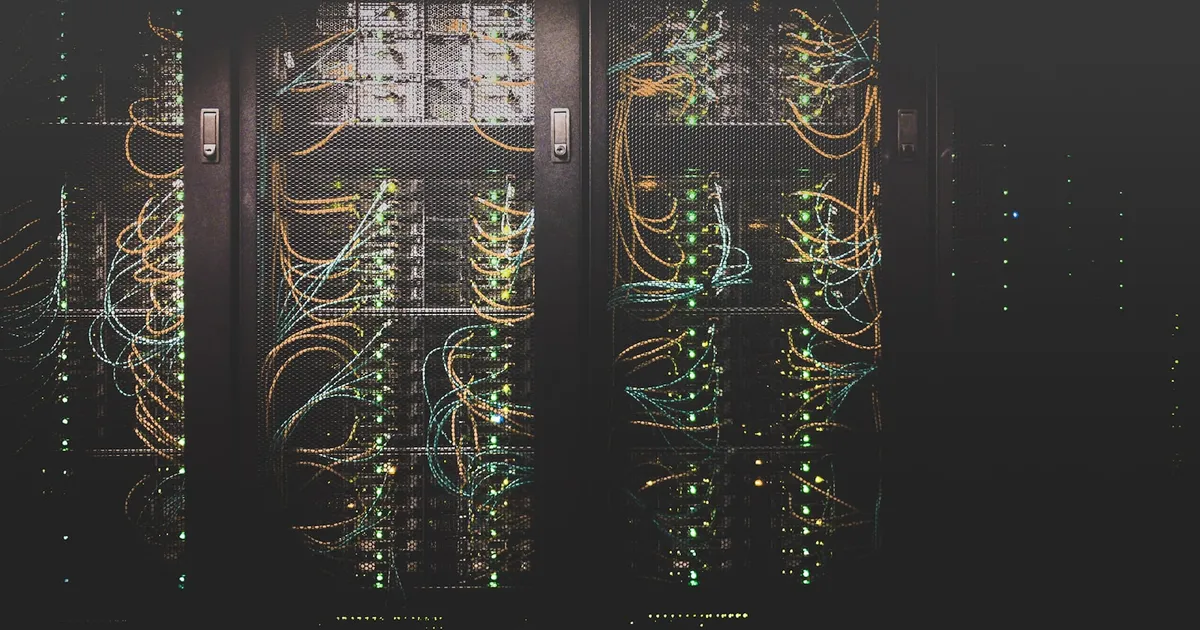
Huawei used the 2026 World Artificial Intelligence Conference (WAIC) in Shanghai to make its most aggressive pitch yet against Nvidia: if it cannot build a single chip as fast as an American GPU, it will wire thousands of its own chips together until the whole system wins on scale. The company publicly displayed the hardware for its Atlas 950 SuperPoD for the first time on July 16, 2026, and the specifications it attached to the system are designed to reframe the AI-hardware race around clusters rather than individual accelerators.
Huawei’s headline claim is blunt: at full configuration, the Atlas 950 SuperPoD delivers 6.7 times more computing power and 15 times more memory than Nvidia’s NVL144, the rack-scale supernode built around Nvidia’s next-generation Rubin platform. The comparison is doing a lot of work, and it is worth unpacking carefully.
What was actually on the floor
The unit shown at WAIC was a partial configuration: 1,024 Ascend NPUs across 16 cabinets, rated at 1 EFLOPS at FP8, 2 EFLOPS at FP4, and 256 TB of globally addressable memory, with interconnect bandwidth Huawei puts in the multi-petabyte-per-second range. That alone makes it one of the largest single AI computing “supernodes” demonstrated in public.
The full Atlas 950 SuperPoD that Huawei is marketing is far bigger. In its complete form it integrates 8,192 Ascend 950DT chips, delivering roughly 8 EFLOPS at FP8 and 16 EFLOPS at FP4, and it is the full 8,192-chip build — not the 1,024-NPU demo unit — that underpins the 6.7x-versus-NVL144 comparison. In Huawei’s framing, the SuperPoD is meant to be treated as a single logical machine: 8,192 accelerators addressed as one pool of compute and memory, the “supernode” concept it has been pushing since 2025.
The strategy behind the numbers
The logic is a direct response to US export controls. Cut off from the most advanced Nvidia GPUs and from leading-edge foundry capacity, Huawei cannot match the per-chip performance of the best American silicon. Its answer is scale-up through interconnect: lash together many domestically producible NPUs with very high-bandwidth links so the aggregate system is competitive even when each individual part is not.
Crucially, the Ascend 950DT is slated to ship with Huawei’s in-house high-bandwidth memory, a notable move given how central HBM supply has become to AI accelerators and how tightly the leading-edge memory market is controlled. Building its own HBM is Huawei’s attempt to remove another external chokepoint from its supply chain.
This system-level approach is becoming the signature of China’s domestic AI-hardware push, where models are increasingly trained and tuned to run on Chinese chips rather than imported GPUs, even as Beijing separately clears channels to import some Nvidia parts.
The caveats the specs don’t mention
Peak FLOPS figures flatter clusters, and there are reasons to read Huawei’s numbers as a ceiling rather than a promise. Aggregate throughput assumes near-perfect scaling across 8,192 chips — an assumption that rarely holds once real workloads contend for interconnect bandwidth, and efficiency at that scale depends heavily on software maturity, where Nvidia’s CUDA ecosystem retains a large lead. A supernode is also enormous: the full SuperPoD occupies scores of cabinets and draws power at a level that concentrates the comparison on raw capability rather than performance per watt, where domestic chips built on older process nodes are at a structural disadvantage.
There is also the matter of timing. Both the Atlas 950 SuperPoD and the Ascend 950DT chip are slated for availability in the fourth quarter of 2026 — a roadmap promise on the WAIC floor, not a shipping product. Huawei went further still, teasing an Atlas 950 SuperCluster that would link more than 520,000 Ascend 950DT chips across over 10,000 cabinets to reach 524 EFLOPS at FP8 and roughly 1 ZettaFLOPS at FP4, also targeted for late 2026. Those are aspirational headline figures whose real-world efficiency will only be knowable once systems are deployed and benchmarked on actual training and inference runs.
What it means
Strip away the peak-FLOPS theater and the Atlas 950 SuperPoD is a serious statement of intent. Huawei is telling China’s AI developers they will have a domestic path to frontier-scale compute that does not depend on Nvidia, US export licenses, or foreign memory suppliers — and it is putting a Q4 2026 date on it. For a market that has spent two years worried about being cut off from the best hardware, that is the message that matters, almost regardless of whether the 6.7x figure survives contact with real workloads.
The winners, if the system ships on schedule, are Chinese cloud providers and model labs that get a credible high-end alternative, and Huawei itself, which converts export restrictions into a captive domestic customer base. The vertical integration — its own NPU, its own HBM, its own interconnect and supernode architecture — is the most strategically important part of the announcement, because each in-house layer removes a lever that Washington can pull.
Nvidia is not dethroned. Its per-chip efficiency, its software moat, and its power-efficiency advantage remain intact, and a 1,024-NPU demo of a system that ships at 8,192 chips “in Q4” is a long way from a delivered, benchmarked product. But the competitive framing has shifted. The question is no longer only whether any single chip can match a Rubin GPU; it is whether a full rack of Chinese silicon can do the job of a full rack of American silicon. Huawei just argued, in public, that it can — and the AI-hardware race, already jittery after this month’s semiconductor sell-off, now has a scale-up front to watch as closely as the per-chip one. The proof arrives when the first SuperPoDs are powered on.
Tagged
Keep reading
 Chisato · · 6 min read
 US Moves to Block China's Remote AI Chip Access
The Commerce Department is drafting a rule to stop Chinese firms from renting banned Nvidia AI compute through data centers in third countries.
 Chisato · · 5 min read
 US Expands AI Chip Licenses: AMD Joins China Trade
New export licenses let ZTE and a Kingsoft unit buy Nvidia H200 and, for the first time, AMD AI chips. AMD jumped 6%. The details and what it means.
 Chisato · · 6 min read
 China H200 Approval: Nvidia Chips for AI Firms
China is preparing to let Alibaba, ByteDance, and DeepSeek buy Nvidia's H200 — but capped under 200,000 chips. The reversal, the conditions, and what it means.