Meta-Anthropic $10B Compute Deal: Why It Matters
Meta is in early talks to lease up to $10B of AI compute to Anthropic over two years — making Meta a cloud provider to its biggest model rival. Here's the story.
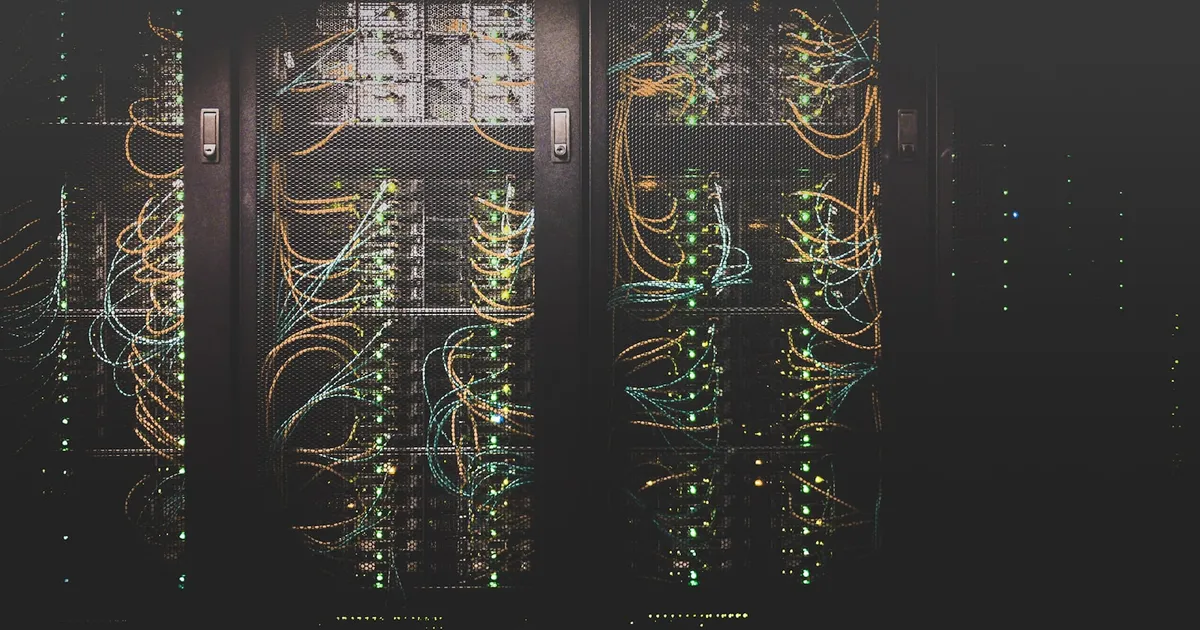
The company that builds Llama may soon be keeping the lights on for the company that builds Claude. On July 17, 2026, the New York Times reported — with CNBC confirming the same early-stage talks — that Meta Platforms is in negotiations to lease computing power to Anthropic in a deal that could be worth as much as $10 billion over roughly two years. Both companies are described as being in preliminary discussions, and people familiar with the matter cautioned that the terms could change or the talks could fall apart.
If it closes, the arrangement would be one of the strangest pairings the AI infrastructure boom has produced: Meta, which ships its own open-weight models and competes directly with Anthropic’s Claude, would become the infrastructure landlord for one of its fiercest rivals. It would also mark the first concrete customer for a cloud business Meta has only just begun to signal.
What is reportedly on the table
According to the reporting, Anthropic would pay Meta in monthly increments over a roughly two-year term, with a total value reaching up to $10 billion. The structure reportedly gives both sides room to walk: the companies would be able to exit any agreement early, and the specifics remain subject to change while the talks are early.
Neither Meta nor Anthropic has confirmed the negotiations publicly, and no signed contract has been announced. What is being described is a lease of data-center capacity and compute — not an equity investment, a model-licensing arrangement, or a partnership on research. Anthropic would be renting the machines; Meta would be the provider.
The dollar figure, while large, fits the scale at which Anthropic has been contracting for compute. The company recently agreed to a reported $1.25 billion-per-month arrangement to use Nvidia GPUs inside the Colossus data center in Memphis operated by Elon Musk’s xAI/SpaceX orbit, and it already draws on Google’s TPUs and Amazon’s Trainium silicon across its training and inference stack. A $10 billion, two-year Meta lease would slot in as another leg of a deliberately multi-sourced compute strategy rather than a single dependency.
Why Meta is suddenly a cloud vendor
For Meta, the significance is less about the customer than about the business the customer would validate. CEO Mark Zuckerberg said in May that Meta was considering entering the cloud market, and a Bloomberg report in early July described the company building a cloud business to sell access to its excess AI computing power — a move that would put it into direct competition with Amazon Web Services, Microsoft Azure, and Google Cloud for the first time. Investors welcomed the idea immediately when it surfaced, sending Meta shares up sharply on the day.
An Anthropic lease would turn that ambition into a marquee reference account. Meta has spent the past two years pouring capital into data centers to train its Llama family and power recommendation and ads systems, and that buildout has left it with — or on track to have — capacity it can monetize when it is not consuming it internally. Renting idle or surplus GPUs to a paying tenant is exactly how hyperscalers began. It is also a hedge: if Meta’s own model roadmap does not consume every watt it has committed to, an external customer converts a fixed cost into revenue.
The economics also cut the other way. Compute has become the scarcest input in frontier AI, and the capital intensity of the buildout means even the largest labs cannot self-provision everything they need on their own timelines. For Anthropic, adding Meta to a roster that already includes Google, Amazon, and the Colossus complex is a way to secure more GPUs faster than building or waiting for any single provider.
The awkward part
The obvious tension is competitive. Meta’s Llama models compete with Claude for developer mindshare and enterprise deals, and Meta’s superintelligence ambitions put it in the same frontier race Anthropic is running. A compute lease would make Meta both a rival on the model layer and a supplier on the infrastructure layer — a dual role that AWS already occupies with Anthropic, and that Microsoft occupies with OpenAI, but that is newer and more pointed for Meta given how publicly Zuckerberg has framed the AI contest.
There is history here, too. Musk — whose xAI already sells Anthropic compute through Colossus — publicly reversed a long-standing skeptical position on the company this week, writing “I was clearly wrong about Anthropic” after previously predicting the lab could not win. The line captures how quickly the industry’s alliances are being redrawn around whoever can supply, or consume, the most compute.
For Anthropic, the strategic logic is straightforward: diversify suppliers, lock in capacity, and avoid being hostage to any one landlord’s pricing or roadmap. The company has spent 2026 tying its balance sheet to its supply chain — from a strategic memory stake taken by Micron to the compute agreements underpinning its training runs — even as it moves toward the public markets with a confidential IPO filing. A Meta lease is one more thread in that web.
What it means
Treat this as a signal, not a done deal. The talks are early, unconfirmed by either party, and structured so both sides can walk — so the near-term takeaway is directional rather than financial.
Who wins if it closes. Meta gets what every aspiring cloud vendor needs first: an anchor tenant with a recognizable name and a real appetite for capacity. Landing Anthropic would let Meta tell investors that its data-center spending is not just a cost center for Llama and ads but the foundation of a fourth hyperscale cloud. Anthropic wins optionality — more GPUs, more suppliers, less exposure to any single provider’s constraints as it scales Claude’s training and inference.
Who should be uneasy. The incumbent clouds. AWS, Azure, and Google Cloud have treated frontier labs as their highest-value customers; a credible fourth bidder with its own fabs of GPUs changes the negotiating table, even before Meta signs a contract. Nvidia, by contrast, is largely indifferent to which hyperscaler ends up housing the chips — the demand lands on its order book either way, which is part of why the data-center economics keep pointing back to a handful of suppliers.
What to watch next. First, confirmation — a signed agreement, or an on-the-record denial. Second, the shape of Meta’s cloud: whether Anthropic is a one-off or the first of several external tenants, and whether Meta stands up the pricing, support, and reliability commitments that enterprise compute buyers demand. Third, how Anthropic’s total compute commitments add up across Meta, Google, Amazon, and Colossus — the sum is becoming a proxy for how aggressively the company intends to scale. A lab that has lined up this much capacity is planning to use it.
Tagged
Keep reading
 Chisato · · 6 min read
 Anthropic Lambda $35B Deal: Texas Data Center, Nvidia Twist
Anthropic signed a six-year, $35B cloud deal with Nvidia-backed Lambda for 350MW at a Hut 8 site in Texas. Here's the structure and the circular-financing question.
Chisato · · 6 min read Anthropic Theseus Venture: Macquarie, GIC Build Data Centers
Anthropic, Macquarie and GIC formed Theseus Infrastructure to develop and lease US data centers to Anthropic as anchor tenant. Here's the breakdown.
 Chisato · · 5 min read
 Anthropic Volta $10B Compute Deal: What to Know
Anthropic signed a $10B, six-year deal for 121MW of Nvidia Vera Rubin capacity at a Bitdeer data center in Norway, delivered by Volta. Here's the breakdown.