AI Memory Boom Goes Bust as KOSPI Crashes
South Korea's KOSPI triggered back-to-back circuit breakers and memory names shed 30% as the AI memory trade unwound — even with record earnings and rising prices.
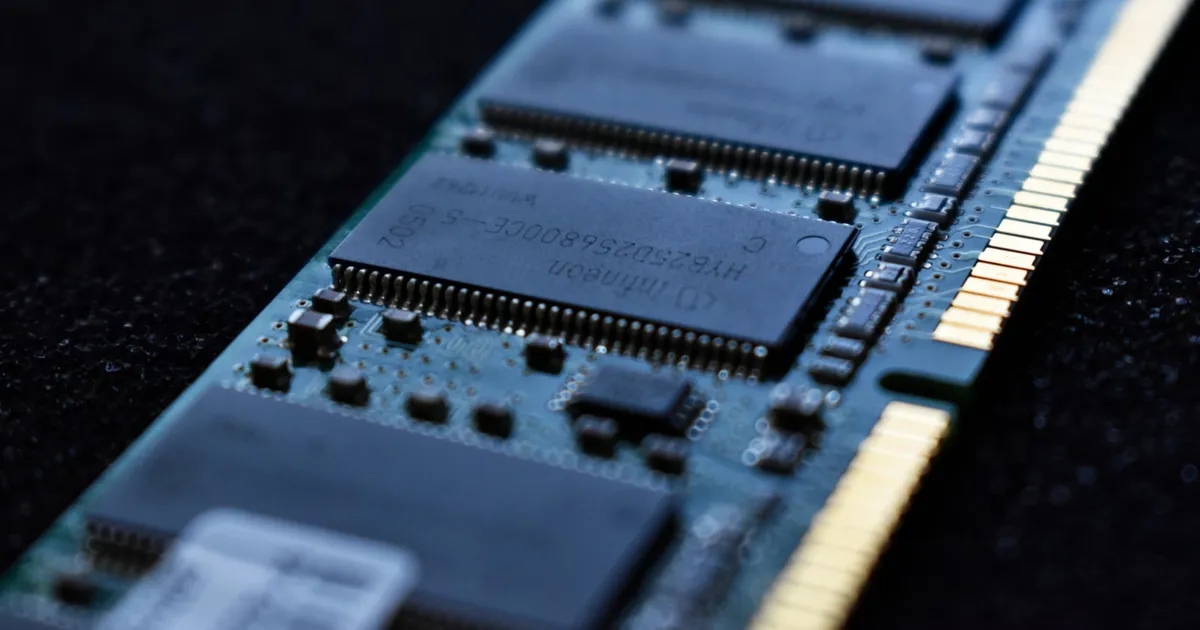
The most crowded trade in technology just cracked. On Tuesday, July 28, 2026, South Korea’s benchmark KOSPI index plunged roughly 10.8% to close at 6,023.66, its steepest single-day drop in more than four months, and triggered two consecutive circuit breakers — a halt of trading that, according to exchange records, had never happened twice in a single session in the index’s history. The memory-chip giants at the heart of the artificial-intelligence buildout led the collapse: Samsung Electronics fell about 13.4% and SK Hynix dropped roughly 14.7% in Seoul.
The rout was not confined to Korea. Across the AI memory complex — Micron, SK Hynix and Sandisk — shares have now fallen 30% or more from their recent highs and, as of midweek, were still sliding. The KOSPI has shed roughly 29% over the past month, formally entering bear-market territory after a boom that had made memory stocks among the best performers on the planet.
A crash without a fundamentals collapse
The most striking feature of the selloff is what did not cause it. The memory makers are not reporting weak results — they are reporting record ones.
SK Hynix posted its second-quarter numbers on July 28, the same day its stock cratered. Revenue surged 257% year over year to a record 79.3 trillion won, the company reported an operating margin in the neighborhood of 76%, and it confirmed that its next-generation HBM4 memory had entered mass production. Management raised full-year capital-expenditure guidance into the high-40-trillion-won range, said it had signed multi-year supply agreements with around ten customers, and guided that third-quarter DRAM shipments could rise another 10%. It was, by almost any measure, a blowout — and it was met with one of the worst single-day declines the stock has seen.
Pricing tells the same paradoxical story. Far from softening, memory prices are still climbing: third-quarter contract prices for DRAM are reportedly settling 20% to 30% higher this month. The physical market remains tight, with high-bandwidth memory largely sold out well into future production quarters. This is a valuation event, not a demand event — a reset of the extraordinary multiples investors had assigned to memory names, not a sign that the chips have stopped selling.
What broke the thesis
For most of the past two years, the bull case for memory rested on a single word: scarcity. HBM production had sold out years in advance as demand for AI accelerators exploded, letting suppliers command premium prices while investors rewarded them with premium valuations. Some memory names had climbed more than 600% on that shortage narrative. When a thesis is that stretched, it does not take a catastrophe to unwind it — only a change in the story.
Two catalysts supplied that change. The first was China. Reports that Chinese firms had reached mass production of DUV lithography tools — a key step toward domestic chipmaking independence — landed at the same time that memory maker CXMT surged more than 460% on its Shanghai debut, raising billions and signaling that Chinese memory supply is arriving faster than bulls had assumed. Together they punctured the idea that the shortage would persist indefinitely.
The second is a shift in where the AI money is going. Hyperscalers are increasingly redirecting incremental AI budgets toward power infrastructure, liquid cooling and custom silicon, shrinking memory’s share of each additional dollar of AI capital spending. Add aggressive capacity expansion from the memory makers themselves — SK Hynix’s own capex hike is part of the picture — and the market began to price in the end of the shortage even as the current quarter’s prices kept rising.
The unwind of a supercycle trade
The selloff is best understood as the market re-rating a story it had bid to euphoric levels. The AI memory supercycle thesis was always a bet that scarcity would last long enough to justify valuations more typical of a monopoly than a commodity cyclical. Memory is, historically, one of the most brutally cyclical corners of technology — periods of shortage and fat margins give way to gluts and losses with grim regularity. What changed in 2026 was the belief that AI had broken that cycle. The past week is the market reconsidering that belief.
That reconsideration has been violent because of how concentrated the trade had become. When the same handful of names carry an outsized share of an index’s gains, the exits are narrow. The back-to-back KOSPI circuit breakers were the mechanical expression of that crowding: too many holders trying to reduce exposure to the same few stocks at once. The episode echoes, at far greater intensity, the rotation out of chip stocks that preceded Big Tech’s earnings week — a market that had grown wary of paying peak multiples for peak-cycle earnings.
Will it cross the Pacific?
The immediate question for U.S. investors is contagion. American memory and memory-adjacent names — Micron and Sandisk chief among them — have already been dragged into the decline, and the broader worry is whether the unwind spreads to the wider AI trade. The Nasdaq has been pushed toward correction territory amid what one report characterized as “a lot of panic around the AI investment.” The mechanism to watch is sentiment: if investors conclude that memory’s re-rating is a preview of a broader AI valuation reset, the selling could migrate from memory to accelerators to the hyperscalers themselves.
The counterargument is that memory is a special case. Its extreme cyclicality and its unusually stretched valuations made it uniquely vulnerable, and record prices plus sold-out capacity suggest the underlying demand for AI compute remains intact. In that reading, the memory crash is a healthy purge of the froth in one overheated sector rather than the leading edge of a market-wide reckoning.
What it means
This is a valuation reset, not a demand collapse — and the distinction is everything. Memory makers are posting record revenue, mass-producing next-generation HBM, and watching contract prices rise 20% to 30%. What fell was the multiple investors were willing to pay, not the business itself. The bull case that scarcity would last forever met the reality that supply always eventually responds, and the correction from a 600% run was correspondingly brutal.
China accelerated a reckoning that memory’s own cyclicality made inevitable. Domestic DUV production and CXMT’s blockbuster debut did not create the vulnerability; they exposed it. A sector priced for permanent shortage was always going to reprice the moment new supply looked credible, and China supplied the catalyst. The lesson is an old one dressed in AI clothing: memory is a commodity cyclical, and treating it as anything else invites exactly this kind of unwind.
The risk now is psychological contagion. The memory crash matters most if the market decides it is a template for the rest of the AI trade. So far the damage is concentrated in the sector with the most extreme valuations and the deepest cyclicality — but with the Nasdaq flirting with a correction, the line between a contained purge and a broader AI selloff is thinner than it was a week ago.
What to watch next: whether U.S. memory names stabilize or keep sliding once the Asian session’s forced selling clears; whether DRAM and HBM contract prices hold their gains into the fourth quarter, which would validate the “fundamentals intact” case; and whether the panic stays boxed in memory or leaks into accelerators and the hyperscalers whose capex has underwritten the entire boom.
Tagged
Keep reading
 Kurumi · · 6 min read
 Korea Chip Exports Hit Record in August, Up 209%
South Korea's chip exports jumped 209% in August 2026 to a record $46.65B — nearly half of all exports — as hyperscaler AI spending drove demand.
 Kurumi · · 5 min read
 Samsung, SK Hynix Rally as KOSPI Chip Rebound Builds
The KOSPI jumped 3.7% as Samsung rose 6.7% and SK Hynix 5.5%, powered by a Temasek investment report, shareholder-return hopes and fading AI capex fears.
 Kurumi · · 5 min read
 Korea July Exports Jump 63% on Record Chip Shipments
South Korea's July exports rose 62.8% to $98.89B, the second-highest ever, as chip shipments jumped 179% on AI memory demand, trade ministry data showed.