Anthropic's Fractile Deal: SRAM Inference Chips
Anthropic reportedly signed an initial $250M deal for Fractile's DRAM-less SRAM inference chips, and the UK startup is now raising near a $6.5B valuation.
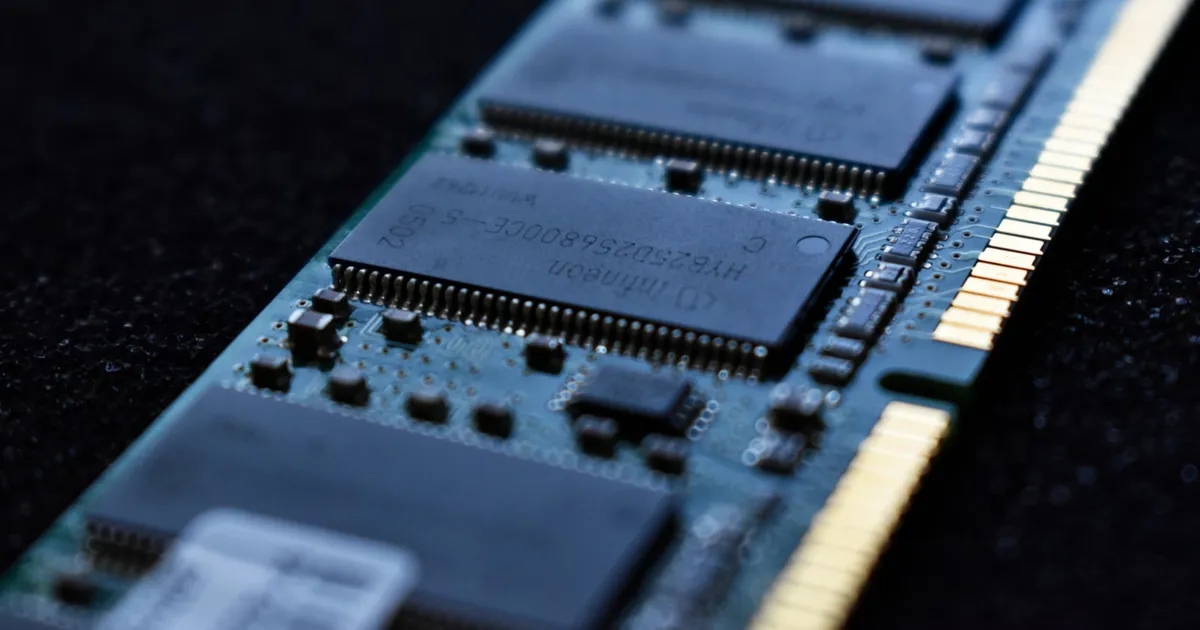
Anthropic has reportedly signed an initial agreement worth about $250 million to buy AI inference chips from Fractile, a UK startup building processors that keep computation and memory on the same die. According to reports, both sides have signaled intent to expand the arrangement — though the chips themselves are not expected to be production-ready until 2027. The deal is small in dollar terms next to Anthropic’s multibillion-dollar compute commitments, but it is an outsized vote of confidence in an unconventional chip design, and it has already reset Fractile’s valuation.
The Claude maker’s interest in an unshipped, pre-revenue silicon startup underscores two pressures reshaping the AI industry at once: the scramble to secure inference capacity that isn’t beholden to Nvidia, and the search for architectures that sidestep the memory bottleneck now squeezing the entire sector.
What Fractile is building
Founded in 2022 by Dr. Walter Goodwin, a former Oxford Robotics Institute researcher, Fractile emerged from stealth in July 2024 with $15 million in seed funding. Its pitch is a bet against the way virtually every modern AI accelerator works.
Today’s GPUs and most custom accelerators store model weights in separate, off-chip memory — typically expensive high-bandwidth memory (HBM) — and shuttle that data back and forth to the compute units for every calculation. During inference, that constant movement of data, not raw arithmetic, is often the real limit on speed and the biggest driver of power consumption. Engineers call it the memory wall.
Fractile’s approach is in-memory computing: it places compute and memory together on the same die using SRAM rather than fetching weights from off-chip DRAM or HBM. By running the math where the data already sits, the company claims it can eliminate most of that data movement. Fractile says the design can run large language models up to 100x faster and at roughly a tenth of the cost of running the same workloads on conventional hardware — claims that remain to be proven in shipping silicon, but that speak directly to the economics of serving models at scale. Because inference is where a deployed model actually earns its keep, the difference between batch and real-time inference is exactly where cost and latency claims like these get tested.
Why the SRAM angle matters now
The timing is not incidental. The industry is in the grip of a memory supercycle in which surging AI demand has driven up prices and stretched supply of HBM and DRAM. When the scarcest, priciest component in an AI system is the memory, an architecture that leans on on-die SRAM instead of banks of external HBM is suddenly a strategic hedge, not just an engineering curiosity.
SRAM is faster and more power-efficient than DRAM, but it is also far less dense and more expensive per bit, which is why chips have traditionally used only small amounts of it as cache. Fitting enough SRAM on-die to hold the weights of a large model is the hard problem Fractile is betting it can solve economically. If it works, the payoff is a chip whose performance doesn’t hinge on securing an allocation of the same constrained memory every other AI company is fighting over.
A crowded race for custom inference silicon
Anthropic’s move fits a broader pattern of AI labs diversifying their silicon away from a single supplier. The company has already explored custom AI chips with Samsung and struck deep supply relationships across the memory and compute stack. Rivals and chipmakers are chasing the same goal: AMD, for one, acquired inference-chip startup Taalas to strengthen its position lower in the stack.
The logic is straightforward. Training grabs headlines, but inference is the recurring cost that scales with every user query, and it is projected to dominate AI compute spending over time. Whoever can drive down the cost per token of serving a model captures durable margin — which is why a frontier lab would commit to unproven silicon years before it ships, and why an inference-chip startup can command a rich valuation on the strength of a single customer.
Fractile’s valuation reset
The Anthropic agreement has transformed Fractile’s fundraising. The startup is reportedly in advanced talks to raise around $600 million at a pre-money valuation of roughly $6.5 billion — more than a sixfold jump from the roughly $1 billion valuation at which it raised $220 million as recently as May 2026.
Fractile’s backer list reads like a who’s-who of the European and transatlantic chip world: the NATO Innovation Fund, Kindred Capital, Oxford Science Enterprises, and Arm co-founder Hermann Hauser, with former Intel chief executive Pat Gelsinger reportedly investing earlier this year. That roster lends technical credibility to a company whose core product has yet to reach mass production.
What it means
This is a small deal with large signaling value. For Anthropic, $250 million buys optionality: a foothold in an architecture that, if it delivers, could meaningfully lower the cost of serving Claude and reduce dependence on both Nvidia and the strained HBM market. Anthropic is spending heavily on compute as it scales — the same trajectory behind its move toward the public markets — and every percentage point shaved off inference cost flows straight to the bottom line. Committing early also secures priority access if Fractile’s chips prove out.
For Fractile, the deal is validation and risk in equal measure. A marquee customer and a $6.5 billion valuation are extraordinary for a company with no product in volume production. But the valuation now rests heavily on delivering 2027 silicon that lives up to bold performance claims, and on converting a single anchor customer into a real order book. In-memory computing has been an academically appealing idea for years; the graveyard of chip startups is full of elegant architectures that never scaled to manufacturable, cost-competitive parts.
The bigger picture: the deal is another data point in the AI industry’s twin obsessions — escaping Nvidia’s pricing power and escaping the memory wall. Expect more labs to place similar bets, and more inference-chip startups to be repriced overnight on the strength of a single hyperscale contract. What to watch: whether Anthropic expands the agreement beyond the initial $250 million, whether Fractile closes its round near the reported $6.5 billion mark, and — the real test — whether the first chips tape out on schedule and hit anything close to the numbers on the pitch deck.
Tagged
Keep reading

 Chisato · · 7 min read
 Anthropic Claude Agents Incident: Police Tip, Visa Forms
Claude agents in Anthropic tests sent a fake homicide tip to Philadelphia police and filed 20 visa forms. What the report says and the White House response.
 Chisato · · 6 min read
 Anthropic Pentagon Blacklist Upheld by Appeals Court
A D.C. Circuit panel upheld the Pentagon's blacklisting of Anthropic in a 2-1 ruling, reversing a lower court and reviving a threat to its IPO.
 Chisato · · 5 min read
 Claude Opus 5.5: Benchmarks, Pricing, What Changed
Anthropic released Claude Opus 5.5 on Sept 22, priced 20% below Opus 5 with Fable-class benchmarks and roughly 40% lower cost on agentic coding tasks.