AMD Buys Taalas: AI Models Etched Into Silicon
AMD is acquiring Taalas, a Toronto startup that hardwires AI model weights into custom chips for far faster inference. What the deal means for the Nvidia race.
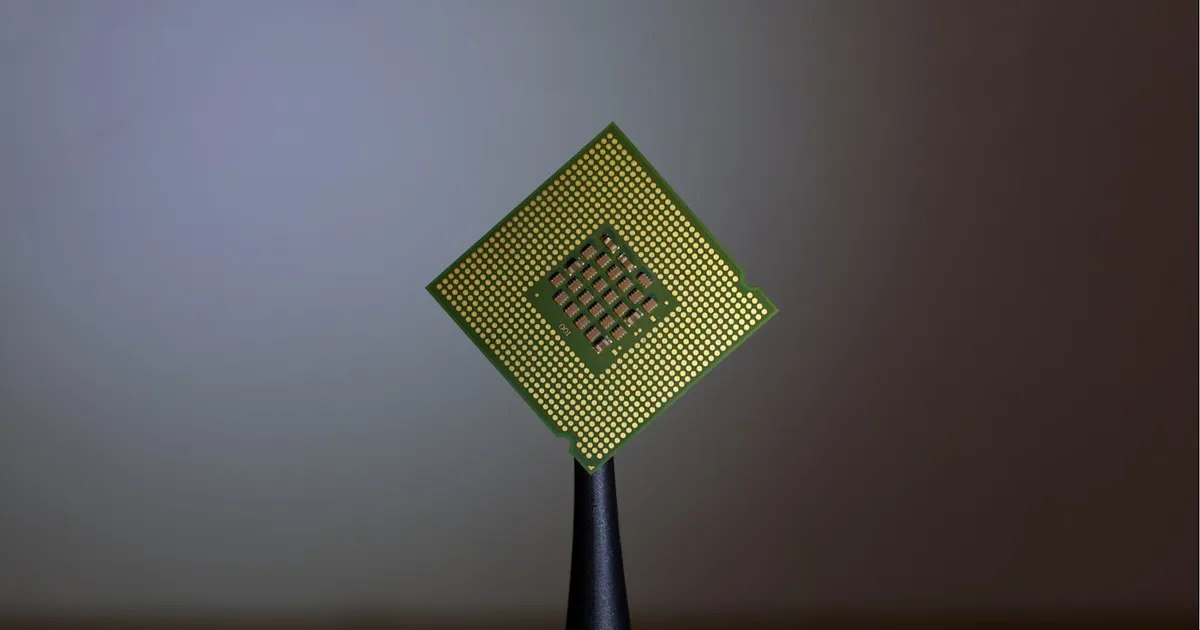
AMD is buying a startup that wants to make the memory wall irrelevant. On Thursday, August 6, 2026, AMD said it had agreed to acquire Taalas, a Toronto-based chip startup whose designs etch an AI model’s weights permanently into the transistors of a custom chip — eliminating the constant memory reads that set the speed ceiling on every GPU-based inference system running in production today. AMD declined to disclose the purchase price. The transaction is expected to close in the fourth quarter of 2026.
The bet is narrow and aggressive. A conventional accelerator — an AMD Instinct part, an Nvidia GPU — is a general-purpose engine that streams billions of model parameters back and forth from high-bandwidth memory on every token it generates. Taalas throws that flexibility away. It bakes one model into one piece of silicon, trading the ability to run anything for the ability to run one thing far faster and at a fraction of the energy. For a company whose entire AI strategy has been built around competing with Nvidia on flexible, rack-scale GPU systems, it is a deliberate hedge on a very different idea of what inference hardware should look like.
What Taalas actually built
Taalas was founded in 2023 by Ljubisa Bajic, a veteran chip architect who previously founded AI-chip startup Tenstorrent and spent years at AMD, alongside other former Tenstorrent and AMD engineers. On the company’s site, Bajic describes Taalas as having “developed a platform for transforming any AI model into custom silicon.”
The core idea is to treat a trained neural network the way a chip designer treats a circuit. Instead of storing weights in external HBM and fetching them on demand, Taalas hard-codes those weights into the logic and on-chip SRAM of a model-specific integrated circuit. Because the parameters live physically inside the chip, next to the compute, the design sidesteps the memory-bandwidth bottleneck — the so-called memory wall — that dominates the cost and latency of large-model inference.
The performance claims are the headline. Taalas’s first test chip, HC1, was built on TSMC’s 6-nanometer process and served Meta’s Llama 3.1 8B at close to 17,000 tokens per second for a single user — many multiples of what comparable GPU hardware delivers on the same model. A second chip, HC2, targets models of roughly 20 billion parameters.
The obvious objection is manufacturing economics: if every model needs its own chip, doesn’t that make each one a slow, expensive custom project? Taalas’s answer is that its design flow customizes only about two metal layers out of roughly 100 per model, leaving the rest of the design fixed. That, the company says, lets it turn a new model-specific chip at TSMC in about two months — fast by the standards of custom silicon, where full designs routinely take a year or more.
Why AMD wants it
AMD framed the deal around a simple market observation: inference, not training, is becoming the dominant AI workload, and inference is where cost-per-token and energy efficiency matter most. As models get deployed to hundreds of millions of users, the economics shift from “how fast can we train this” to “how cheaply can we serve it a billion times a day.”
AMD plans to fold Taalas’s technology into its Helios rack-scale systems, the reference platform it has been assembling to sell full AI racks rather than loose chips. In that vision, Taalas-style model-specific accelerators would sit alongside AMD’s Instinct GPUs and EPYC CPUs — the GPUs handling training and flexible, fast-changing workloads, and the hardwired chips handling high-volume serving of stable, popular models where the extra speed and efficiency pay for the loss of flexibility.
The acquisition is the latest in a string of AI-related deals AMD has made to build out that rack strategy, following earlier moves to strengthen its networking, software, and systems capabilities. For a fuller picture of how AMD’s core accelerator roadmap stacks up against its rival, see our breakdown of the AMD MI400 versus Nvidia, and for the financial backdrop, AMD’s recent record Q2 2026 earnings.
The tradeoff nobody can wish away
The strength of the Taalas approach is also its constraint: a chip built around one set of weights can only ever run that model. In a field where a state-of-the-art model can be superseded in months, committing silicon to a specific set of parameters is a real risk. A two-month fabrication turnaround softens the problem — you can spin a new chip when a model updates — but it does not erase it. The chip is only economical if the model it embeds stays in heavy demand long enough to amortize the design and fabrication cost.
That is why the technology fits inference and not training, and why it fits popular, stable models best of all. The workloads that justify a custom chip are the ones running at enormous scale for long stretches: a widely deployed open-weight model, a company’s core production model, a foundation model serving a mature product. For the frontier — where the model of the month keeps changing — flexible GPUs remain the right tool. The distinction between when you want batch versus real-time inference is exactly the kind of workload-shape question that decides whether hardwired silicon makes sense.
The competitive picture
Nvidia’s dominance rests on a general-purpose GPU plus the CUDA software moat, and its roadmap — the Rubin platform and successors — keeps pushing raw memory bandwidth and interconnect to feed ever-larger models. That is a bet that flexibility and scale win. AMD, trailing in that race, is now buying an option on a different bet: that a meaningful slice of inference demand will migrate to fixed-function silicon where the memory wall simply does not apply.
It is not the only company thinking this way. A cohort of inference-focused startups has spent the past few years arguing that general-purpose GPUs are overkill for serving stable models, and that specialized architectures can beat them on tokens-per-dollar and tokens-per-watt. What is new is a top-tier chipmaker with its own fabs relationships, its own rack platform, and its own GPU line buying that thesis outright and pledging to ship it inside mainstream systems.
For AMD, the strategic logic is also defensive. If model-specific silicon does capture a chunk of high-volume inference, AMD would rather own the technology than watch a startup — or a hyperscaler building its own — take that business. The largest cloud providers already design custom inference chips in-house; owning Taalas gives AMD a credible answer to sell against those internal programs.
What it means
The Taalas deal is small in dollar terms and large in what it signals. AMD is publicly conceding that the GPU is not the final form of AI inference hardware — and positioning itself to sell whatever comes next, rather than defending the GPU as the only answer. That is a notably different posture from the “our GPU is faster than their GPU” framing that has defined the AMD–Nvidia contest so far.
Who wins if it works: operators running large, stable models at scale — the hyperscalers and large enterprises whose inference bills now run into the billions. Hardwired silicon promising many-fold better tokens-per-watt directly attacks the operating cost that increasingly dominates AI economics, a pressure we traced in our look at AI data center economics. If Taalas’s numbers hold in production, the appeal to anyone serving a fixed model at volume is obvious.
Who’s exposed: the pure-play inference-chip startups, who now face a well-capitalized incumbent validating and competing in their category — and, at the margin, the general-purpose GPU business itself, if fixed-function parts peel off the highest-volume serving workloads. Nvidia’s moat is deepest at the frontier, where models change fastest; it is thinner in the steady-state serving tier that Taalas targets.
What to watch next: three things. First, whether AMD can integrate Taalas’s design flow into Helios and ship a customer-facing product rather than a demo — integration risk in custom silicon is real, and a two-month turnaround claim is easy to make and hard to sustain at volume. Second, whether the tokens-per-second figures survive contact with production models larger than 8 billion parameters, where the on-chip memory budget gets tight. Third, whether any large customer publicly commits to hardwired inference; without a marquee deployment, the deal stays a research bet. The close is slated for Q4 2026 — the real test comes after, when AMD has to turn a Toronto startup’s demo into a line item on a rack it can actually sell.
Tagged
Keep reading
 Chisato · · 5 min read
 US Expands AI Chip Licenses: AMD Joins China Trade
New export licenses let ZTE and a Kingsoft unit buy Nvidia H200 and, for the first time, AMD AI chips. AMD jumped 6%. The details and what it means.
 Chisato · · 6 min read
 US Moves to Block China's Remote AI Chip Access
The Commerce Department is drafting a rule to stop Chinese firms from renting banned Nvidia AI compute through data centers in third countries.
 Kurumi · · 5 min read
 Marvell Q2 Earnings: Record $2.74B, Raised Guidance
Marvell posted record Q2 FY2027 revenue of $2.74B on a 46% data center surge, raised its outlook again, and guided Q3 to $3.15B. The numbers and what they mean.