Stock Market Week Ahead: Nvidia, Jackson Hole, PCE
Nvidia reports Wednesday and Fed Chair Warsh makes his Jackson Hole debut alongside July PCE on Friday — a pivotal week that will test the AI trade.
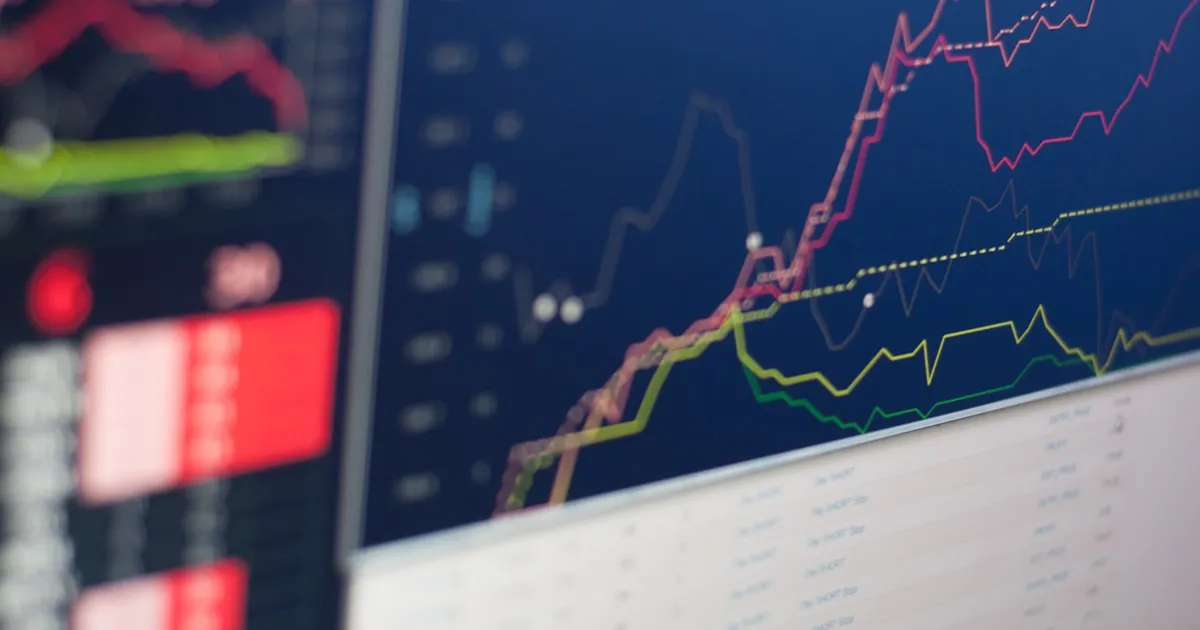
Wall Street opens the week of August 24 with two events that could set the market’s direction into the autumn: Nvidia’s quarterly results on Wednesday and Federal Reserve Chair Kevin Warsh’s first Jackson Hole keynote on Friday, delivered the same morning the Fed’s preferred inflation gauge lands. Between them sits a stretch of macro data — a revised read on second-quarter GDP, durable-goods orders, and consumer sentiment — that will test whether the AI-powered rally can hold near record territory.
The setup follows a rough five sessions. The S&P 500 closed Friday at 7,674.37, up 0.43% on the day but down 1.4% for the week; the Nasdaq Composite finished at 26,180.45, also up 0.43% on Friday but off roughly 2% on the week as investors trimmed exposure to the megacap technology names that have driven 2026’s gains. After months in which every dip was bought, the pullback set a more cautious tone heading into the calendar’s biggest catalysts.
Nvidia headlines a make-or-break earnings print
Nvidia reports fiscal second-quarter results Wednesday after the close, and no single number this week matters more to the tape. Analysts broadly expect revenue in the $93 billion to $95 billion range against the company’s roughly $91 billion guidance — growth of about 96% year over year — driven by the ramp of its Blackwell-generation accelerators and insatiable data-center demand. Data-center revenue alone topped $75 billion in the quarter that ended in April, a figure that dwarfs the entire quarterly sales of rivals AMD and Intel combined.
The problem for bulls is expectations. Nvidia’s stock has climbed sharply and its valuation already prices in an extended AI build-out, which raises the bar for what counts as a “good” quarter. A beat-and-raise that clears the highest whisper numbers could reignite the rally and lift the whole semiconductor complex; anything that hints at slowing order growth, margin pressure, or a Blackwell supply hiccup could trigger an outsized drop given how much capital is concentrated in the name. As we noted in our Nvidia Q2 FY2027 earnings preview, the report doubles as a referendum on the durability of AI infrastructure spending.
Chip designer Marvell Technology reports the same afternoon, offering a second data point on custom-silicon and networking demand from the hyperscalers. Together the two prints will shape sentiment across the AI-hardware trade for weeks.
Warsh’s Jackson Hole debut
Friday brings the marquee macro event: Fed Chair Kevin Warsh delivers his first keynote at the Kansas City Fed’s Jackson Hole Economic Symposium since taking the job. The speech lands roughly three weeks before the September policy meeting, giving it unusual weight as a signal for the rate path.
Markets will parse Warsh’s tone for how quickly the Fed intends to move on rates, but the subtext is bigger. Warsh arrives at Jackson Hole amid an intense debate over central bank independence, and investors will be listening for any framing of how he views the Fed’s autonomy and its reaction function. A speech read as hawkish — or as signaling political pressure on policy — could unsettle bond markets; a dovish lean that keeps a September cut in play would support risk assets already leaning on cheaper money to justify stretched multiples.
The inflation and growth data
Warsh speaks the same morning the Commerce Department releases the July core PCE price index, the inflation measure the Fed weighs most heavily. A hotter-than-expected print would complicate the case for near-term easing; a benign one would reinforce it. The collision of the Fed’s most important speech and its most important inflation gauge in a single session makes Friday the week’s fulcrum.
The rest of the calendar fills in the growth picture. A revised estimate of second-quarter GDP will show whether the economy grew faster or slower than first reported, durable-goods orders will gauge business investment, and the final read on consumer sentiment will indicate how households are holding up. None individually rivals PCE or Nvidia, but a cluster of soft numbers would revive concerns about a slowing economy just as the AI trade wobbles.
The AI trade under a microscope
What ties the week together is a single question: can the AI rally keep going? The megacap technology and semiconductor names that led the market higher have grown so large that their earnings and guidance effectively set the index’s direction. Nvidia’s results speak to demand; Jackson Hole and PCE speak to the cost of the capital financing that demand. The surge in hyperscaler capital spending has underwritten much of the boom, and that spending is more attractive when borrowing is cheap.
The recent weekly losses show investors are already re-rating the risk. Coming off the retail-earnings and Fed-minutes week, and after an August selloff driven by rising bond yields, the market enters this stretch without the cushion of fresh record highs.
What it means
This is the highest-stakes week of the late summer, and the order of events matters. Nvidia on Wednesday is a microeconomic test — does end demand for AI compute still justify the spending? Friday is a macro test — how expensive will the money financing that spending be, and how independent is the institution setting its price?
The bull case: Nvidia beats and raises, Warsh signals patience with room for a September cut, and July core PCE comes in tame. That combination would confirm both that AI demand is intact and that the Fed is willing to support risk assets, likely sending the S&P 500 and Nasdaq back toward records and lifting the broader chip complex.
The bear case: Nvidia’s guidance disappoints or its margins compress, Warsh strikes a hawkish or politically charged tone, and PCE runs hot. Any two of those would hit the market’s most crowded trade at its most vulnerable point, and the concentration that powered the rally would work in reverse — a sharp, index-wide drop led by the same names that drove the gains.
What to watch: Nvidia’s forward revenue guidance and data-center gross margin (the tells on demand and pricing power); Warsh’s language on the rate path and on central bank independence; and the July core PCE month-over-month figure against expectations. With so much index weight riding on a handful of tickers, the reaction to these events will say as much about market structure as about the underlying news. Expect volatility — and position sizes — to reflect it.
Keep reading

 Kurumi · · 6 min read
 Stock Market Week Ahead: CPI, Oracle, Apple Event
A holiday-shortened week brings August CPI on Friday, Oracle and Adobe earnings Thursday, and Apple's iPhone event Wednesday. What to watch.
 Kurumi · · 4 min read
 August Jobs Report: 162K Beat Revives Fed Hike Bets
US payrolls rose 162,000 in August, nearly triple forecasts. The hot print pushed the 2-year yield to a 2025 high and lifted odds of a September Fed rate hike.
Kurumi · · 5 min read Snowflake Q2 FY2027 Earnings: Revenue, Guidance, Stock
Snowflake Q2 FY2027 product revenue rose 37% to $1.49B and full-year guidance was raised, sending shares up over 20%. The key numbers and outlook.