Qualcomm Chip Price Hike: What It Means for Phones
Qualcomm will raise Snapdragon chip prices by double digits on Sept. 1, 2026, blaming a memory cost surge. Here's the earnings context and the hit to phone buyers.
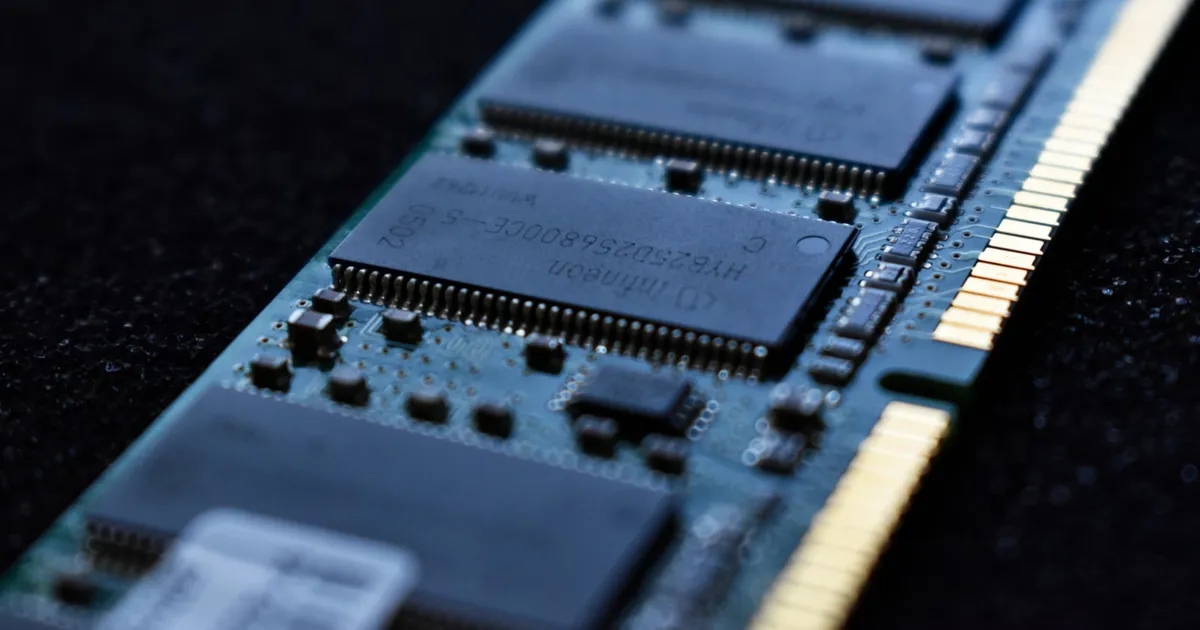
The memory shortage that has rattled the technology supply chain for months is now about to show up on the price tag of your next phone. On its fiscal third-quarter earnings call on July 29, 2026, Qualcomm confirmed it will raise prices on most of its chips by double-digit percentages starting September 1, with chief executive Cristiano Amon telling analysts that costs have gone up and prices will follow. The move all but guarantees higher hardware costs for the Android brands and laptop makers that rely on Snapdragon processors.
What Qualcomm reported
Qualcomm’s results for fiscal Q3 2026 were a study in mixed signals. Revenue came in at roughly $9.95 billion, ahead of the roughly $9.69 billion analysts expected, but non-GAAP earnings per share of $2.21 narrowly missed consensus near $2.22–$2.23. Profit fell sharply year over year — by about a quarter, according to reporting on the quarter — as higher input costs compressed margins.
The pain was concentrated in the core handset business. QCT handset revenue fell about 20% year over year to roughly $5.09 billion, squeezed by memory-supply constraints, higher input costs, and softer demand from Chinese smartphone makers. Management said the Android handset weakness alone carried an EPS impact exceeding $1.50. Bright spots came from diversification: the company cited record automotive revenue, reported up sharply, and continued progress toward its data-center ambitions, an area where it is trying to build a business measured in the billions.
For the current period, Qualcomm guided fiscal Q4 2026 revenue to $9.7 billion–$10.5 billion and non-GAAP EPS to $2.05–$2.25 — a cautious range that reflects both the cost pressures and a previously flagged decline in modem revenue from its largest customer.
Why prices are going up
The proximate cause is memory. A prolonged surge in the price of DRAM and other memory components — driven by AI data-center demand vacuuming up supply — has rippled outward from servers into consumer devices. Qualcomm buys memory and packaging as part of its chip modules, and management said it can no longer absorb the increases across wafer fabrication, memory, assembly, and advanced packaging.
Amon framed the decision plainly: costs have risen, so prices will rise as well, effective September 1, while the company continues to pursue supply-chain efficiencies. Executives characterized the increase as double-digit but described it as modest relative to the underlying memory cost inflation — small enough, they argued, that it is “not expected to fundamentally change premium-tier volume.” In other words, Qualcomm is passing along a fraction of the cost shock and eating the rest, at least for now.
The dynamic is not unique to Qualcomm. The same memory squeeze has surfaced across the industry, from the memory supercycle that has lifted DRAM and HBM makers to the volatility that has whipsawed component suppliers all year. Qualcomm is simply one of the first large chip vendors to put a date and a number on the pass-through to customers.
Who absorbs the increase
Qualcomm sells its Snapdragon processors to device makers, not consumers, so the first to feel the hike are the phone and PC brands that build around them. A double-digit increase on the most expensive component in a flagship phone is difficult to swallow without either compressing already-thin hardware margins or raising retail prices — and analysts widely expect at least some of it to reach shoppers. Reports on the hike suggest it could push flagship Android phones further past the $1,000 mark heading into the holiday season.
Chinese Android makers, already contending with weaker demand, are especially exposed, and some may shift more volume toward mid-tier chips or negotiate harder on terms. Laptop makers building on Qualcomm’s PC silicon face the same math, arriving just as the Windows-on-Arm ecosystem has been gaining momentum and trying to establish itself against x86 incumbents on price as well as battery life. A pricier core chip narrows that opening.
The timing is awkward for the whole Android hardware channel. The September 1 effective date lands ahead of the fall product cycle, meaning devices launching for the holidays will be among the first designed around the higher component cost.
The broader supply-chain squeeze
Qualcomm’s announcement is best read as a symptom rather than a standalone event. The memory market has been the epicenter of the year’s most violent moves in semiconductors — a boom for suppliers, a cost shock for buyers, and a source of repeated whipsaws in chip equities. The strain has already shown up in earnings across the complex, from memory makers riding record demand to device-adjacent companies warning about input costs, and it has fed sharp swings in names like Micron, whose stock has lurched with every data point.
That backdrop matters because it determines how durable Qualcomm’s increase is. If memory prices ease as new capacity comes online, the surcharge could prove temporary. If the AI-driven demand for memory persists — as many in the industry expect through at least the next several quarters — then September’s hike may be the first of several, and not just at Qualcomm. Component cost inflation that starts in the data center is now demonstrably reaching the consumer, and pricing power is shifting toward whoever controls scarce memory supply.
What it means
For consumers, the message is straightforward: the AI-infrastructure boom is no longer an abstraction confined to hyperscaler capital budgets. It is arriving as higher prices on mainstream devices. Buyers weighing a flagship Android phone or an Arm-based laptop this fall should expect less aggressive pricing than in prior cycles, and in some cases outright increases. The squeeze is broad enough that switching brands offers limited relief, since most premium Android devices share the same Snapdragon supply.
For Qualcomm, the quarter captures a company in transition. The handset core is shrinking under cost pressure and the looming loss of modem revenue from its largest customer, while automotive and data-center bets are growing but not yet large enough to offset the decline. Raising prices protects margins in the short run, but it also risks accelerating customers’ search for alternatives — whether in-house silicon at the largest phone makers or rival suppliers — at exactly the moment Qualcomm is trying to prove it can diversify beyond smartphones.
For the industry, the announcement is a clean data point on how the memory shortage propagates. The cost shock that began with AI data centers competing for DRAM and high-bandwidth memory is now being formally passed down the chain to device makers, and from there toward shoppers. Watch for other chip vendors to follow with their own increases, for phone brands to signal holiday pricing in the coming weeks, and for the next round of memory-market data to tell whether this is a one-time adjustment or the start of a sustained climb. If it is the latter, September 1 will be remembered as the day the AI boom started charging consumers directly.
Tagged
Keep reading
 Kurumi · · 5 min read
 Marvell Q2 Earnings: Record $2.74B, Raised Guidance
Marvell posted record Q2 FY2027 revenue of $2.74B on a 46% data center surge, raised its outlook again, and guided Q3 to $3.15B. The numbers and what they mean.
 Kurumi · · 5 min read
 SMIC Q2 2026 Earnings: Profit Jumps 262%, Stock Rises
SMIC's Q2 profit surged 262% to $479M as revenue rose 36% and margins expanded, sending the Chinese foundry's Hong Kong shares up as much as 6.4%.
Kurumi · · 5 min read Applied Materials Q3 2026 Earnings: Record Revenue Beat
Applied Materials posted a record $9.12B in Q3 revenue, up 25%, and guided Q4 to $10.25B as AI chip demand lifts its 2026 equipment outlook above 30%.