Apple Mac Studio M5 Ultra and Mac mini M6: Specs, Price
Apple refreshed the Mac Studio with M5 Max and M5 Ultra and the Mac mini with M6, adding up to 512GB of unified memory and big on-device AI gains. What to know.
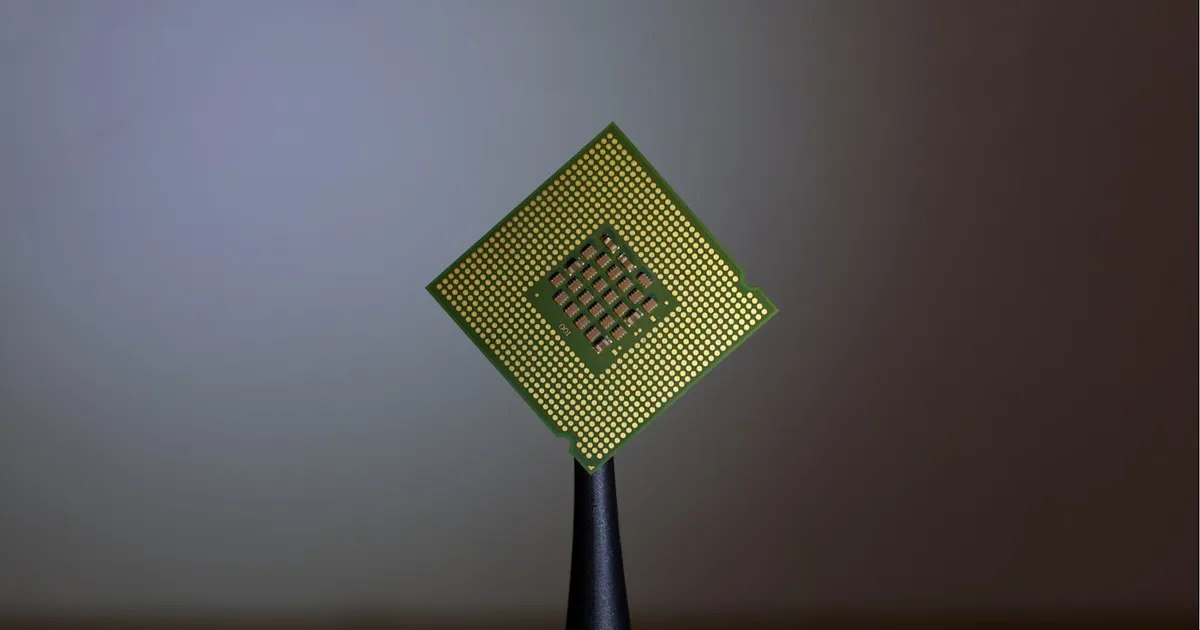
Apple refreshed its desktop lineup on August 25, introducing a new Mac Studio built around the M5 Max and an all-new M5 Ultra, alongside a Mac mini powered by the M6 and M5 Pro chips. The update arrived without a keynote — a press release drop rather than a stage event — but the headline is unambiguous: Apple is pushing on-device AI memory and throughput hard, topping out at 512GB of unified memory on the Mac Studio, enough to hold very large models entirely in local RAM.
Mac Studio: M5 Max and M5 Ultra
The new Mac Studio comes in two tiers. The M5 Max configuration starts at $2,499, while the range-topping M5 Ultra starts at $5,499. Apple says the machine delivers up to 4.3x faster AI performance, up to 2x faster storage, up to 1.8x faster graphics, and up to 1.3x faster CPU speed versus the prior generation.
The M5 Ultra — Apple’s largest chip, formed by fusing two Max dies over the company’s UltraFusion interconnect — supplies 1.2TB/s of unified memory bandwidth and can be configured up to 512GB of unified memory. That memory ceiling is the story for AI developers: with 512GB addressable by both CPU and GPU cores, a Mac Studio can run inference on models that would otherwise require a multi-GPU server, without the high-bandwidth memory partitioning and cross-device transfers that complicate discrete-GPU setups.
Pre-orders opened August 25, with most configurations shipping from September 22. The top-end 512GB build is the exception: Apple is not taking pre-orders for it yet, and it is not expected to ship until late October, with U.S. pricing reported to start well above $10,000.
Mac mini: M6 and M5 Pro
The Mac mini gets Apple’s newest silicon generation before the Studio does — the M6, the first chip in the M6 family to ship — with an M5 Pro option above it. Apple says the M6 Mac mini delivers up to 4x faster AI performance, 2x faster storage and graphics, and 40% faster CPU performance than its predecessor. Pricing starts at $899 for the 256GB storage model, rising to $1,099 with 512GB of storage.
The generational split — M6 in the entry Mac mini, M5-series in the pro desktop — reflects Apple’s staggered rollout, where lower-power chips reach volume first and the large, multi-die parts follow. For most buyers the practical takeaway is that the least expensive Mac desktop now carries the newest architecture, while the workstation-class machine trades bleeding-edge node for maximum memory and core count.
How Apple builds an Ultra
The M5 Ultra exists because of a packaging trick Apple has leaned on since the M1 generation. Rather than design a separate, enormous die, Apple fuses two M5 Max chips together over UltraFusion, a die-to-die interconnect that carries enough bandwidth to make the two halves behave, to software, as a single chip with one pool of memory. That approach lets Apple reuse the Max die — which it already manufactures in volume for laptops and the lower Studio tier — instead of taping out a distinct top-end part, and it explains why the Ultra always trails the Max to market rather than launching alongside it.
The payoff is the memory system. Because Apple silicon uses unified memory — a single pool addressable by CPU, GPU, and neural-accelerator cores without copying data between them — the 512GB ceiling and 1.2TB/s of bandwidth on the M5 Ultra are available to every part of the chip at once. On a conventional workstation, a model larger than a single GPU’s memory must be sharded across multiple cards, with the interconnect between them becoming the bottleneck. On the Studio, a 200-billion-parameter model quantized to fit in a few hundred gigabytes simply loads into RAM. That architectural difference, not raw FLOPS, is what has made high-memory Macs a niche favorite for local AI work.
The on-device AI angle
Every performance figure Apple led with was an AI number, and that is not an accident. The company has spent two years repositioning Apple silicon around local inference, and the Mac desktops are now its most capable machines for running foundation models without a cloud round-trip. The 512GB unified-memory Studio is squarely aimed at developers and researchers who want to run large open-weight models locally — for privacy, latency, or cost — rather than renting cloud accelerators by the hour.
Apple’s neural accelerators, built into the GPU cores of the M5 generation, handle the matrix math that dominates transformer inference. The pitch is that a single desktop under a desk can serve as a private inference box, an angle that has quietly made high-memory Macs a favorite among developers building with local models. It also dovetails with Apple’s broader software strategy, including the on-device and hybrid approach behind its AI features and its recent moves to expand model availability, such as approval to use Alibaba’s Qwen models in China.
Who these machines are for
The refresh sharpens a division of labor across Apple’s desktop range. The Mac mini at $899 is the volume machine — a small, cheap, quiet box that now happens to carry the newest silicon generation, aimed at general users, developers, and the server-closet and home-lab crowd who buy them by the rack. The Mac Studio is the specialist: a workstation for video editors, 3D artists, engineers, and, increasingly, AI practitioners who need the memory ceiling.
That last group is the one Apple is most visibly courting. A researcher fine-tuning or serving a large open-weight model has, until now, faced a choice between renting cloud accelerators — metered, shared, and subject to data-egress and privacy constraints — or assembling a multi-GPU tower. The 512GB Studio offers a third path: a fixed-cost, single-box machine that keeps data local and runs models too large for a single discrete GPU. It will not match a rack of data-center accelerators on raw throughput, and it is not meant to. Its advantage is capacity per watt in a form factor that fits on a desk, drawing a fraction of the power a comparable server would pull. For a narrow but growing slice of buyers, that trade is exactly the one worth making.
What it means
This is an incremental hardware refresh with a strategic subtext. Apple is not competing with Nvidia for data-center AI — it sells no rack systems and trains no frontier models — but it is carving out a defensible niche in local, personal AI compute, where unified memory and power efficiency are structural advantages that discrete-GPU vendors cannot easily match. A 512GB single-box machine that runs large models locally has no clean equivalent in the PC world.
For Apple’s business, the Mac desktop line is a small slice of revenue, and this refresh will not move the needle the way the iPhone or Services do — the Mac was a modest contributor even in Apple’s record-setting recent quarter. But it reinforces the halo: developers building AI tools on Macs deepen the platform’s lock-in, and the “run it locally” story differentiates Apple silicon from commodity x86.
The pricing tells its own story. A top Mac Studio starting well north of $10,000 for the 512GB build signals that Apple sees genuine demand at the high end from the AI-developer segment, and is willing to charge for the memory ceiling. Watch two things next: whether the M6 generation extends up-stack to a future Studio and Pro, and how much of the on-device AI narrative Apple leans into when it eventually gives these machines a proper stage. For now, the quiet drop says the hardware speaks for itself — in AI benchmarks and in gigabytes of memory.
Keep reading
 Chisato · · 5 min read
 OpenAI Buys Tens of Thousands of Macs for AI Agents
OpenAI reportedly bought tens of thousands of Mac minis and Studios to train computer-use agents, while Anthropic rents Apple silicon via AWS.
 The Lycoris Team · · 6 min read
 Apple iPhone 18 Pro Event: Foldable iPhone, New CEO
Apple's September 9 'Surprise and shine' event is set to unveil the iPhone 18 Pro and a first foldable iPhone — the first launch under new CEO John Ternus.
Chisato · · 4 min read What Is a TPU? Tensor Processing Units Explained
A TPU is a chip built specifically for the matrix math behind neural networks, using a systolic array instead of a general-purpose GPU pipeline.