Nvidia, Mitsubishi Heavy Eye AI Data Center Cooling
Nvidia and Mitsubishi Heavy Industries are exploring a partnership on cooling and power systems for AI data centers, targeting the heat and energy bottleneck.
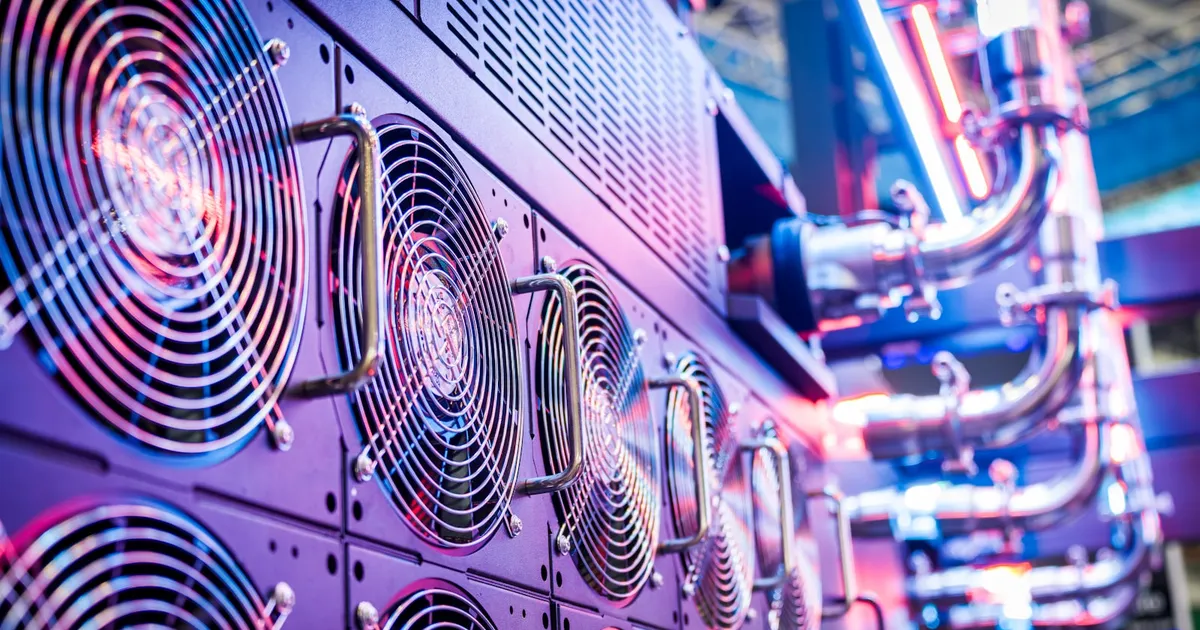
The hardest problem in AI infrastructure is no longer buying the chips — it is keeping them cool and keeping them powered. That reality is behind a reported tie-up between two very different giants. Nvidia and Japan’s Mitsubishi Heavy Industries (MHI) are exploring a partnership under which the industrial conglomerate would supply cooling systems and power equipment for the AI data centers Nvidia is helping stand up worldwide, according to reports published on July 14, 2026 by Nikkei and others. Mitsubishi Heavy shares climbed nearly 5% in early trading on the news.
The discussions are described as preliminary — a cooperation the two sides are “eyeing” rather than a signed contract — but the strategic logic is unambiguous. Modern GPU clusters generate so much heat and draw so much electricity that the buildings housing them look less like server farms and more like industrial power plants. Increasingly, the companies that can solve heat and power at that scale are as important to the AI boom as the companies that design the silicon.
What Mitsubishi Heavy brings
Mitsubishi Heavy Industries is not a chip company. It is a 145-year-old industrial conglomerate whose businesses span power-generation equipment, gas turbines, aircraft components, air conditioning, and heavy machinery. That portfolio maps almost perfectly onto the pain points of a next-generation AI facility. Under the reported arrangement, MHI could supply:
- High-efficiency cooling systems and industrial air conditioning designed for dense, high-heat environments.
- Emergency and backup power equipment to keep clusters running through grid disturbances.
- Energy-management technology to orchestrate power draw across a facility that may pull as much electricity as a small city.
This is not MHI’s first appearance in Nvidia’s orbit. The company showcased high-efficiency power-generation and cooling systems at Nvidia’s GTC 2026 conference in March, and at Data Center World 2026 in April, MHI executive Shinichiro Gomi delivered a keynote arguing that AI data centers must transition to industrial-scale, integrated energy-and-cooling systems — the kind of infrastructure MHI has built for utilities and factories for decades. A formal Nvidia partnership would turn those appearances into a supply relationship.
Why cooling became the bottleneck
For most of the computing era, cooling was an afterthought — a matter of fans and building-scale air conditioning. AI accelerators broke that model. A single rack of Nvidia’s latest Rubin-class GPUs can draw and dissipate more power than an entire aisle of older servers, and the heat concentration has pushed the industry past the limits of air cooling entirely. The frontier is now direct liquid cooling — piping coolant to the chips themselves — and, increasingly, whole-facility thermal engineering that treats the data center as a single heat-and-power machine.
That shift changes who the important suppliers are. When cooling was incremental, hyperscalers handled it in-house. When it becomes an industrial-scale problem — moving megawatts of heat, managing water and refrigerant loops, integrating backup generation — it starts to look like work for the companies that already build power plants and factory climate systems. Nvidia has an obvious interest in making sure that capacity exists: its GPUs are only as valuable as the buildings that can actually run them. The economics are stark. As our teardown of what a gigawatt data center costs laid out, power and cooling now dominate both the capital budget and the operating bill of an AI facility, and they are the constraints most likely to stall a buildout.
Nvidia’s “AI factory” strategy
The reported MHI talks fit a pattern Nvidia has been building for more than a year: positioning itself not merely as a chip vendor but as the architect of complete “AI factories” — full-stack facilities that pair its accelerators with reference designs for networking, power, and cooling, delivered through local partners in each major market. Rather than sell GPUs and leave the rest to the buyer, Nvidia increasingly ships the blueprint for the whole building and lines up the suppliers to construct it.
In Japan, that means partnering with the industrial names that already dominate the country’s power and heavy-equipment sectors. Japan is in the middle of its own aggressive AI buildout, with domestic cloud operators and government-backed programs racing to add sovereign compute capacity. A partner like MHI gives Nvidia a route to supply the physical plant — the cooling loops, the switchgear, the backup generation — that turns a warehouse full of GPUs into a working data center. It is the same instinct visible across the industry’s capital-spending boom: the winners will be the ones who can secure not just chips, but the power and cooling to run them.
The power problem behind the heat
Cooling is only half of what MHI would bring; the other half is power, and power is where the AI buildout is running hardest into physical limits. Every watt delivered to a GPU becomes heat that has to be removed, so cooling and electricity scale together — and both are climbing faster than grids can accommodate. Google’s own disclosure that its electricity use jumped 37% in a single year put a number on the strain, and the backlash is now showing up in policy: New York recently became the first U.S. state to pause new hyperscale data centers over grid and ratepayer concerns.
That is precisely the gap MHI’s power-generation and energy-management businesses are positioned to fill. If utilities cannot deliver reliable capacity fast enough, data centers are turning to on-site and backup generation, tighter energy orchestration, and higher-efficiency systems to squeeze more compute out of every available megawatt. An industrial partner that can supply generation equipment alongside cooling addresses both sides of the constraint at once — which is likely why Nvidia is interested.
What it means
A reported, not-yet-signed cooperation between a chip company and an industrial conglomerate is easy to underrate. But it is a clean signal of where the AI infrastructure race is heading: away from silicon scarcity and toward physical-plant scarcity. Chips are abundant relative to the buildings, power, and cooling needed to deploy them, and the companies that solve heat and electricity at industrial scale are becoming strategic.
Who wins. Heavy-industry and power-equipment firms — MHI, and peers in turbines, switchgear, and industrial cooling — are finding an enormous new end market in AI. Their shares moved on the mere report of talks because investors recognize that “boring” industrial capability is now upstream of the most valuable computing on earth.
Nvidia’s calculus. By orchestrating cooling and power partners, Nvidia protects the demand for its own accelerators. A GPU that cannot be cooled or powered is unsellable; ensuring the surrounding infrastructure exists is a defensive moat around its core business.
What to watch. Whether the talks produce a formal agreement, how large the commitment is, and whether Nvidia strikes similar deals with industrial partners in other regions. If the “AI factory” model means Nvidia lines up a heavy-industry cooling-and-power partner in every major market, it cements the company’s role as the general contractor of the AI era — not just the chip inside the machine, but the architect of the machine itself.
Tagged
Keep reading
 Chisato · · 5 min read
 Nvidia Australia AI Factories: 2 GW Buildout by 2027
Nvidia lined up eight Australian data center operators to build up to 2 GW of AI factory capacity by 2027, roughly doubling the nation's compute footprint.
 Chisato · · 6 min read
 Anthropic Lambda $35B Deal: Texas Data Center, Nvidia Twist
Anthropic signed a six-year, $35B cloud deal with Nvidia-backed Lambda for 350MW at a Hut 8 site in Texas. Here's the structure and the circular-financing question.
 Chisato · · 5 min read
 Alibaba Cloud Launches First Brazil Region
Alibaba Cloud opened its first South American region in São Paulo, with two data centers and planned agentic AI services, part of a $53B infrastructure push.