Google's $15B India Data Center Faces Water Protests
Google's $15B Visakhapatnam AI data center with Adani faces legal challenges and protests over water use and a nearby wildlife sanctuary. What's at stake.
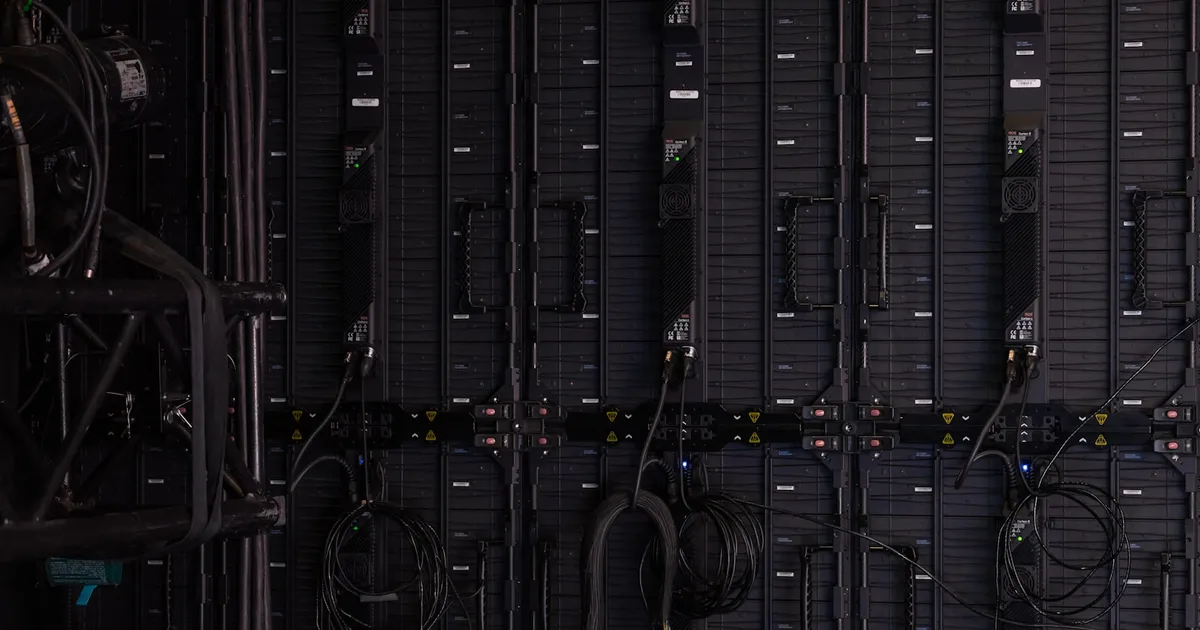
Google’s largest-ever bet on India is running into the same wall confronting every AI buildout on the planet: not chips or capital, but water and local consent. According to reporting published August 6, 2026, mounting environmental opposition is emerging as an early test for the company’s $15 billion artificial-intelligence data-center hub in Visakhapatnam, the coastal port city in the southern Indian state of Andhra Pradesh. Construction is already in full swing — a hillside above the site has been stripped to red earth and terraced into steps — but the project now faces legal challenges over its impact on scarce water supplies and its proximity to a wildlife sanctuary.
The scale of the project
The Visakhapatnam campus is Google’s first dedicated AI hub in India, and by the company’s own description one of its most significant infrastructure commitments anywhere. The roughly $15 billion investment is planned to run over five years, from 2026 through 2030, and centers on a 1-gigawatt data-center campus supported by a subsea cable network and clean-energy procurement — the full stack of infrastructure required to train and serve large models at scale.
The buildout is not a single facility but a cluster spread across three sites in the villages of Adavivaram, Tarluvada, and Rambilli, with Google aiming to bring operations online by mid-2028. Google has framed the project as a cornerstone of India’s AI ambitions and a major economic catalyst, with state and company projections pointing to as many as 188,000 jobs created across construction and operations.
Google is not building alone. The company has partnered with Indian conglomerate the Adani Group, whose data-center arm AdaniConneX — a joint venture with established operator EdgeConneX — is developing the gigawatt-scale campus. Reporting indicates the Adani Group is set to invest up to $5 billion of its own in the effort. The project also feeds a larger regional ambition: Andhra Pradesh has laid out a plan to stand up 6 gigawatts of data-center capacity by 2029, and the Google hub is meant to anchor it.
Why water is the flashpoint
The opposition is rooted in a simple arithmetic problem. Visakhapatnam is a city of roughly 2.5 million people, and by the government’s own figures it receives about 410 million litres of water a day from reservoirs and rivers against a stated requirement of 480 million litres. In other words, the city already runs a structural water deficit, and water rationing is common. Into that shortfall, opponents argue, the state is inviting one of the most water-intensive industrial uses that exists.
Large data centers consume significant volumes of water for cooling, and the concern in Visakhapatnam is that a gigawatt-scale campus could compete directly with residents for a supply that is already insufficient. That tension is what has turned a marquee investment into a rallying point. In recent weeks, activists and children have marched through the city holding banners reading “We cannot drink DATA,” and demonstrators have painted handcuffs onto the Google logo — imagery designed to frame the project as extracting a shared public resource for private compute.
Google has responded directly to the water question. The company said the project will be developed “in line with applicable laws” and that it will deploy advanced air cooling to protect vital local water resources — a design choice meant to blunt exactly the criticism now aimed at the site. Air-based cooling trades water consumption for higher electricity use, a tradeoff that echoes the broader dynamic playing out across the industry, where Google’s own power draw jumped 37% in a single year as AI workloads scaled.
The wildlife dimension
Water is not the only front. The project sits near a wildlife sanctuary that is home to species including leopards and pangolins, and the legal challenges cite the risk that a sprawling industrial campus and its supporting infrastructure could disrupt sensitive habitat. The stripped hillside visible at the construction site has become a visual shorthand for that concern, and it gives opponents a tangible image to organize around.
The combination — a water-stressed city and a protected ecosystem — is what makes the Visakhapatnam fight more than a routine permitting dispute. It bundles two of the most potent objections to hyperscale development into a single site, and it does so around the highest-profile foreign technology investment the region has ever attracted.
Part of a global pattern
What’s happening in Visakhapatnam is a local expression of a global constraint. The economics that make AI infrastructure attractive — enormous, concentrated compute close to power and connectivity — collide with the physical realities of the places chosen to host it. The economics of AI data centers increasingly turn on securing power and water at the scale models demand, and on winning the social license to operate that scale locally.
That collision is now a recurring feature of the buildout. In the United States, communities have pushed back hard enough that New York moved toward a moratorium on new hyperscale data centers while it studied the strain on grids and resources. The broader capital-spending boom among hyperscalers assumes that suitable sites will be available at the pace the models require — an assumption that gets harder to satisfy every time a project runs into water rationing, grid limits, or organized local opposition. State-backed programs elsewhere, from China’s $295 billion AI infrastructure push to national compute strategies, face versions of the same test.
India is an especially consequential arena because it pairs enormous demand for digital infrastructure with acute resource stress. The subcontinent’s largest cities routinely confront water scarcity, and the same coastal geography that makes Visakhapatnam attractive for subsea cables and cooling also makes its freshwater supply precious. The Google-Adani campus is the clearest case yet of that tension being negotiated in public.
What it means
Google’s Visakhapatnam project reframes the AI infrastructure race as a contest for local resources and local consent, not just capital and silicon.
Who’s exposed. Google and Adani, first — a $15 billion, multi-year commitment with operations targeted for 2028 is vulnerable to delay if legal challenges succeed or protests force design changes, and the reputational cost of a “we cannot drink DATA” narrative attaches to Google’s brand well beyond India. The Andhra Pradesh government is exposed too: it has staked a 6-gigawatt regional strategy and up to 188,000 promised jobs on projects that residents are now contesting in court. And Visakhapatnam’s residents bear the underlying risk the dispute is about — whether a city already rationing water can absorb a gigawatt-scale industrial load.
The tension that won’t resolve cleanly. Google’s answer to the water objection is advanced air cooling, which reduces water draw but raises electricity demand — trading one scarce resource for another in a region that will have to generate the power somewhere. That is the same bind the entire industry is in: efficiency and clever engineering can soften the footprint of any single facility, but the sheer number and size of AI campuses keeps total resource demand climbing. A project can be responsibly designed and still land in a place that cannot easily spare what it needs.
What to watch next. Three things. First, the legal track — whether the courts allow construction to proceed on schedule, impose conditions, or pause it, which will set a precedent for every subsequent data-center project in India. Second, the cooling and sourcing commitments — whether Google publishes specifics on water use, power sourcing, and habitat protection concrete enough to defuse the opposition, or whether the “advanced air cooling” assurance proves too vague to satisfy critics. Third, the template effect — Visakhapatnam is the model other operators are watching as they eye the same coastal corridor, and how this fight resolves will shape whether India’s data-center boom advances with local buy-in or against it. The compute behind products like Gemini has to be built somewhere; increasingly, the binding question is not whether the money exists, but whether the ground will accept it.
Tagged
Keep reading

 Chisato · · 6 min read
 Google's AI Data Centers Drove a 37% Power Surge
Google's 2026 environmental report shows electricity use jumped 37% in a year — its largest-ever rise — as AI data centers reshaped its energy footprint.
 Chisato · · 6 min read
 Google DeepMind WeatherNext 3: Hourly 5km AI Forecasts
Google DeepMind's WeatherNext 3 delivers hourly, up-to-5km AI weather forecasts with 15-day, 64-member ensembles and gains in cyclone prediction.
Chisato · · 5 min read Alibaba Cloud Launches First Brazil Region
Alibaba Cloud opened its first South American region in São Paulo, with two data centers and planned agentic AI services, part of a $53B infrastructure push.