Meituan LongCat-2.0: 1.6T Model on Chinese Chips
Meituan open-sourced LongCat-2.0, a 1.6-trillion-parameter model it says was trained and served entirely on domestic Chinese AI chips. Here's what it means.
China’s answer to the frontier labs arrived from an unexpected place. On June 30, 2026, Meituan — the Chinese food-delivery and local-services giant, not an AI lab — open-sourced LongCat-2.0, a 1.6-trillion-parameter large language model. The headline isn’t the size. It’s the claim attached to it: Meituan says LongCat-2.0 was trained from scratch, and now runs inference, entirely on domestic Chinese AI chips — no NVIDIA GPUs involved at any stage.
If that claim holds, it’s the most concrete evidence yet that China can build a near-frontier model without the American silicon that U.S. export controls have spent three years trying to keep out of the country.
What Meituan shipped
LongCat-2.0 is a Mixture-of-Experts model, the same sparse architecture that lets a model carry a huge total parameter count while only activating a fraction of it on any given token. That design is what makes a 1.6-trillion-parameter model economical to serve at all: the full weight matrix is enormous, but the compute per token stays manageable.
The specifics Meituan disclosed:
- 1.6 trillion total parameters, MoE architecture.
- A 1-million-token context window, putting it in the same long-context tier as the leading closed models.
- Open weights, released under a permissive MIT license — meaning anyone can download, run, fine-tune, and commercialize it without paying Meituan a cent.
The model didn’t arrive as a mystery. Under the codename “Owl Alpha,” LongCat-2.0 had quietly been climbing the usage charts on OpenRouter, the popular model-routing service, for weeks before Meituan revealed its identity. Developers were already voting with their API calls, unaware they were road-testing a Chinese model trained without a single American accelerator.
The chip claim is the story
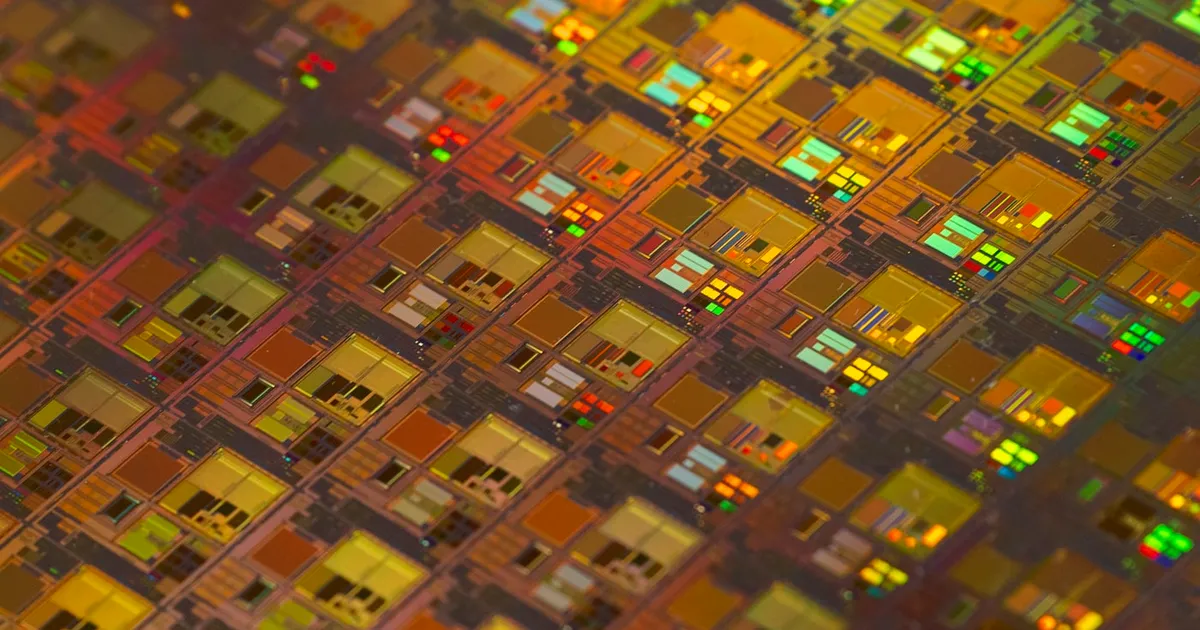
Strip away the benchmark chatter and the significance of LongCat-2.0 is one sentence: Meituan says it completed both pre-training and inference on a 50,000-card cluster of domestic AI ASIC superpods — Chinese-designed accelerators rather than NVIDIA hardware.
Read that carefully, because the wording matters. Plenty of Chinese models have been trained partly on stockpiled or smuggled NVIDIA chips, or on a mix of domestic and foreign silicon. Meituan is making the stronger claim: the entire lifecycle, training through serving, ran on Chinese accelerators. If verified, LongCat-2.0 would be the first model of its scale to do so end to end.
That distinction is the whole ballgame for China’s massive AI-infrastructure buildout. Beijing has poured hundreds of billions into domestic compute precisely to escape a chokehold: for years, the assumption in Washington was that even if China could design competitive AI chips, it couldn’t manufacture them at the volume and yield needed to train frontier models — so export controls on NVIDIA’s best parts would keep Chinese labs a generation behind. A 1.6-trillion-parameter model trained on 50,000 domestic cards is a direct challenge to that assumption.
How good is it, really?
Meituan positions LongCat-2.0 as a near-frontier agentic-coding model, and the early signals are strong. Its coding scores put it in the same conversation as GPT-5.5, Gemini 3.1 Pro, and Claude Opus 4.6 — the current Western frontier — rather than a tier below.
Two caveats are worth stating plainly, in the wire-service spirit of trust-but-verify.
First, “in the conversation” is not “on top.” Being competitive on published coding benchmarks is a real achievement, but the very best closed models still tend to lead on the hardest reasoning tasks, and public leaderboards flatter every model — scores saturate and test data leaks into training sets. The honest read is that LongCat-2.0 is genuinely useful for real coding work, not that it has dethroned anyone.
Second, the OpenRouter traction is the more persuasive data point. Benchmarks can be gamed; sustained developer usage under a neutral codename is harder to fake. People kept routing real work to “Owl Alpha” because it delivered, before anyone knew whose model it was.
Why a food-delivery company built a frontier model
The instinct is to ask what a company famous for getting dumplings to your door in 30 minutes is doing at the AI frontier. The answer is that Meituan’s core business is one of the largest real-time optimization problems on earth — routing millions of couriers, predicting demand, pricing dynamically, matching supply to orders across hundreds of cities every second. That is an AI problem, and Meituan has been spending accordingly.
Open-sourcing a frontier-class model is also a strategic move, not charity. Releasing strong open weights is how a company that isn’t a dedicated lab buys mindshare, recruits researchers, pressures rivals’ pricing, and plants its architecture in the global developer ecosystem. It’s the same playbook that turned open weights from an act of goodwill into a competitive strategy across the industry. China’s other open-weight releases — from GLM to DeepSeek to Kimi — have followed the same logic. Meituan just did it at a scale, and on hardware, that makes a geopolitical point.
The verification question
Every extraordinary claim in AI deserves a skeptic, and LongCat-2.0’s central boast — full-lifecycle training on domestic chips — is not independently verified. Meituan has published the weights and its account of the training run; it has not opened the training cluster to outside auditors, and it’s difficult for anyone downstream to prove which silicon produced a given set of weights.
Two things are checkable and two are not. The weights are real and downloadable; the benchmark and OpenRouter performance are observable by anyone. What outsiders can’t directly confirm is the chip provenance and the exact composition of that 50,000-card cluster — how many accelerators, of which domestic design, at what yield. That gap is where the debate will live in the coming weeks, and where U.S. officials, who have separately accused Chinese labs of intellectual-property theft, will focus.
What it means
LongCat-2.0 is a genuine inflection point, and it’s worth being precise about which part.
The capability gap keeps closing, and it’s now closing on Chinese hardware. The story of 2026’s open models was that the distance between the best closed labs and the best open weights shrank to months. LongCat-2.0 extends that: not only can an open model reach near-frontier coding performance, but a Chinese company can apparently produce one without American chips. Both of those pressure the same thing — the pricing power of the closed frontier.
Export controls just got their hardest test. The entire premise of restricting NVIDIA sales to China was that compute is the binding constraint and America controls it. A 1.6-trillion-parameter model trained on 50,000 domestic accelerators, if the claim survives scrutiny, suggests the constraint is loosening. That doesn’t mean domestic Chinese chips have caught NVIDIA on raw performance — they almost certainly haven’t, which is why Meituan reportedly needed a very large cluster. But “slower chips, more of them” is a viable path around an export ban, and this is the clearest demonstration of it so far.
Winners: Chinese AI independence, the global open-weight ecosystem, and every developer who now has a free, commercially usable, million-token, frontier-class coding model. Meituan buys enormous credibility for the cost of giving the weights away.
Losers: the political case for export controls as currently drawn, and — at the margin — the pricing of closed frontier APIs, which now compete against a capable free alternative for a growing slice of coding and agentic work.
What to watch next: independent replication of the benchmarks on private test sets; any credible verification (or debunking) of the domestic-chip claim; whether Western enterprises actually deploy a Chinese open model in production or shy away on security and provenance grounds; and Washington’s response, given that officials have already signaled they’re watching Chinese frontier releases closely. The weights are out and irreversible. The argument about what they prove is just beginning.
Tagged
Keep reading

 Chisato · · 6 min read
 DeepSeek V4 Pro 0813: Benchmarks, Price Hike, Specs
DeepSeek moved its V4 Pro 0813 flagship to general availability with big agentic-coding gains and a peak-hour price hike up to 12x. What's verified and what isn't.
 Chisato · · 6 min read
 Alibaba Wan-Animate-2: Open-Source Real-Time AI Animation
Alibaba's Tongyi Lab open-sourced Wan-Animate-2, a character-animation model that streams at 24fps under Apache 2.0. What it does and why it matters.
 Chisato · · 6 min read
 DeepSeek V4-Flash-0731: Benchmarks, Price, What Changed
DeepSeek's retrained V4-Flash-0731 beats its own flagship on nine agent benchmarks at the same $0.14/$0.28 price, with MIT-licensed weights on Hugging Face.