EU Orders Google to Open Android to AI Rivals
The EU's DMA orders force Google to give ChatGPT and Claude the same Android access as Gemini and to share Search data with rivals. Timelines and fines.
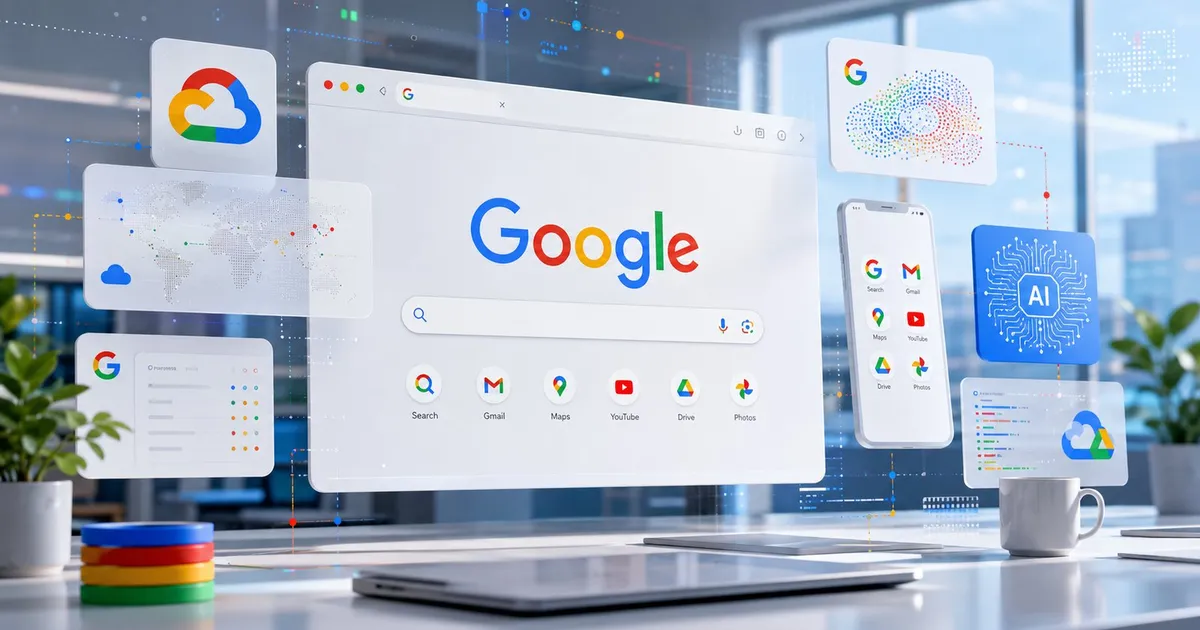
The fight over who controls the AI assistant on your phone just moved from the app store to the operating system. On July 16, 2026, the European Commission issued two binding orders under the Digital Markets Act (DMA) that require Google to give rival AI services the same system-level access to Android that it currently reserves for its own Gemini assistant, and to share the data behind Google Search with competing AI chatbots on regulated terms. Alphabet shares slipped on the news, part of a rough week for the company that also saw a reported delay to its flagship model.
The decisions mark the first time EU regulators have used the DMA to pry open the deep integration between an operating system and its built-in AI — the layer where an assistant stops being just an app and becomes the default way users talk to their device.
What the Commission ordered
The two orders address different chokepoints, but both aim at the same outcome: letting rival AI assistants compete with Gemini on equal footing inside Google’s ecosystem.
Android system-level access. The first decision targets the integration points that currently distinguish Gemini from every other assistant on an Android phone. According to the Commission, Google must let rival AI services — the obvious beneficiaries are OpenAI’s ChatGPT and Anthropic’s Claude — plug into the same operating-system hooks Gemini uses. In practice that means a competing assistant could register its own wake word, the way “Hey Google” summons Gemini, and claim system-wide triggers such as the long-press of the home button that today launches Google’s assistant by default. From there a rival assistant could take the kinds of actions users expect a phone-native agent to handle — booking a taxi, searching for a place, controlling settings — rather than being boxed into a standalone app with no privileged access. Reporting on the order described roughly a dozen Android features being opened across the integration points at issue. Users would see the changes land in the next iteration of Android, expected around July 2027.
Search data sharing. The second decision reaches into the core of Google’s dominance. The Commission is ordering Google to share the data it uses to optimize Search with rival AI chatbots that offer search-like answers, so competitors can improve the quality of their own results. The data is to be anonymized and priced by a set formula rather than negotiated deal by deal, and the obligation is due to begin in January 2027. This is the more consequential of the two orders in the long run: search-quality data is the moat that has protected Google’s ranking advantage for two decades, and forcing it open on regulated terms is a direct attempt to lower the barrier for AI-native search challengers.
Both orders sit within the DMA’s designation of Google as a “gatekeeper,” the status that triggers the law’s interoperability and non-discrimination duties. If you are new to how these assistants actually take actions on a device, our primer on what an AI agent is explains the mechanics the regulators are trying to make competitive.
The penalties behind the orders
The DMA’s teeth are what make these orders more than guidance. Non-compliance can draw fines of up to 10% of Alphabet’s annual worldwide turnover, rising to 20% for repeat violations — a ceiling that, against Alphabet’s revenue base, runs into the tens of billions of dollars. The Commission can also levy daily penalty payments for each day a gatekeeper fails to comply, giving Brussels a way to keep pressure on without waiting for a years-long court fight.
The July 16 orders arrived alongside separate DMA action. The Financial Times reported on July 15 that Brussels was preparing to fine Google hundreds of millions of euros across two DMA decisions — one on search self-preferencing, the other tied to the data-sharing regime — with the company facing daily penalties if it fails to comply within 60 days. The moves also follow a distinct antitrust track: in early July, an EU court sealed a €4.1 billion Android fine in the long-running Google Android case, a reminder that the company is fighting on multiple regulatory fronts at once. The DMA orders are structural remedies; the fines are the enforcement backstop.
Google’s response
Google pushed back on the substance rather than the Commission’s authority. The company warned that the measures “risk undermining vital privacy and security guardrails for millions of Europeans,” arguing that opening system-level assistant hooks and Search data to third parties expands the attack surface and weakens protections it has built into Android and Search. Google said it had repeatedly offered solutions intended to satisfy the DMA’s goals while preserving those safeguards, and framed the binding orders as going further than necessary.
That privacy-and-security argument is the industry’s standard line against interoperability mandates, and regulators have heard it before. The counter-position, which the Commission has effectively adopted, is that “security” cannot become a blanket justification for keeping the most valuable integration points reserved for the gatekeeper’s own product.
The competitive stakes
The reason this order matters more than a typical compliance skirmish is where it applies. The AI assistant race has largely been fought at the application layer — ChatGPT, Claude, and Gemini competing as apps users download and open. But the most valuable real estate is the default: the assistant that answers when you press a button or speak a wake word without choosing an app first. That position has been Gemini’s by virtue of Google owning Android, and it is exactly what the DMA order attacks.
For OpenAI and Anthropic, system-level Android access would be a meaningful distribution win in a market where distribution, not just model quality, increasingly decides adoption. It is the mobile-side complement to the browser and search battles playing out elsewhere — including the pressure Google faces as AI answers erode traditional zero-click search and as it retools its own results with AI Mode. Opening the search-optimization data adds a second front: it chips at the quality gap that has kept challengers a step behind Google’s ranking.
The order also fits a widening pattern of AI governance moving from principle to enforcement. Europe is simultaneously standing up the EU AI Act’s enforcement powers over general-purpose models, and the same “build EU requirements into the core product” dynamic that reshaped how models ship into Europe now extends to how assistants integrate with phones. For the broader field of open and closed models competing for users, regulated access to a billion-device platform is a prize no amount of benchmark leadership can substitute for.
What it means
The DMA orders reset the terms of the assistant war in Europe, and the effects ripple outward from there.
Who wins. OpenAI and Anthropic are the clearest beneficiaries. System-level Android access — a wake word, a home-button trigger, the ability to act on the device — removes the structural disadvantage of being “just an app,” and regulated access to Google’s search-optimization data narrows the quality moat that has protected Google’s ranking. Any AI-native search challenger gains from the data-sharing regime.
Who loses. Google loses on two axes: the default-assistant advantage that came free with owning Android, and exclusive control of the search data that competitors have never been able to replicate. Neither loss is fatal — Gemini remains pre-installed and deeply woven into Google’s services — but both erode advantages the company never had to defend before.
What to watch. First, compliance versus litigation: Google can implement the orders, challenge them in the EU courts, or offer narrower technical remedies and dare the Commission to reject them. The 60-day clocks and daily-penalty mechanics will show how hard Brussels intends to push. Second, whether the model spreads: DMA remedies have a way of becoming global defaults, because maintaining a separate “EU mode” is expensive — if rival assistants get system-level Android hooks in Europe, pressure builds to offer them everywhere. Third, the security argument’s fate: if Google can demonstrate concrete harm from opening these interfaces, it strengthens the industry’s case against future interoperability mandates; if the transition proves uneventful, the “privacy and security” objection loses credibility for the next fight.
The near-term impact on users is modest — the Android changes are not due until July 2027 and the data sharing until January 2027. But the direction is set. For the first time, the question of which AI assistant runs your phone is one regulators, not just platform owners, intend to answer.
Tagged
Keep reading

 Chisato · · 6 min read
 Trump's AI Force and AI Czar: What Was Announced
President Trump says he'll create an 'AI Force' modeled on the Space Force and name an AI czar, while rejecting calls to slow AI down. Here's what we know.
 Chisato · · 6 min read
 Tesla Cybercab NHTSA Investigation: What to Know
NHTSA opened an audit query into Tesla's Cybercab hours after the steering-wheel-free robotaxi launched in Austin, targeting the company's self-certification.
 Chisato · · 6 min read
 Google DeepMind WeatherNext 3: Hourly 5km AI Forecasts
Google DeepMind's WeatherNext 3 delivers hourly, up-to-5km AI weather forecasts with 15-day, 64-member ensembles and gains in cyclone prediction.