Google Search's AI Mode Now Runs on Gemini 3.5
Google's AI Mode in Search now runs on Gemini 3.5 Flash and adds 24/7 agents that monitor the web for you — what it calls the biggest change to Search in 25 years.
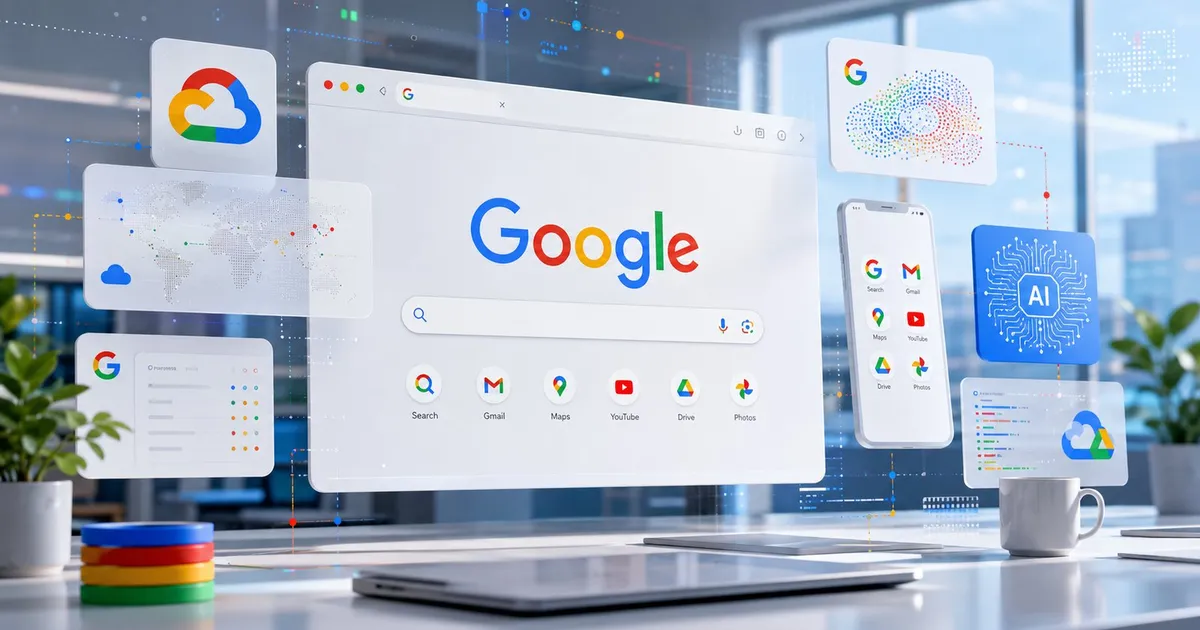
Google is reshaping the product that built the company. Its AI Mode in Search now runs on Gemini 3.5 Flash — a faster model tuned for multimodal queries — and Google is calling the result the biggest change to Search in over 25 years. The shift moves Search further from a list of links and toward a system that answers questions and, increasingly, acts on them.
From ten blue links to answers
For most of its history, Search returned a ranked list of pages and let you do the rest. AI Mode inverts that: it synthesizes an answer directly, drawing on the web and on Gemini’s reasoning and multimodal understanding. Choosing Gemini 3.5 Flash for the job is deliberate — at Google’s query volume, speed and cost per answer matter as much as raw capability, and Flash is built to deliver strong reasoning quickly and cheaply.
The bigger leap: search agents
The more significant change is the arrival of 24/7 Search agents — assistants that monitor the web for topics you care about and notify you when something new appears. That’s a different relationship with Search entirely. Instead of you pulling information when you remember to look, an AI agent watches continuously and pushes updates to you. Search becomes proactive.
Under the hood, this leans on the same techniques powering modern AI answers, including retrieval-augmented generation to ground responses in current web content rather than the model’s training data alone.
What it means for the open web
For publishers, this is the double-edged part. When Search answers directly, fewer users click through to the sites that produced the underlying information — the “zero-click” problem, now amplified. And when agents do the browsing, the audience for a page may increasingly be a model, not a person. Sites built for discoverability will have to think about being readable and citable by AI systems, not just rankable in a list. It’s a real shift for anyone whose traffic depends on Search.
The takeaway
Google is betting that the future of Search is answers and agents, not links — and it’s using a fast, capable Gemini model to get there at scale. For users, it’s more convenient. For Google, it’s a defense of its core business in the AI era. For the open web that feeds it, it raises hard questions about who gets the traffic when the search engine increasingly keeps the visit to itself.
Keep reading
 Chisato · · 6 min read
 Google AI Overviews and the Zero-Click Search Problem
Fresh 2026 data shows AI Overviews now sit atop most Google searches, and clicks to the open web are collapsing. Here's what the numbers say and who is hit.

 The Lycoris Team · · 2 min read
 Getty Images and OpenAI Sign a Content Deal
Getty Images will surface its licensed library inside ChatGPT's search experience under a multi-year deal with OpenAI — another step from lawsuits to licensing.
 Chisato · · 5 min read
 Grouped-Query Attention (GQA) Explained: MHA vs MQA vs GQA
Grouped-query attention shares key and value heads across groups of query heads, shrinking the KV cache with little quality loss. GQA vs MHA and MQA.