Google DeepMind WeatherNext 3: Hourly 5km AI Forecasts
Google DeepMind's WeatherNext 3 delivers hourly, up-to-5km AI weather forecasts with 15-day, 64-member ensembles and gains in cyclone prediction.
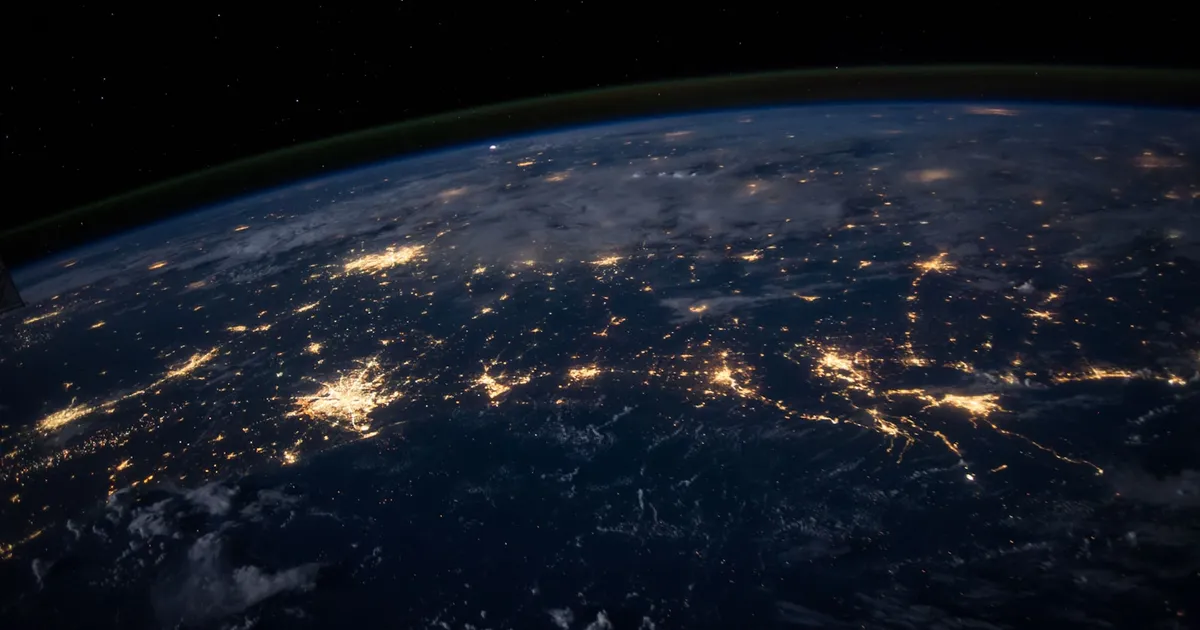
Google DeepMind and Google Research on September 3, 2026 introduced WeatherNext 3, the company’s most advanced global AI weather model to date, which it says produces hourly forecasts at up to 5-kilometer resolution and delivers a step-change in predicting tropical cyclones. The model is being wired into consumer and developer products at once — Google Search, the Gemini app, Google Maps, the Google Maps Platform Weather API, and Google Earth Engine — signaling that AI weather has moved from research demo to shipped infrastructure.
The pitch is sharper, faster, and more probabilistic forecasts than both traditional physics-based systems and Google’s own prior models, generated on a fraction of the compute that numerical weather prediction has historically required.
What is new in version 3
WeatherNext 3 builds on the Functional Generative Network (FGN) approach that underpinned WeatherNext 2, producing 15-day, 64-member ensemble forecasts trained to minimize the continuous ranked probability score (CRPS), a standard measure of probabilistic forecast skill. Ensembles matter because weather is chaotic: running many plausible scenarios captures uncertainty far better than a single deterministic guess, which is why national forecasting centers have long relied on them.
The architecture was scaled up relative to WeatherNext 2. Google increased the model’s latent size from 768 to 1024 and deepened its mesh transformer from 24 to 32 layers, the kind of capacity bump that has repeatedly paid off across AI domains. The most visible gain is spatial resolution: key surface variables such as temperature and moisture are produced at 5-kilometer resolution, other surface variables at roughly 10 kilometers, and atmospheric variables such as wind speed at about 25 kilometers. WeatherNext 2, by comparison, operated on a coarser grid at longer intervals.
Just as important is cadence. WeatherNext 3 ingests live geostationary satellite data to refresh forecasts every hour, sidestepping the roughly six-hour data lag that constrains conventional numerical weather prediction pipelines. For fast-moving, high-impact weather — storms forming, fronts shifting — an hourly update loop is a meaningful operational advantage over systems that recompute only a few times a day.
The cyclone result
The headline scientific claim concerns tropical cyclones. Google says WeatherNext-family modeling achieved state-of-the-art accuracy across a storm’s track, intensity, and wind structure simultaneously — historically difficult to nail at the same time, since track and intensity have often been forecast by different tools with different strengths.
The company frames the improvement in the terms forecasters care about: the model buys roughly an extra day of lead time, meaning a three-day forecast is now about as accurate as a two-day forecast was under prior systems. Google characterizes that as the equivalent of about a decade of progress measured against the pace of improvement over the last 20 years. Against the European Centre for Medium-Range Weather Forecasts’ AIFS ENS v2, another leading AI system, WeatherNext 3 shows roughly a 10% average advantage in the first forecast week for tropical cyclones, alongside consistent gains over WeatherNext 2 on both track and intensity.
For precipitation, Google says users planning a day or more ahead will see up to 50% more accurate rain forecasts, with the biggest improvements in regions where forecasts have historically been least reliable — often exactly the places with the least dense ground-observation networks.
Why AI weather models keep winning
The broader story is that machine-learning weather models have, in the space of a few years, gone from novelty to serious challengers to the physics-based systems that governments have refined for decades. Traditional numerical weather prediction solves the equations of atmospheric physics on supercomputers — accurate but enormously expensive and slow to run. Learned models like WeatherNext instead train on decades of historical weather and reanalysis data to predict how the atmosphere evolves, and once trained they generate forecasts orders of magnitude faster and cheaper, often on a single accelerator rather than a supercomputer cluster.
That cost collapse is what makes hourly, high-resolution, 64-member ensembles practical to serve at consumer scale. It is the same economic logic that has driven AI into so many Google surfaces this year, from Gemini’s push past a billion users to the Gemini 3 model family now threaded through Search and Maps. Weather is a particularly clean fit: a well-defined prediction target, abundant training data, and obvious daily utility for hundreds of millions of people.
It also slots into DeepMind’s positioning of AI as an engine for scientific and real-world problem solving, a theme running from its protein-structure work through its recent framing of an automated research “discovery loop”. Rival labs are pressing the same claim from other directions, whether Anthropic’s demonstration that Claude agents could formalize a landmark math proof or OpenAI’s assertions about solving open problems. Weather is the version of that story with the most immediate mass-market payoff.
The distribution advantage
The most consequential detail may be commercial, not scientific: WeatherNext 3 is being pushed straight into products people already use. Embedding it in Search, the Gemini app, Maps, the Maps Platform Weather API, and Earth Engine means the model reaches consumers, developers, and enterprise customers through channels Google already dominates.
For developers, the Weather API and Earth Engine access turn a research model into a building block others can integrate — a familiar Google pattern of shipping a capability as infrastructure rather than a standalone app. That distribution reach is something few competitors can match, and it is a large part of why a better weather model is strategically valuable to Google beyond the forecast itself: every query that surfaces a sharper prediction is another reason to stay inside Google’s products.
The caveats
A few qualifications are worth keeping in view. Google’s accuracy claims are the company’s own, benchmarked on its chosen metrics; independent evaluation by meteorological agencies is what will ultimately establish where WeatherNext 3 sits against operational systems in practice, especially for the rare, extreme events that matter most and are hardest to score. Learned models can also struggle to extrapolate to conditions unlike anything in their training data — a live concern in a shifting climate — and probabilistic skill on average does not guarantee reliability in every individual high-stakes case.
None of that diminishes the trajectory. But “state of the art on our benchmarks” and “trusted for an evacuation decision” are different bars, and the meteorology community will apply the second one carefully.
What it means
WeatherNext 3 is a strong entry in a fast-moving field and, thanks to Google’s distribution, likely to be one of the most widely used AI weather models regardless of exactly where it ranks on any single benchmark. The extra day of cyclone lead time and the hourly, high-resolution refresh loop are the kind of concrete gains that translate into real-world value — earlier warnings, better logistics, sharper planning.
Who wins: Google, which converts a research advance into an infrastructure moat across products it already controls; developers and enterprises that gain a cheap, fast forecasting API; and, if the accuracy holds up in the field, people in storm-exposed regions with historically weak coverage.
What to watch: independent validation from national weather services and academic groups, particularly on extreme events and cyclone intensity, where the stakes are highest and averages hide the tail. Watch, too, how traditional forecasting centers respond — several are already blending AI models into operations — and whether hourly, satellite-fed updating becomes the new baseline expectation for what a weather forecast should be. As with much of Google’s AI-in-Search strategy, the quiet win is that a better underlying model makes the products it feeds a little harder to leave.
Keep reading
 Chisato · · 6 min read
 Google's $15B India Data Center Faces Water Protests
Google's $15B Visakhapatnam AI data center with Adani faces legal challenges and protests over water use and a nearby wildlife sanctuary. What's at stake.
 Chisato · · 5 min read
 Jeff Dean Leaves Google; Hassabis Becomes DeepMind Chair
Jeff Dean is leaving Google after 27 years to co-found Discovery Loop, and Demis Hassabis is stepping back to chair as Google reshuffles its AI leadership.
 Chisato · · 6 min read
 Google's AI Data Centers Drove a 37% Power Surge
Google's 2026 environmental report shows electricity use jumped 37% in a year — its largest-ever rise — as AI data centers reshaped its energy footprint.