SoftBank Q1 Earnings: $8.2B Intel Gain, Record NAV
SoftBank booked an $8.2B gain on Intel and posted a record net asset value, but profit fell 18% and shares slid as investors weighed its AI bets.

SoftBank Group reported fiscal first-quarter results on August 6, 2026, and the headline was a windfall: a roughly 1.3 trillion yen ($8.2 billion) gain on its stake in Intel, whose shares have climbed nearly 400% over the past year. The gain flattered a quarter in which SoftBank’s operating businesses were otherwise mixed, and it underscored how much of the Japanese group’s fortunes now ride on a handful of large, concentrated bets on the AI buildout.
For the three months ended June 30, SoftBank posted net profit of 347.3 billion yen, or about $2.2 billion. That beat analyst expectations — consensus had clustered around 120 billion to 148 billion yen — but it was still down about 17.7% from a year earlier, as rising financing costs and volatility across its holdings offset the investment gains. Investors focused on the direction rather than the beat: SoftBank shares fell about 4.4% after the presentation.
The Intel windfall
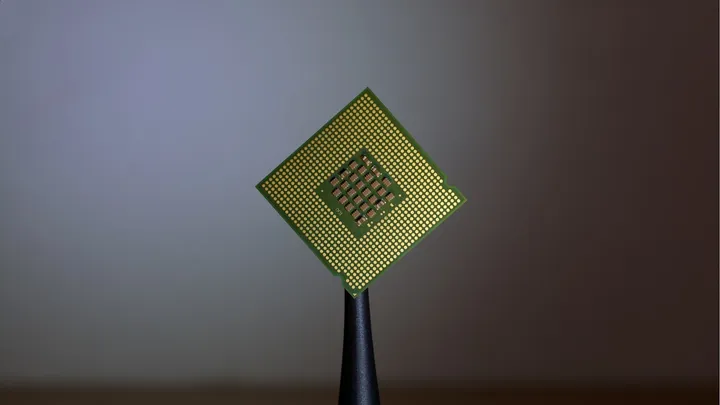
The Intel gain traces back to a deal struck a year ago. In August 2025, SoftBank agreed to invest $2 billion in Intel at $23 per share, a vote of confidence in the U.S. chipmaker’s turnaround at a moment when its stock was deeply out of favor. Since then, Intel’s shares have surged, driven by a combination of government support, foundry momentum, and renewed optimism about domestic semiconductor manufacturing. The appreciation left SoftBank sitting on a paper gain of roughly 1.3 trillion yen on a position that cost it $2 billion — one of the more striking mark-to-market swings in its portfolio.
SoftBank’s chief executive, Masayoshi Son, has long favored large, contrarian positions, and the Intel bet fits the pattern. The gain also arrived at a useful time. SoftBank is deep into a capital-intensive stretch, funding its share of the Stargate data-center program and a fast-growing commitment to OpenAI, and a multibillion-dollar mark on a single equity stake helps demonstrate that the balance sheet can still generate value even as cash goes out the door. Intel’s rally has been consequential enough that it now materially moves SoftBank’s reported earnings — a reminder of how concentrated the group’s risk has become.
Record net asset value, and a widening discount
SoftBank presented a record-high net asset value (NAV) of about 72.3 trillion yen ($445.2 billion) as of June 30, driven above all by gains in Arm Holdings, the chip-design company SoftBank controls and took public in 2023. Total investment gains for the quarter reached roughly 1.8 trillion yen. On paper, that is the strongest NAV the group has ever reported.
The problem is that the market does not agree with the group’s own valuation. Even with a record NAV, SoftBank’s market capitalization sat far below the sum of its parts — around 37 trillion yen against a NAV of roughly 74 trillion yen at the time of the report — a persistent NAV discount that has dogged the stock for years. The gap reflects investor skepticism about how much of that paper value can actually be realized, especially with so much tied up in illiquid private bets. It is the same holding-company discount problem that makes the distinction between headline value and realizable value matter so much for conglomerates; the mechanics are similar to the way analysts separate a company’s equity value from its total capital structure in a market-cap-versus-enterprise-value framing.
The discount widened further in the days around the report. Amid a broader technology sell-off, SoftBank’s pro forma NAV was said to have fallen to about 58.3 trillion yen by August 5 — a sharp reminder that a NAV built on volatile AI-linked assets can compress quickly when sentiment turns.
Vision Fund steady, OpenAI marked flat
The Vision Funds posted an investment gain of about 255.8 billion yen for the quarter, a steadier result than the wild swings the segment produced in prior years. Notably, SoftBank recorded no gain or loss on its OpenAI stake in the period — the position is being carried at a flat mark even as SoftBank continues to pour capital into it.
That capital commitment is enormous. SoftBank’s cumulative investment in OpenAI reached about $32.4 billion as of March 31, and the company has said it expects the total to reach roughly $64.6 billion by October 1, 2026, through a series of $10 billion funding tranches. On completion, SoftBank’s ownership of OpenAI would rise to approximately 13%. The scale of that single commitment — larger than the entire market value of many public technology companies — helps explain why every OpenAI headline now moves SoftBank’s stock, and why the flat mark this quarter drew scrutiny.
Progress on Stargate, the U.S. data-center program SoftBank is backing alongside OpenAI and others, was described as slower than initially hoped, held up by site selection, stakeholder coordination, and technical challenges. SoftBank reiterated an investment target of about 500 billion yen over four years for the effort. The pace matters because Stargate is central to SoftBank’s thesis that the constraint on AI is not demand but the physical capacity to serve it — the same hyperscaler capex logic driving every large cloud operator’s spending.
Shrugging off bubble fears
Asked directly about the risk of an AI bubble, SoftBank’s leadership did not dismiss the debate so much as reframe it. Chief financial officer Yoshimitsu Goto acknowledged the arguments but pointed to what he described as a clear supply-demand imbalance, telling analysts that “the supply is very much short.” His argument: without securing compute, technology and AI services get bottlenecked, so the infrastructure spending is not speculative excess but a necessary response to real, unmet demand.
It is a familiar refrain across the industry, and one SoftBank has structural reasons to make. Its entire strategy — from OpenAI to Stargate to its neocloud ambitions — is a bet that AI compute will remain scarce and valuable for years. The counterargument, which the muted stock reaction reflects, is that near-term returns are uncertain, the capital outlays are front-loaded, and much of the value SoftBank reports is still on paper. That tension between a scarcity thesis and a returns-timing question is now the defining debate around every large AI infrastructure commitment, including the industry’s largest, like the $250 billion data-center backstop tied to OpenAI’s buildout.
What it means
SoftBank’s quarter is a study in the gap between reported value and realized value — and in how much a single, concentrated bet can now define the group’s results.
Who wins. SoftBank, at least on paper. The Intel gain is real mark-to-market value on a contrarian position that most of the market had written off a year ago, and Arm’s strength pushed NAV to a record. If even a fraction of the OpenAI and Stargate bets pay off on the timeline management describes, the current NAV discount would look like a bargain in hindsight. Son’s willingness to make large, unfashionable bets is exactly what produced the Intel windfall.
Who should be nervous. Anyone underwriting SoftBank on the strength of its headline NAV. The persistent discount is the market’s verdict that paper value and cash returns are not the same thing, and the speed with which pro forma NAV compressed during the early-August sell-off shows how fragile a valuation built on volatile AI assets can be. Profit fell 18% year over year despite the Intel gain — a sign that the core financing machine is getting more expensive to run even as the bets get bigger. And carrying the OpenAI stake flat, quarter after quarter, defers the moment investors actually learn what that $64.6 billion commitment is worth.
What to watch next. Three things. First, whether OpenAI’s next financing or any secondary transaction forces SoftBank to re-mark the stake — up or down — which would be the single biggest swing factor for the reported numbers. Second, Stargate’s pace: management admitted it is behind, and continued slippage would undercut the scarcity thesis that justifies the spending. Third, the NAV discount itself. SoftBank has spent years and billions on buybacks trying to close it; a record NAV that the market still values at roughly half suggests the credibility problem is structural, not cyclical. For now, an $8.2 billion gain on a chipmaker few wanted a year ago is doing a lot of the work — and that is both the appeal and the warning in this set of results.
Keep reading
 Kurumi · · 6 min read
 Broadcom Q3 2026 Earnings: AI Chips Triple, Stock Dips
Broadcom's fiscal Q3 2026 revenue hit a record $29.6B as AI chip sales more than tripled to $16.7B, but light Q4 guidance sent the stock lower.
Kurumi · · 5 min read Marvell Q2 Earnings: Record $2.74B, Raised Guidance
Marvell posted record Q2 FY2027 revenue of $2.74B on a 46% data center surge, raised its outlook again, and guided Q3 to $3.15B. The numbers and what they mean.
 Kurumi · · 6 min read
 SoftBank's $20 Billion Bond Sale to Fund OpenAI Bet
SoftBank is weighing a $10–20 billion bond sale to refinance a $40 billion bridge loan behind its OpenAI investment. The deal structure and what it signals.