Nvidia Invests $5B in Safe Superintelligence
Nvidia is putting $5 billion into Ilya Sutskever's Safe Superintelligence at a $32B valuation, with Vera Rubin access — for a lab with no product yet.
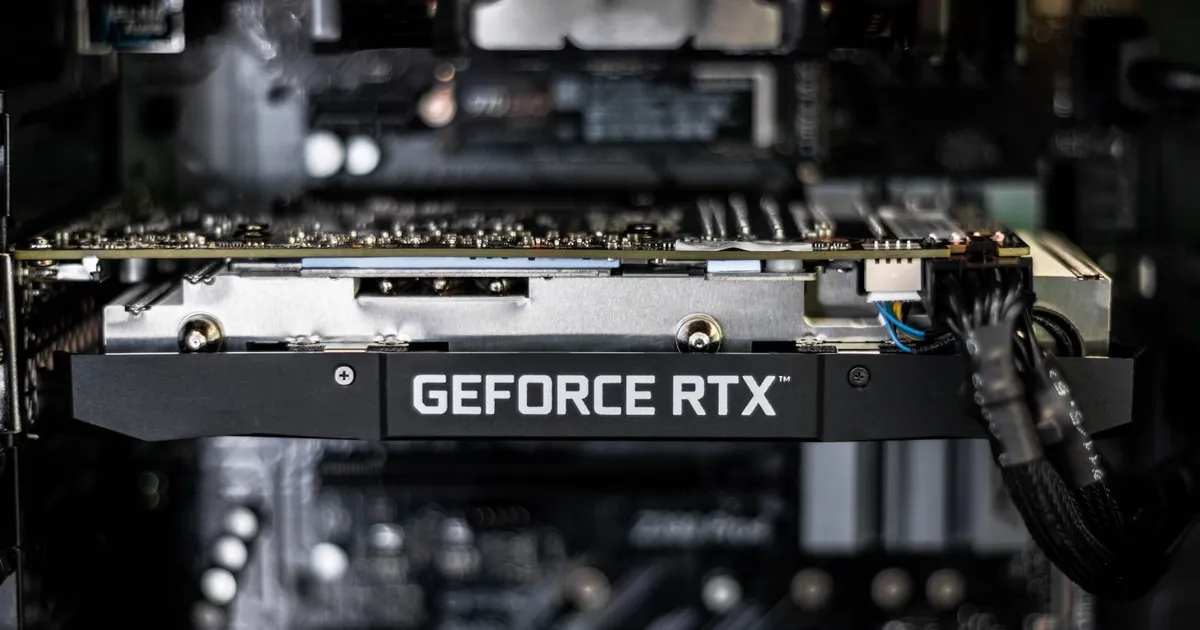
Nvidia is writing another enormous check into the AI frontier — this time for a company that has yet to ship anything. On July 27, 2026, Nvidia confirmed a $5 billion investment in Safe Superintelligence Inc. (SSI), the secretive research lab founded by former OpenAI chief scientist Ilya Sutskever, according to reporting from Bloomberg. The deal values SSI at roughly $32 billion post-money and comes bundled with something arguably more valuable than cash: access to Nvidia’s next-generation Vera Rubin platform.
The investment lifts SSI’s total funding to about $7 billion, an extraordinary sum for a startup that, by its own design, has released no model, no product, no demo, and no revenue. It is one of the largest single bets Nvidia has made during the AI boom, and it plants the chipmaker’s flag firmly on the “safe superintelligence” side of the industry’s central research debate.
The terms
The headline numbers are stark against SSI’s near-total lack of commercial output. The company was founded in June 2024, shortly after Sutskever’s departure from OpenAI in the wake of the boardroom upheaval that briefly ousted CEO Sam Altman. Since then, SSI has raised money at escalating valuations without publishing a research paper of note, releasing a chatbot, or announcing a product roadmap — a deliberate strategy Sutskever has framed as building one thing, straight to superintelligence, with safety as the only near-term deliverable.
The $5 billion from Nvidia pushes cumulative funding to about $7 billion at a $32 billion post-money mark. For context, that is a valuation in the neighborhood of established, revenue-generating software companies — assigned to a lab whose entire public output is a mission statement and a founder’s reputation.
The Vera Rubin access may be the strategic core of the deal. Compute is the binding constraint on frontier research, and a guaranteed allocation on Nvidia’s newest platform lets SSI scale training runs without competing for scarce capacity on the open market. For a lab whose thesis is that a single, sustained scaling effort can reach superintelligence, priority access to the best available silicon is not a perk — it is the enabling condition.
The straight-shot thesis
Understanding the valuation requires understanding what SSI claims to be doing. Sutskever has described the company as pursuing superintelligence in a single, focused effort — no interim products, no consumer chatbot to monetize, no enterprise API to maintain. The pitch inverts the prevailing playbook, in which labs like OpenAI and Anthropic fund frontier research by selling access to today’s models. SSI argues that commercialization is a distraction that pulls talent and compute away from the goal, and that the right move is to stay heads-down until the technology is both capable and, in the company’s framing, safe enough to release.
That posture is what makes the funding remarkable. Investors are not underwriting a growth curve; they are underwriting a conviction — that a small, elite team with enough compute can leapfrog labs spending tens of billions on productized research. It is a bet that resembles early-stage biotech more than software: years of burn with nothing to sell, justified entirely by the size of the eventual prize. The Vera Rubin allocation is the piece that makes the thesis physically executable, because a straight-shot strategy fails immediately if the lab cannot get enough of the best chips to run the training it is built around.
The obvious risk is that the field does not cooperate. If frontier capability keeps arriving incrementally — and if open-weight models keep compressing the gap — a lab that refuses to ship for years could find the ground shifting beneath it, its head start eroded by rivals who learned in public while it worked in private.
Why Nvidia is doing this
On its face, a $5 billion investment in a pre-product startup looks like froth. Read against Nvidia’s playbook, it looks like strategy. The company has spent the past year using its balance sheet to manufacture and secure demand for its own chips, and SSI fits the pattern: an investment that converts, in part, back into GPU consumption.
That pattern is now unmistakable. In recent weeks Nvidia has been reported to be weighing a $250 billion financing backstop for OpenAI’s Ohio data center and has publicly championed open frontier models to widen the market for its hardware. The SSI deal is a smaller, cleaner version of the same idea: put capital into a lab, hand it access to the Rubin platform, and watch the money flow through to compute demand. Critics call these arrangements circular — the chipmaker funding its own customers — and the SSI investment will draw the same scrutiny, precisely because there is no revenue on the other side to anchor the valuation.
There is also a talent-and-signaling dimension. Sutskever is among the most credentialed researchers in the field, and a marquee Nvidia investment is a statement about whose approach to scaling the chipmaker wants to be aligned with. In an industry where top researchers command franchise-player deals, backing Sutskever’s lab is as much about association as arithmetic.
The valuation question
The uncomfortable question is whether $32 billion for a no-revenue lab is visionary or a symptom. SSI’s valuation rests entirely on the belief that Sutskever can reach transformative AI and that being early gives investors a claim on an unimaginably large payoff. That is a venture bet in its purest form — binary, illiquid, and impossible to underwrite with conventional metrics.
It also lands at a jittery moment for AI valuations. Public markets have grown skeptical of the sector’s capital intensity; Alphabet shares fell more than 7% after it lifted 2026 capex guidance toward $205 billion and reported its first negative quarterly free cash flow since 2004. Private markets tell a similar story of stratospheric marks, with Anthropic reportedly changing hands near a $1.2 trillion secondary valuation and OpenAI reportedly planning $750 billion in compute spending through 2030. Against that backdrop, a $32 billion mark for a pre-product lab is either a rounding error on the way to superintelligence or a textbook late-cycle excess — and reasonable people are betting both ways.
What it means
Nvidia’s SSI investment is a concentrated expression of the two forces defining this phase of the AI boom: belief that scaling still has a long runway, and a chipmaker willing to underwrite that belief with its own balance sheet.
Who wins. SSI wins the two scarcest inputs at once — capital and guaranteed frontier compute — with no obligation to ship on anyone’s timeline. Sutskever wins vindication of a strategy that looked eccentric a year ago. Nvidia wins optionality: a stake in a possible superintelligence lab and another channel routing investment back into Rubin demand.
Who bears the risk. The other investors marking SSI at $32 billion, who own a claim on a research thesis rather than a business. And the broader market, insofar as deals like this normalize valuations untethered from revenue — the kind of pricing that looks brilliant in a bull run and reckless in a drawdown. If sentiment on AI capex keeps souring, a no-revenue lab at a five-figure-million valuation is exactly the position that gets repriced first.
What to watch next. Three signals. First, whether SSI shows anything — a paper, a benchmark, a capability demo — that begins to justify the mark, or whether the “no product” posture holds through another raise. Second, whether Nvidia’s investment-into-demand flywheel keeps spinning or starts drawing regulatory and accounting scrutiny over circularity. Third, the read-through to every other frontier lab: if Sutskever can raise $7 billion on reputation and a thesis, the bar for funding pre-revenue AI research just moved again — and so did the risk that the whole edifice is pricing a future that has to arrive on schedule to pay off.
Keep reading
 Kurumi · · 5 min read
 Nvidia Pauses AI Compute Partnership: What Happened
Nvidia has paused its revenue-sharing cloud financing program less than two months after launch, as staff flagged antitrust risk over its control demands.
Kurumi · · 6 min read Nvidia Pauses Revenue-Sharing Deals With AI Clouds
Nvidia has paused its $36 billion AI Compute Partnership over antitrust and control concerns, sending CoreWeave, Nebius, and IREN shares lower.
Kurumi · · 5 min read Nvidia AI Server Prices to Rise 15%+ on Memory Costs
Nvidia's server builders have told Microsoft, Google and Oracle that Vera Rubin and Grace Blackwell system prices will climb more than 15% from early 2027 as memory costs soar.