Nebius Q2 2026 Earnings: Revenue Up 454%, Stock Soars
Nebius Q2 2026 revenue surged 454% to $582M and adjusted EBITDA turned positive as ARR hit $3B, sending NBIS up 34%. The neocloud numbers that mattered.
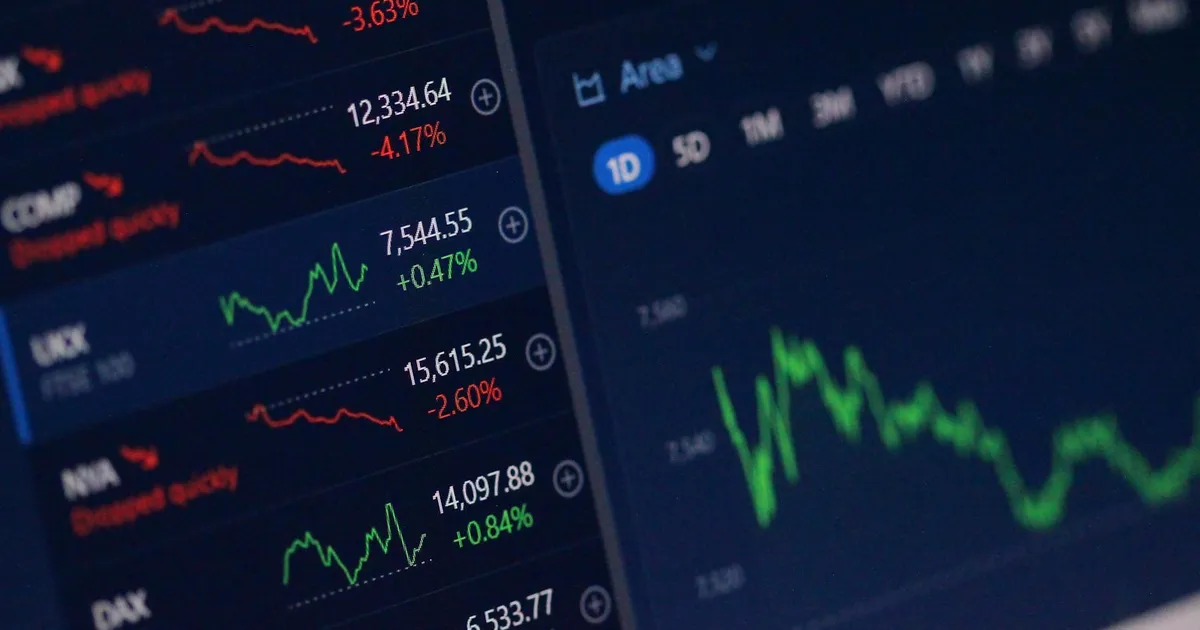
The second AI cloud to report this week did not just beat expectations — it delivered the kind of quarter that turns a speculative story stock into a business with visible economics. On Wednesday, August 12, 2026, Nebius Group reported second-quarter results in which revenue more than quintupled, adjusted profitability flipped positive for the first time, and annualized run-rate revenue reached a milestone the company had promised but not yet shown. Shares surged roughly 34%, one of the sharpest single-day moves among the AI-infrastructure names, and capped a rally that has made the Amsterdam-based neocloud one of the year’s most watched — and most contested — stocks.
The headline numbers
Nebius posted second-quarter group revenue of $582.3 million, up more than 454% from roughly $105 million a year earlier, according to the company’s release. The overwhelming majority of that came from its core AI cloud business, Nebius AI, which generated about $575 million — some 98% of total revenue — and grew even faster, up 514% year over year.
The bottom line was where the story turned. Adjusted EBITDA came in at a positive $236.2 million, a swing from a roughly $21 million loss a year earlier and a first concrete demonstration that the AI cloud business can throw off cash at scale. That implies an adjusted EBITDA margin north of 40% — remarkable for a company still spending tens of billions to build capacity. The company narrowed its adjusted net loss to $33.2 million, with the remaining red ink driven largely by the depreciation and financing costs that come with an aggressive build-out.
The run-rate hit its milestone
For Nebius, the number that matters most is not any single quarter’s revenue but its annualized run-rate revenue (ARR) — a snapshot of the business’s exit velocity. That figure reached $3 billion at the end of June, up 58% from about $1.9 billion at the end of March. It is the metric management has staked its credibility on, and hitting the $3 billion mark on schedule was the proof point the bull case required.
The run-rate is underpinned by a small number of very large contracts. Nebius said it has signed four AI cloud agreements averaging more than $1 billion each in total contract value, the kind of multi-year commitments that convert a capacity build into booked revenue. The most consequential of those is a landmark arrangement under which Meta Platforms will pay as much as $27 billion over five years for access to Nebius infrastructure — a deal that alone reframes the company from a scrappy challenger into a strategic supplier of frontier-scale compute. Nebius also counts Microsoft among its large customers and earlier this year secured a roughly $2 billion investment from Nvidia, tying its fortunes directly to the two companies at the center of the AI economy.
Guidance: reaffirmed, and still enormous
Rather than raise its outlook, Nebius reaffirmed the guidance that had already made it one of the most ambitious growth stories in the market. For the full year, the company continues to target group revenue of $3 billion to $3.4 billion, an exit ARR of $7 billion to $9 billion, an adjusted EBITDA margin of roughly 40%, and capital expenditures of $20 billion to $25 billion.
That last figure is the tell. Nebius intends to spend as much as $25 billion this year building data-center capacity — several times its current annual revenue — a bet that the demand behind those billion-dollar contracts will keep arriving faster than the capacity to serve it. Management was explicit that it plans to keep investing aggressively in capex, financing the gap between today’s revenue and tomorrow’s committed backlog. It is the same borrow-and-build model that defines the entire neocloud sector, and the same one that draws the sharpest scrutiny.

The short case, in its own words
The size of the move reflects how divided opinion has been. Nebius has been a battleground stock for months, and among its most prominent skeptics is Michael Burry, the investor of Big Short fame, who disclosed bearish positions against Nebius and Oracle on the thesis that the neocloud build-out rests on aggressive accounting for the useful life of GPUs and on customer concentration that could unwind quickly. Wednesday’s print is a direct rebuttal to part of that argument: a company generating positive adjusted EBITDA and $236 million of it in a single quarter is harder to dismiss as a cash-incinerating story stock.
But the print does not settle the deeper questions. The bear case has never been that revenue would fail to grow — it is that the economics behind the growth depend on depreciation schedules for rapidly aging accelerators, on financing that must stay cheap and available, and on a handful of hyperscale customers honoring multi-year commitments through whatever the AI cycle does next. A 40% adjusted EBITDA margin looks very different once the depreciation those adjustments set aside is fully weighed, and Nebius’s $20-to-$25-billion capex plan means the balance sheet will keep absorbing debt for years before the backlog fully converts to cash. The same tension runs through the economics of the entire AI data-center build-out.
A neocloud rally in stereo
Nebius did not report in a vacuum. Its surge came the morning after CoreWeave posted its own blowout — revenue up 112% and a backlog past $104 billion — and the same day that server maker Supermicro followed with a gross-margin surge and $60 billion in new orders. Together the three reports formed the clearest picture yet of an AI-infrastructure cohort whose numbers are still accelerating, and they lifted a broad basket of server, memory, optical, and power suppliers in sympathy.
The rally was helped along by the macro backdrop. A benign July inflation reading released Wednesday morning cooled the near-term case for a Fed rate hike and put the Nasdaq higher, giving high-multiple growth names the kind of tailwind they had lacked during July’s wobble. For a stock like Nebius, whose valuation rests entirely on future cash flows, a softer rate outlook amplifies every good headline.
What it means
Nebius’s quarter did for the neocloud model what CoreWeave’s did for the AI cloud broadly: it moved the debate from whether the revenue is real to whether the economics hold at scale. Positive adjusted EBITDA of $236 million and a run-rate that hit $3 billion on schedule are hard facts, and they validate the core claim that renting frontier compute is a genuine, fast-growing business with attractive unit economics. The $27 billion Meta agreement, in particular, gives the company a caliber of customer commitment that few challengers can match.
The winners are Nebius shareholders — including Nvidia, whose $2 billion stake looks prescient after a 34% day — and the AI labs and hyperscalers locking in scarce capacity through multi-year contracts. The risk, as with every name in this trade, sits on the balance sheet and in the depreciation footnotes. A capex plan of up to $25 billion against $3.4 billion of guided revenue is a bet of extraordinary magnitude, and the adjusted margins that look so clean today will be tested as tens of billions in GPUs and buildings roll through the income statement as depreciation over the next several years.
What to watch next: whether Nebius’s exit ARR climbs into the promised $7-to-$9-billion range by year-end, whether the four billion-dollar contracts convert to recognized revenue on schedule, and whether the company can keep financing a $20-billion-plus build-out on terms that preserve the economics it just showed the market. The demand is proven and the customers are marquee. The question that separates the bulls from Michael Burry is the same one that hangs over the whole sector: what all this capacity is really worth once the bill for building it comes due.
Keep reading
 Kurumi · · 6 min read
 CoreWeave Q2 2026 Earnings: Revenue, Backlog, Capex
CoreWeave's Q2 2026 revenue jumped 112% to $2.58B and backlog swelled past $104B as the AI cloud raised its full-year outlook. The numbers that moved CRWV.
Kurumi · · 6 min read Amazon Q2 2026 Earnings: AWS Up 37%, Revenue Tops $200B
Amazon's Q2 2026 revenue crossed $200B for the first time as AWS grew 37%, its fastest in five years. Capex guidance rose to $220B. Full breakdown.
 Kurumi · · 6 min read
 Amazon Q2 2026 Earnings Preview: AWS, Capex, Chips
Amazon reports Q2 2026 results July 30 after the close. AWS reacceleration, a fresh capex hike, and Trainium's ramp are what the market will judge.