Kimi K3 Subscriptions Paused as Demand Melts GPUs
Moonshot AI paused new Kimi K3 sign-ups within 48 hours of launch after demand overwhelmed its GPU capacity. What the crunch says about China's compute limits.
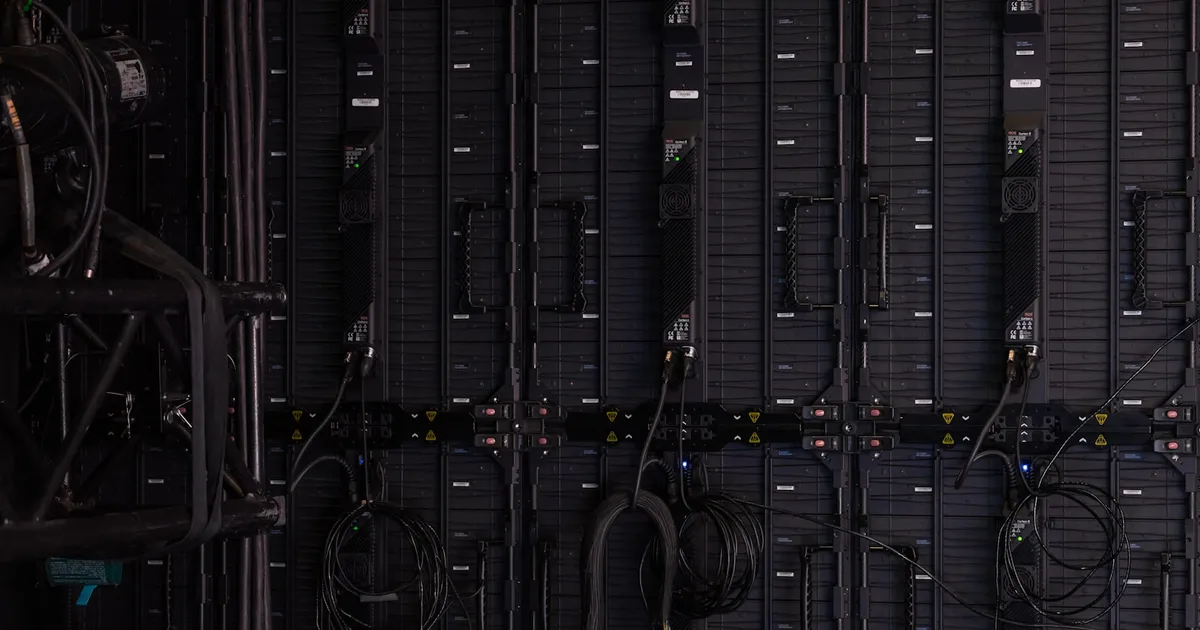
A model can be a hit and a problem at the same time. On July 20, 2026, Chinese AI lab Moonshot AI paused new subscriptions to its flagship Kimi K3 model after demand overwhelmed the company’s available GPU capacity — just 48 hours after the model went live on July 16. Existing users kept access; new sign-ups were halted while Moonshot scrambled to add compute.
The pause is a striking outcome for a launch that, by most accounts, went extremely well. It is also a window into the single constraint that increasingly separates the winners from the also-rans in AI: not model quality, but whether you can get enough chips to serve the model you built.
What happened
Moonshot released Kimi K3 on July 16, 2026. Within two days, the company said demand had exceeded its GPU capacity so quickly that it had to stop accepting new subscribers entirely rather than let latency and reliability degrade for everyone. Moonshot framed the move as a controlled throttle: it plans to bring new users back in batches as it scales its infrastructure, rather than reopening sign-ups all at once.
There is a second release date that matters. Moonshot has said the full open weights for Kimi K3 are expected to be published on July 27, 2026. Once the weights are public, organizations can run the model on their own hardware and bypass Moonshot’s hosted service — and its capacity bottleneck — entirely. In effect, the company’s own open-weight strategy is the release valve for its infrastructure crunch.
About the model
Kimi K3 is not a small model. It is a 2.8-trillion-parameter open-weight system built as a mixture-of-experts, the architecture that lets a model carry an enormous parameter count while only activating a fraction of it per token — the standard approach for keeping inference costs manageable at frontier scale. Moonshot has positioned K3 for demanding workloads: long-horizon coding, complex reasoning, multimodal inputs, and agentic tasks, with a context window running up to 1 million tokens.
On at least one public benchmark, K3 has drawn attention for beating a Western frontier model: reporting cited K3 topping Claude Fable 5 on a frontend code-generation arena. As always, a single benchmark is a narrow slice of real-world capability, and leaderboard positions move quickly. But the headline — the largest open-weight model yet released, competitive with the best closed models on coding — is why demand spiked hard enough to break the service in two days.
For readers new to the name, Kimi is Moonshot’s model family; K3 is the newest and by far the largest entry.
The real story is compute
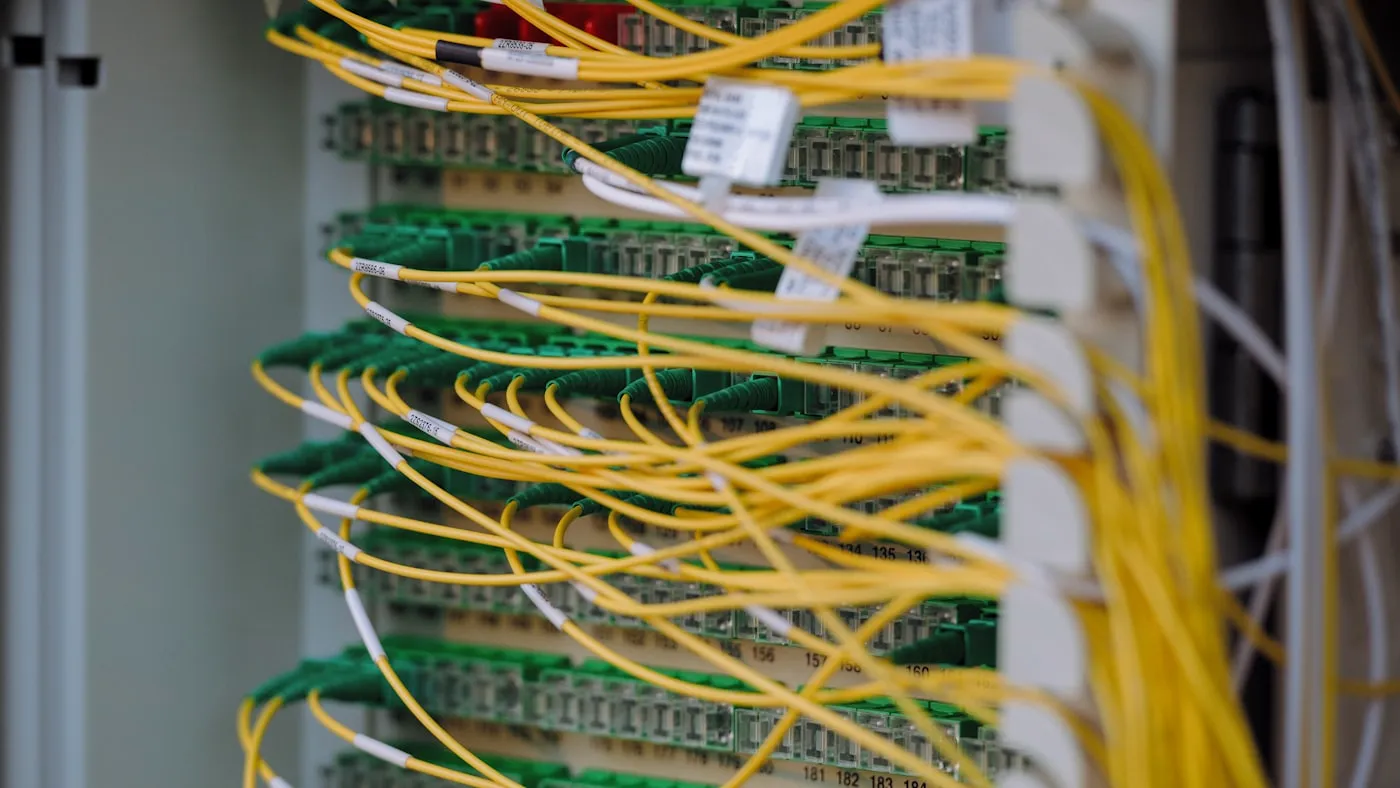
The reason the pause matters more than a typical launch-day outage is why Moonshot ran out of room. Capacity shortages are particularly punishing for Chinese model developers, because access to the most advanced Nvidia chips remains constrained by U.S. export controls. A U.S. lab facing a demand surge can, in principle, rent more top-tier GPUs from a hyperscaler. A Chinese lab has a narrower menu: restricted access to the fastest accelerators, reliance on export-compliant or domestic silicon, and cloud infrastructure that is itself competing for the same scarce parts.
Serving a 2.8-trillion-parameter model is memory-hungry and bandwidth-hungry in exactly the ways that scarce, high-end hardware is built for. When the model is this large and the demand this sudden, the gap between “we shipped a great model” and “we can serve it to everyone who wants it” becomes a hardware problem first and an engineering problem second. Moonshot’s crunch is a concrete illustration of a theme running through the whole Chinese AI sector: the models have caught up faster than the compute to run them.
The business behind the model
The timing is loaded because Moonshot is not just shipping a model — it is positioning for the public markets. The company recently raised roughly $2 billion in a funding round that pushed its valuation above $20 billion, and it is reportedly preparing for a potential initial public offering in Hong Kong, unwinding an offshore corporate structure ahead of a listing.
In that light, the subscription pause is a double-edged signal for prospective investors. On one hand, demand so strong it breaks your service is the kind of problem every AI company claims to want — evidence of genuine product-market fit. On the other, a company that cannot serve its flagship at launch has just advertised, in public, that its growth is gated by infrastructure it does not fully control. How Moonshot narrates that tension — surging demand versus capacity discipline — will shape the story it tells the market.
What it means
Kimi K3’s launch crystallizes the defining constraint of this phase of the AI race. For a stretch, the competition was about who could train the smartest model. Increasingly, it is about who can deploy one at scale — and that is a question about chips, memory, networking, and power, not benchmarks. Moonshot built a model good enough to overwhelm its own servers in 48 hours; the bottleneck was never the intelligence.
Who benefits? Enterprises and developers, in the near term, could actually come out ahead: the July 27 open-weight release turns Moonshot’s hosting problem into an opportunity for anyone with their own hardware — or a cloud contract — to run a frontier-class model without waiting in Moonshot’s queue. That is the quiet power of open weights. A hosted service can be capacity-gated; a downloadable model, once released, cannot be un-shipped. It also intensifies pressure on closed labs, whose pricing advantage narrows every time a competitive open-weight model lands.
Who is squeezed? Moonshot itself, at least on the hosted side, and Chinese labs broadly, for whom the export-control reality turns every demand spike into a harder scaling problem than their U.S. counterparts face. The pause is a reminder that a great model on constrained hardware is a fragile advantage.
What to watch next: whether the open weights actually ship on July 27 and how the model performs on independent evaluations once anyone can run it; how quickly Moonshot reopens hosted subscriptions and what that says about its access to compute; and whether the capacity story helps or hurts the Hong Kong IPO narrative. The model made the headline. The chips will decide the outcome.
Tagged
Keep reading

 Chisato · · 6 min read
 DeepSeek V4 Pro 0813: Benchmarks, Price Hike, Specs
DeepSeek moved its V4 Pro 0813 flagship to general availability with big agentic-coding gains and a peak-hour price hike up to 12x. What's verified and what isn't.
 Chisato · · 6 min read
 Alibaba Wan-Animate-2: Open-Source Real-Time AI Animation
Alibaba's Tongyi Lab open-sourced Wan-Animate-2, a character-animation model that streams at 24fps under Apache 2.0. What it does and why it matters.
 Chisato · · 6 min read
 DeepSeek V4-Flash-0731: Benchmarks, Price, What Changed
DeepSeek's retrained V4-Flash-0731 beats its own flagship on nine agent benchmarks at the same $0.14/$0.28 price, with MIT-licensed weights on Hugging Face.