Market Order vs Limit Order: What's the Difference
A market order executes immediately at the best price; a limit order waits for your price or better. How each works and when to use them.
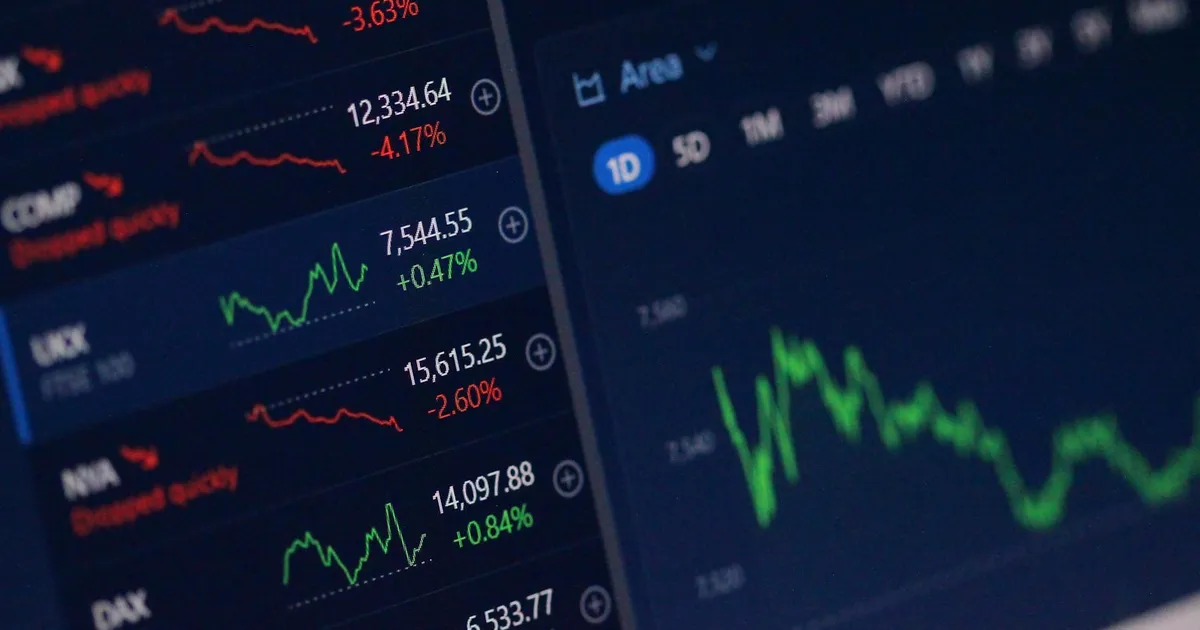
A market order tells your broker to buy or sell a security immediately at whatever price is currently available. A limit order tells your broker to buy or sell only at a specific price or better, even if that means the trade doesn’t happen right away — or at all. The choice between the two is a trade-off between certainty of execution and certainty of price; you can have one guaranteed, but not both.
How a market order works
When you place a market order, your broker routes it to an exchange, which matches it against the best available opposing order in the order book — the lowest ask if you’re buying, the highest bid if you’re selling. The trade fills essentially instantly, but the price you get is whatever the market happens to be offering at that microsecond, not the price you saw quoted a few seconds earlier.
For a heavily traded stock with a lot of buyers and sellers at every price level, that gap is usually tiny — a fraction of a cent. For a thinly traded security, it can be significant, because a market order will keep matching against progressively worse prices in the order book until the entire order is filled.
How a limit order works
A limit order specifies the worst price you’re willing to accept: a maximum price for a buy, a minimum price for a sell. The order sits in the exchange’s order book until a matching order arrives at your price or better. If the market never reaches your limit, the order simply never fills — it can sit open for the rest of the trading session, or longer, depending on how you set its duration.
This gives you price certainty at the cost of execution certainty. You know exactly the worst price you’ll pay or receive, but you’re accepting the risk that the trade might not happen at all if the price moves away from your limit before it’s matched.
Price certainty vs execution certainty
| Market order | Limit order | |
|---|---|---|
| Execution | Immediate (assuming any liquidity exists) | Only if price reaches your limit |
| Price | Best available at the moment of execution | Your limit price or better, guaranteed |
| Best for | Highly liquid securities, urgency | Illiquid securities, price-sensitive trades |
| Main risk | Slippage in thin markets | Missing the trade entirely |
| Fills partially? | Can, in thin order books | Can, if only part of the size is available at your price |
Slippage: why market orders can surprise you
Slippage is the difference between the price you expected and the price you actually got. It shows up most in two situations: thinly traded securities, where there simply aren’t enough orders at nearby prices to absorb a large market order without moving through several price levels, and volatile moments — earnings releases, major news — where prices are changing faster than your order can route to the exchange. A market order placed during a fast-moving, low-liquidity moment can fill meaningfully worse than the last quoted price.
This is one reason a stock’s market capitalization and average trading volume matter beyond just sizing a position — a large-cap, heavily traded stock has enough standing orders at every price level that a market order rarely moves the price much, while a small, thinly traded one might not.
When each one makes sense
Market orders make sense when you care more about getting the trade done than about the exact price — closing a position quickly, or trading a highly liquid security where the bid-ask spread is negligible anyway. Limit orders make sense whenever price matters more than immediacy: entering a position at a specific valuation, trading something illiquid where slippage risk is real, or simply not wanting to babysit a screen waiting for a price to arrive.
Traders who write options contracts or take short positions tend to lean on limit orders by default, since both strategies are more sensitive to entry price than a straightforward long position — a few cents of slippage matters more when it’s compounding against leverage or a borrowed position. Investors practicing dollar-cost averaging, by contrast, often prefer market orders precisely because the strategy is built around not worrying about any single trade’s exact price.
Related order types worth knowing
Most brokers offer variations that combine elements of both. A stop order turns into a market order once a security trades at a specified trigger price — useful for limiting losses on a position without watching it constantly. A stop-limit order does the same but turns into a limit order instead of a market order once triggered, adding price protection back in at the cost of a chance the trade won’t fill. These exist specifically to bridge the gap between the two core order types: automatic triggering (which a plain limit order doesn’t offer) combined with either execution certainty or price certainty once triggered.
Market makers are the counterparty on the other side of many of these trades — they continuously post both bid and ask prices, which is precisely why a market order in a liquid stock almost always fills near the last quoted price: there’s a market maker standing ready to take the other side.
The takeaway
A market order guarantees the trade happens now, at whatever price the market offers; a limit order guarantees the price, at the cost that the trade might never happen. Reach for a market order when speed matters more than a few cents and the security is liquid enough that slippage is minimal; reach for a limit order whenever the exact price matters, the security is thinly traded, or you’re running a strategy — like options or short selling — where entry price has an outsized effect on the outcome.
Tagged
Keep reading
 Kurumi · · 5 min read
 Accretive vs Dilutive Acquisitions: How M&A Affects EPS
An accretive acquisition raises the buyer's earnings per share; a dilutive one lowers it. How accretion/dilution analysis works and where it misleads.
 Kurumi · · 5 min read
 What Is the Cash Conversion Cycle? CCC, Explained
The cash conversion cycle measures how many days a company's cash is tied up in inventory and receivables before it comes back. How to calculate and read it.
 Kurumi · · 5 min read
 What Is a Dual-Class Share Structure?
A dual-class share structure gives some shares more votes than others, so founders keep control with a minority stake. How it works and the trade-offs.