What Is a Market Maker? How They Provide Liquidity
A market maker quotes buy and sell prices continuously, profiting from the spread while providing the liquidity that keeps markets tradeable.
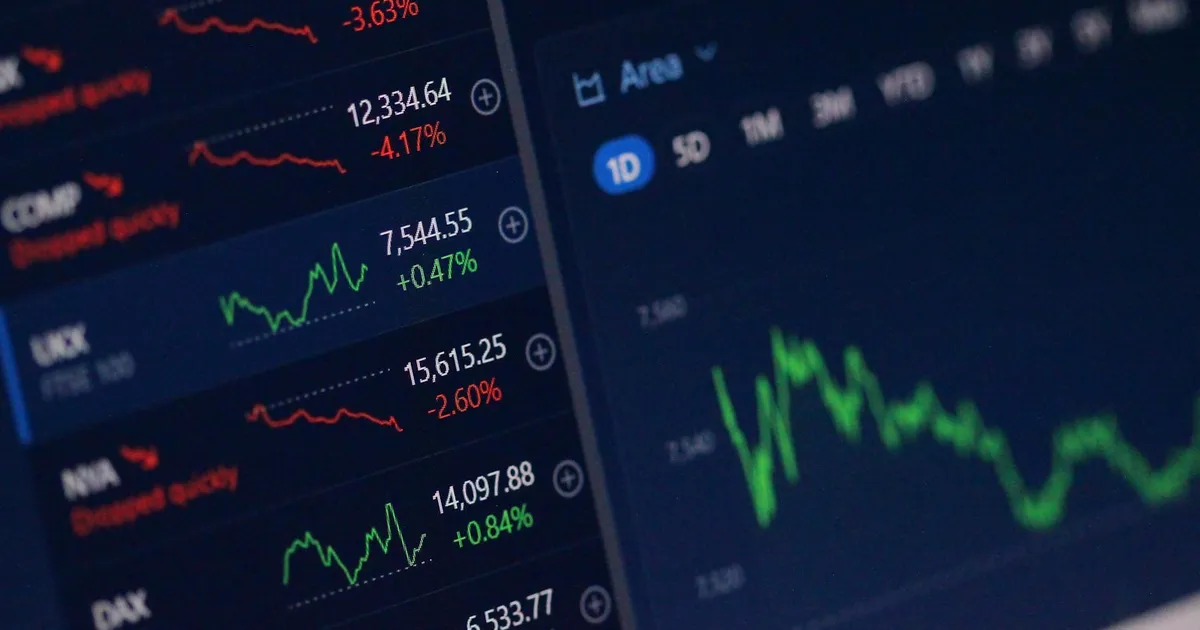
A market maker is a firm or trader that continuously quotes both a buy price (the bid) and a sell price (the ask) for a security, standing ready to trade at those prices whenever someone wants a counterparty. Their profit doesn’t come from correctly predicting where a stock is headed — it comes from the spread, the small gap between the bid and ask price, collected over an enormous volume of trades.
The problem liquidity solves
Imagine you want to sell 100 shares of a stock right now. Without a market maker, you’d need to find another trader who, at that exact moment, wants to buy exactly that stock in exactly that quantity — a coincidence that isn’t guaranteed to exist when you need it. That mismatch is what economists call a lack of liquidity, and it’s what makes some assets easy to trade instantly and others take days to unload at a fair price.
Market makers solve this by always being the other side of the trade. If you want to sell, the market maker buys, quoting a bid price they’re willing to pay. If you want to buy, they sell, quoting an ask price they’re willing to accept. You don’t need to wait for another investor with the opposite desire to show up — the market maker is always there, which is exactly what makes the security liquid.
How the spread generates profit
Say a market maker quotes a stock at a bid of $50.00 and an ask of $50.02. A seller hits the bid and gets $50.00; moments later, a buyer lifts the ask and pays $50.02. The market maker pockets the $0.02 difference on that round trip, having taken on the stock only briefly in between.
That two-cent spread looks trivial on a single trade, but market makers do this across enormous volumes — the same security, repeated thousands or millions of times a day. The business model is built on volume and tight, consistent spreads rather than large moves on any individual trade, which is a fundamentally different kind of exposure than a typical investor holding a position and betting on direction.
Inventory risk
Quoting both sides continuously means a market maker is constantly accumulating a position, whether it wants one or not. If sellers keep hitting the bid faster than buyers lift the ask, the market maker ends up holding more and more shares — inventory it didn’t choose to buy for investment reasons, just as a byproduct of providing liquidity.
This is the core risk of the business: an accumulating position that moves against the market maker if the price drops before it can be unwound. Firms manage this by adjusting their quoted prices in response to inventory — skewing the bid and ask lower when they’re holding too much, encouraging buyers and discouraging further sellers, nudging inventory back toward flat. Modern market making is heavily automated for exactly this reason: the reaction to inventory imbalance and shifting order flow needs to happen in milliseconds, not the minutes a human trader would take to notice and respond.
Market makers vs a typical trader
| Market maker | Directional trader | |
|---|---|---|
| Profit source | The bid-ask spread, collected repeatedly | Price moving in a predicted direction |
| Position intent | Byproduct of quoting, not a bet | Deliberately chosen based on a view |
| Holding period | Seconds to minutes, typically | Days, months, or years |
| Primary risk | Inventory accumulation, adverse selection | Being wrong about direction |
| Role in the market | Provides continuous liquidity | Consumes liquidity by trading against quotes |
Where market makers show up
Every exchange-listed stock, ETF, and option has market makers behind its quoted prices, even if the retail investor placing an order never sees them directly. When you buy a share through a brokerage app, the trade is very often filled against a market maker’s quote rather than matched directly against another retail investor’s order — a structure that keeps most retail trades executing near-instantly at a competitive price. This matters more for a heavily traded security like a large-cap stock or a diversified ETF than for a thinly traded small-cap, where wider spreads and less market-maker participation can make execution noticeably worse.
Market makers are also central to how newly listed securities start trading. When a company goes public — whether through a traditional IPO or a SPAC merger — a market maker or a syndicate of them typically commits to quoting the stock from day one, which is part of what keeps a freshly listed stock from opening with an unusably wide spread.
Why it matters for anyone trading
For most individual investors, market makers are invisible infrastructure — you place an order, it fills near the price you expected, and you move on. But the spread they collect is a real, if usually small, transaction cost embedded in every trade. It tends to be tightest for large, heavily traded names — the kind that dominate a broad market index and get referenced constantly in market cap discussions — and widest for illiquid securities, where fewer participants and more inventory risk push the market maker to demand more compensation for taking the other side. Understanding that spreads aren’t fixed costs but a function of liquidity helps explain why the same percentage move can cost noticeably more to trade in and out of on a thinly traded stock than on a heavily traded one.
The takeaway
A market maker earns money from the bid-ask spread by continuously standing ready to buy and sell, providing the liquidity that lets other investors trade instantly instead of waiting for a matching counterparty. Their risk isn’t picking a bad direction — it’s ending up with unwanted inventory as one side of the market keeps hitting their quotes faster than the other. The spread they charge, tight for liquid names and wider for illiquid ones, is a real embedded cost in every trade, even when the market maker itself never appears on the receipt.
Keep reading

 Kurumi · · 5 min read
 Accretive vs Dilutive Acquisitions: How M&A Affects EPS
An accretive acquisition raises the buyer's earnings per share; a dilutive one lowers it. How accretion/dilution analysis works and where it misleads.
 Kurumi · · 5 min read
 What Is the Cash Conversion Cycle? CCC, Explained
The cash conversion cycle measures how many days a company's cash is tied up in inventory and receivables before it comes back. How to calculate and read it.
 Kurumi · · 5 min read
 What Is a Dual-Class Share Structure?
A dual-class share structure gives some shares more votes than others, so founders keep control with a minority stake. How it works and the trade-offs.