What Is Dollar-Cost Averaging? A Simple Guide
Dollar-cost averaging means investing a fixed amount on a regular schedule regardless of price. How it works, and its real tradeoffs versus lump sum.
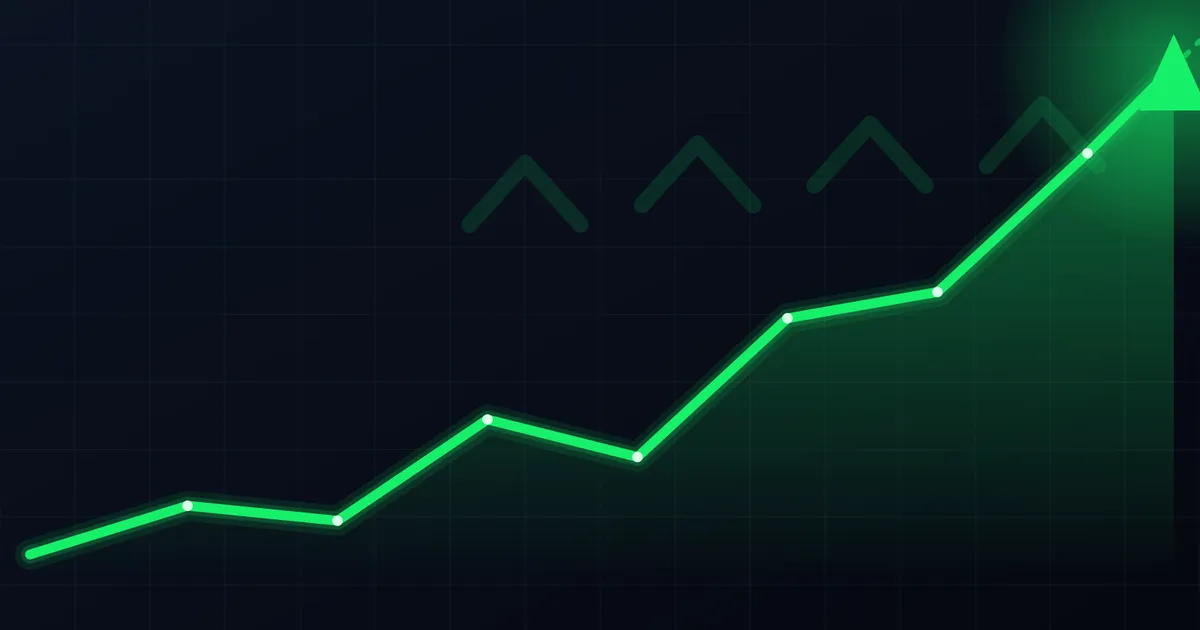
Dollar-cost averaging, or DCA, is an investing strategy where you invest a fixed amount of money at regular intervals — say, the same dollar figure every month — regardless of whether the price is high or low at the time. Instead of trying to time a single purchase at the best possible moment, you spread purchases across many moments, letting the average price you paid smooth out over time.
How it works, mechanically
Say an investor commits to putting a fixed amount into a fund every month. When the price is high, that fixed amount buys fewer shares; when the price is low, the same amount buys more shares. Over many purchases, this naturally weights your average cost per share toward the periods when prices were lower, simply because more shares were bought at those lower prices. You never need to know in advance which months were the cheap ones — the mechanism does that averaging automatically, as a side effect of buying a fixed dollar amount rather than a fixed number of shares.
This is different from buying a fixed number of shares on a schedule, which doesn’t get this averaging effect — a fixed-amount purchase buys more shares when they’re cheap and fewer when they’re expensive, which is precisely the behavior that produces a lower average cost than an unlucky single lump-sum purchase at a peak.
Dollar-cost averaging vs lump sum investing
| Dollar-cost averaging | Lump sum investing | |
|---|---|---|
| Timing risk | Spread across many entry points | Concentrated at a single entry point |
| Upside if prices rise steadily | Lower — later purchases cost more | Higher — full amount benefits from the entire rise |
| Downside if prices fall after entry | Lower — later purchases benefit from the dip | Higher — the full amount was exposed at the top |
| Emotional difficulty | Easier — no single high-stakes timing decision | Harder — one decision carries all the timing risk |
| Best suited for | Investing money as it’s earned (like from a paycheck) | Investing a windfall you already have in hand |
The tradeoff is symmetric by design: dollar-cost averaging reduces the damage from bad timing, but it also caps the benefit of good timing. If prices rise steadily and consistently from the moment you start, putting the entire sum in immediately would have outperformed spreading it out, purely because more money was exposed to the rise for longer. If prices instead fall after an initial lump-sum purchase, dollar-cost averaging would have outperformed, because later installments bought in at the lower price.
Why people use it anyway
Two reasons come up most often, and they’re different from each other. The first is practical: most people don’t have a large lump sum sitting around to invest — they’re investing money as it arrives from a paycheck, which makes regular, smaller purchases the natural shape of the strategy rather than a deliberate choice against a lump sum. In that framing, dollar-cost averaging isn’t really being compared to a lump sum at all — it’s just what investing out of ongoing income looks like.
The second reason is behavioral. Committing to a fixed schedule removes the temptation to try to time entries, a game that’s notoriously difficult to win consistently even for professional investors. A regular, automatic purchase schedule takes that decision off the table entirely, which for many investors matters more than the small amount of theoretical expected return that a lump-sum approach carries on average in a market that trends upward over long periods.
Adjusting the schedule
Some investors vary the amount invested at each interval based on how the price has moved since the last purchase — buying somewhat more when the price has dropped and somewhat less when it has risen, a variant sometimes called value averaging. This tilts the strategy further toward buying more during downturns than a strictly fixed schedule would, at the cost of requiring more active attention than simply automating the same fixed amount every interval. For most investors, the appeal of dollar-cost averaging in its plain form is precisely that it removes ongoing decisions — adding a variable-amount rule reintroduces some of the judgment calls the basic version was designed to avoid.
What it doesn’t do
Dollar-cost averaging doesn’t guarantee a profit, and it doesn’t protect against a genuinely bad investment — buying fixed amounts of something that declines in value the whole time still loses money, just somewhat less than a single purchase at the very start would have. It’s a strategy for managing timing risk within a given investment, not a substitute for evaluating whether the investment itself is sound. It also isn’t free of its own cost: depending on the broker, frequent smaller purchases can carry more transaction friction than a single large one, though this has become less of a factor as commission-free trading has spread.
Where it fits alongside other concepts
Dollar-cost averaging is a purchasing schedule, not a choice of what to buy — it’s commonly paired with broad, diversified holdings like an ETF, where the strategy’s smoothing effect applies to a basket of many companies rather than the fortunes of a single stock. Metrics used to judge whether an individual holding looks fairly priced at any given purchase, like the P/E ratio or a company’s market cap relative to its peers, remain just as relevant under a dollar-cost averaging schedule as they would for a lump-sum purchase — the strategy changes when you buy, not whether what you’re buying is a good idea.
The takeaway
Dollar-cost averaging invests a fixed amount on a regular schedule, which mechanically buys more shares when prices are low and fewer when prices are high, smoothing out the average cost paid over time. It trades away the upside of a lucky, well-timed lump sum in exchange for protection against an unlucky, badly timed one — and for most people investing out of regular income rather than a windfall, it’s less a deliberate strategic choice than simply the natural shape investing takes.
Tagged
Keep reading

 Kurumi · · 5 min read
 Accretive vs Dilutive Acquisitions: How M&A Affects EPS
An accretive acquisition raises the buyer's earnings per share; a dilutive one lowers it. How accretion/dilution analysis works and where it misleads.
 Kurumi · · 5 min read
 What Is the Cash Conversion Cycle? CCC, Explained
The cash conversion cycle measures how many days a company's cash is tied up in inventory and receivables before it comes back. How to calculate and read it.
 Kurumi · · 5 min read
 What Is a Dual-Class Share Structure?
A dual-class share structure gives some shares more votes than others, so founders keep control with a minority stake. How it works and the trade-offs.