AppLovin Q2 2026 Earnings: Why the Stock Dropped 20%
AppLovin stock fell about 20% after Q2 2026 revenue rose 53% but light Q3 guidance signaled slowing growth. Here's what the numbers and Axon rollout show.
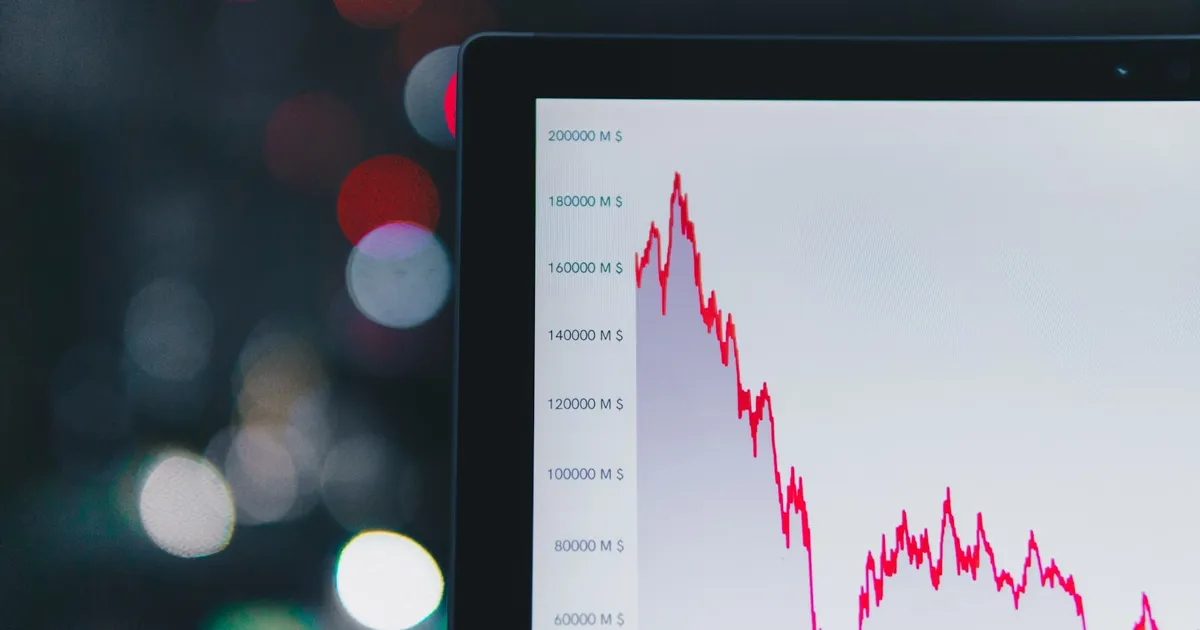
Growth was never AppLovin’s problem — the market’s expectations were. On August 5, 2026, the mobile-advertising company reported second-quarter results that beat on earnings and landed inside its own revenue guidance, then watched its stock crater roughly 20% in after-hours trading, sliding to around $331.57. The selloff had little to do with the quarter that just closed and everything to do with the one ahead: a Q3 outlook that told investors the fastest-growing name in ad-tech is decelerating.
The quarter by the numbers
AppLovin posted second-quarter revenue of $1.92 billion, up 52.8% year over year. That figure sat squarely within management’s prior guidance range of $1.915 billion to $1.945 billion — a clean result by most standards, but shy of the higher “whisper” number a stock priced for perfection had been carrying into the print.
Profitability held up. GAAP earnings came in at $3.76 per share, in line with the analyst consensus, and the company’s adjusted EBITDA margin stayed near the mid-80s — an extraordinary level for any business, and the core of AppLovin’s bull case. When a company converts roughly 84 cents of every revenue dollar into adjusted operating cash flow, small changes in the growth rate get magnified in the valuation.
The problem is that the earnings per share and the margin were both about as good as they could get. There was no upside surprise to reward, and a stock that had run up on the expectation of one had nowhere to go but down when the beat failed to materialize.
The guidance that moved the stock
The real story sat in the outlook. AppLovin guided third-quarter revenue to a range of $2.055 billion to $2.085 billion, implying roughly 46% to 48% year-over-year growth. The midpoint came in about 0.6% below the analyst consensus near $2.08 billion — a rounding error in absolute terms, but a meaningful signal in direction.
Two things unsettled investors. First, the deceleration: growth stepping down from the low-50s to the high-40s continues a clear downward slope off the triple-digit expansion AppLovin posted in prior years. Second, the margin guide. Management pointed to a Q3 adjusted EBITDA margin near 83%, down from the roughly 84%–85% the business had been running — a modest give-back, but one that lands right as revenue growth is cooling. For a growth stock valued on the assumption that both lines keep climbing, a simultaneous wobble in growth and margin is the combination the market fears most.
None of the individual figures were alarming on their own. Stacked together, they reframed the narrative from “hyper-growth with expanding profitability” to “very good growth that is normalizing” — and the multiple compressed to match.
From game studio to pure-play ad engine
To understand why the reaction was so violent, it helps to remember what AppLovin has become. The company spent years as a hybrid — part mobile-game publisher, part advertising platform — before making a decisive bet on the ads side. It completed the divestiture of its apps and games business in mid-2025, booking a pre-tax gain of about $106 million and reinventing itself as a pure-play advertising software company.
That transformation is the reason the stock trades where it does. Stripped of the lower-margin, capital-intensive games operation, what remains is Axon, AppLovin’s machine-learning ad engine. Axon predicts which users are most likely to convert and prices ad placements in real time, and it is the flywheel investors are actually buying: more advertisers feed it more data, the model gets sharper, returns on ad spend improve, and more advertisers pile in. The margins reflect a software business, not a media one — which is exactly why the market treats any hint of a slowdown as a threat to the entire thesis.
The e-commerce question hanging over everything
AppLovin’s next act depends on pushing beyond its home turf. The company built its dominance selling ads inside mobile games; the growth story Wall Street has underwritten assumes Axon can extend that same targeting edge into e-commerce and broader web advertising, where the addressable market is vastly larger.
The self-serve version of Axon opened to the public in June 2026, a milestone meant to let e-commerce merchants buy AppLovin inventory directly rather than through managed accounts. Management has consistently framed the e-commerce ramp as a “it takes time” effort — a deliberate, multi-quarter build rather than an overnight surge — and warned that expanding the funnel could carry near-term marketing costs. The most bullish analysts have modeled scenarios where e-commerce sustains 30%–50% annual growth for years if the expansion lands.
That optionality is the upside. It’s also the source of the anxiety in this print: with the games-advertising base maturing, e-commerce has to do the heavy lifting to re-accelerate the top line. A Q3 guide in the high-40s suggests the new engine is contributing but not yet inflecting — and after a run like AppLovin’s, “contributing but not inflecting” is not what a richly valued stock needs to hear.
A stock that lives on expectations
AppLovin has been one of the market’s most polarizing names for years, a favorite of momentum buyers and a repeated target of short-sellers who have questioned the durability of its ad measurement and the sustainability of its margins. Each earnings report becomes a referendum, and the swings are correspondingly large. A 20% move on a quarter that beat on profit and met its own revenue guidance is only rational in the context of a valuation that had already priced in continued acceleration.
The broader tape didn’t help. AppLovin reported into a jittery market where investors have grown increasingly focused on AI monetization and forward guidance over trailing results, punishing any company whose outlook implies the growth curve is bending. On the same day, memory and storage names slid on soft forecasts, and the mood favored selling first and re-underwriting later.
What it means
The number that mattered was never the $1.92 billion AppLovin booked — it was the roughly 47% growth it guided to next quarter, and the message that message carried.
Who wins. Patient investors who believe the e-commerce ramp is real get a materially cheaper entry point into a business still growing revenue ~50% at an ~84% adjusted EBITDA margin — a rare combination at almost any price. The short-sellers who have circled AppLovin for years get validation that the deceleration they predicted is now visible in the guidance, not just in their models.
Who loses. Momentum holders who bought the stock on the assumption of endless acceleration absorbed the re-rating in a single session. And AppLovin’s management now owns a higher bar: having conditioned the market to expect beat-and-raise quarters, an in-line print reads as a disappointment, and the company has to re-prove the growth story rather than coast on it.
What to watch next. Three things. First, the e-commerce contribution — whether the self-serve Axon rollout starts showing up as re-acceleration in the top line, or stays a slow build that keeps growth grinding lower. Second, the margin trajectory — the step down toward 83% is small, but investors will want to know whether it reflects one-time expansion spending or a structural ceiling now behind the company. Third, the valuation reset — after a 20% haircut, AppLovin’s multiple is lower but still premium; the next two quarters will decide whether that premium is a growth business normalizing gracefully or a story stock still searching for its second act. For a company that turned itself from a game maker into an AI ad engine, the transformation worked. The question now is how fast the engine can still run.
Keep reading

 Kurumi · · 6 min read
 Stock Market Week Ahead: CPI, Oracle, Apple Event
A holiday-shortened week brings August CPI on Friday, Oracle and Adobe earnings Thursday, and Apple's iPhone event Wednesday. What to watch.
 Kurumi · · 4 min read
 August Jobs Report: 162K Beat Revives Fed Hike Bets
US payrolls rose 162,000 in August, nearly triple forecasts. The hot print pushed the 2-year yield to a 2025 high and lifted odds of a September Fed rate hike.
Kurumi · · 5 min read Snowflake Q2 FY2027 Earnings: Revenue, Guidance, Stock
Snowflake Q2 FY2027 product revenue rose 37% to $1.49B and full-year guidance was raised, sending shares up over 20%. The key numbers and outlook.