What Is an ETF? Exchange-Traded Funds Explained
An ETF is a basket of securities that trades on an exchange like a stock. How creation and redemption work, and how ETFs differ from mutual funds.
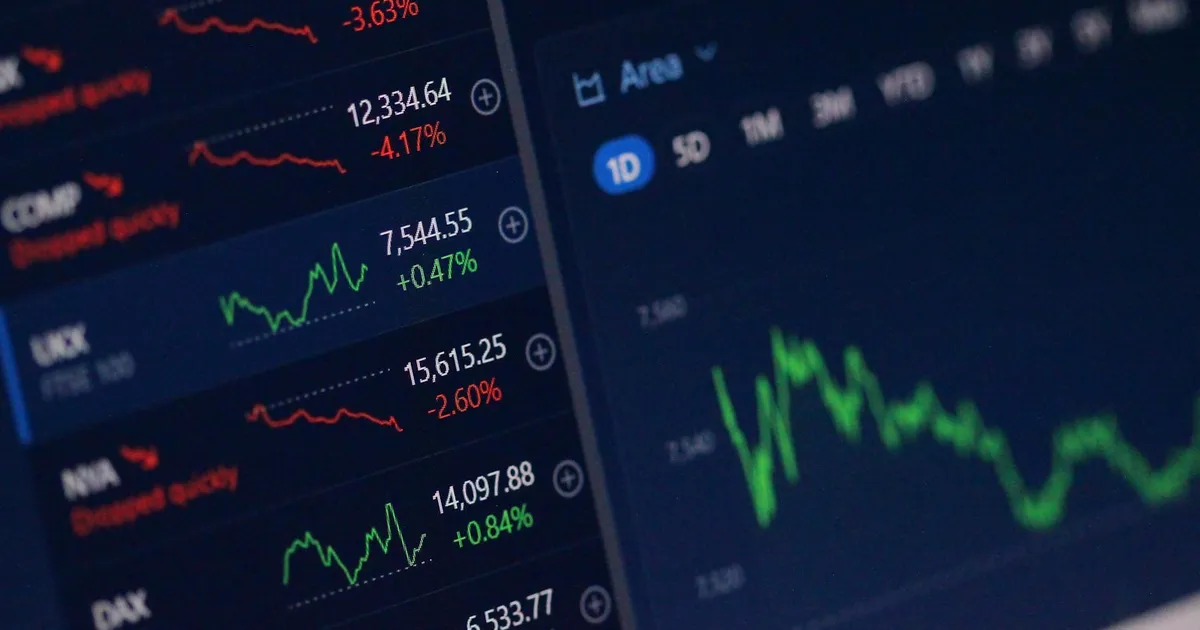
An ETF, or exchange-traded fund, is a basket of securities — stocks, bonds, commodities, or a mix — that trades on a stock exchange throughout the day, the same way a single company’s shares do. Instead of buying a fund from the fund company directly and getting a price set once at the end of the day, an ETF is bought and sold from other investors on the open market, with a price that moves continuously as trading happens.
How an ETF is built
An ETF is issued by a fund manager who defines what the fund holds — for example, an index-tracking ETF might hold every stock in a given index, weighted the same way the index weights them. Shares of the ETF represent a proportional claim on that underlying basket.
What keeps the ETF’s market price close to the actual value of what it holds is a mechanism unique to the ETF structure: large institutional players called authorized participants can create new ETF shares by delivering the underlying basket of securities to the fund manager, or redeem ETF shares by handing them back in exchange for the underlying securities. When the ETF’s market price drifts too far above the value of its holdings, authorized participants can profit by creating new shares and selling them, which pushes the price back down; when it drifts too far below, they can buy cheap shares and redeem them for the more valuable underlying basket, pushing the price back up. This creation-and-redemption arbitrage is what keeps an ETF’s trading price tightly tracking its net asset value, without a central authority having to intervene.
ETFs vs mutual funds
| ETF | Mutual fund | |
|---|---|---|
| Trading | Throughout the day, at live market prices | Once per day, at end-of-day net asset value |
| Minimum investment | Cost of one share (or a fraction, on brokers that support it) | Often a fixed dollar minimum |
| Typical expense ratios | Often lower, especially for index-tracking funds | Often higher, especially for actively managed funds |
| Tax efficiency | Generally more efficient due to the in-kind creation/redemption process | Can trigger more taxable distributions from internal trading |
| Intraday price visibility | Yes — price moves with the market in real time | No — you only know the price after the trading day closes |
The core distinction is structural: an ETF trades like a stock because it is a security that changes hands between investors on an exchange, while a mutual fund is bought from and sold back to the fund company itself at a single daily price.
Types of ETFs
- Index ETFs track a benchmark index, aiming to match its return by holding the same securities in the same proportions. This is the most common category and typically carries the lowest expense ratios.
- Sector and thematic ETFs concentrate holdings in a specific industry or theme, offering targeted exposure without picking individual companies.
- Bond ETFs hold baskets of fixed-income securities, giving investors intraday tradability for an asset class that traditionally settled less liquidly.
- Commodity ETFs track the price of a physical commodity or a basket of commodities, sometimes by holding the physical asset and sometimes through derivatives contracts.
- Actively managed ETFs use the same exchange-traded structure but don’t track an index — a manager makes ongoing selection decisions, similar to an actively managed mutual fund but wrapped in the ETF format.
What to actually look at before buying one
Two ETFs tracking similar things can perform noticeably differently in practice. The expense ratio — the fund’s ongoing annual fee, expressed as a percentage of assets — compounds over long holding periods, so a small difference matters more the longer you hold. Tracking error, or how closely the fund’s actual return matches its target index, is worth checking for anything beyond the largest, most liquid ETFs. And trading volume and bid-ask spread matter for cost of entry and exit — a thinly traded ETF can cost more to buy and sell than its expense ratio alone would suggest, even though the creation/redemption mechanism keeps its price broadly anchored to fair value.
None of this determines whether a specific ETF is a good investment for a specific goal — that depends on time horizon, risk tolerance, and what role the fund plays in a broader portfolio, questions this article isn’t attempting to answer.
How ETFs relate to other market concepts
An ETF’s price still reflects the market’s collective view of what its underlying holdings are worth, which connects to concepts like market cap for the individual companies inside an index fund, and the P/E ratio as one lens analysts use to judge whether those holdings look expensive or cheap relative to earnings. Corporate actions at the individual-stock level, like a stock split or a stock buyback, also ripple through to any ETF that holds shares of the company doing them, since the fund’s value is simply the sum of what it holds.
The takeaway
An ETF wraps a basket of securities in a structure that trades continuously on an exchange, kept close to fair value by an arbitrage mechanism that lets authorized participants create and redeem shares against the fund’s actual holdings. Compared to a mutual fund, that structure typically means intraday pricing, often lower costs, and generally better tax efficiency — though the specific fund’s expense ratio, tracking accuracy, and liquidity still deserve a look before buying in.
Tagged
Keep reading

 Kurumi · · 5 min read
 Accretive vs Dilutive Acquisitions: How M&A Affects EPS
An accretive acquisition raises the buyer's earnings per share; a dilutive one lowers it. How accretion/dilution analysis works and where it misleads.
 Kurumi · · 5 min read
 What Is the Cash Conversion Cycle? CCC, Explained
The cash conversion cycle measures how many days a company's cash is tied up in inventory and receivables before it comes back. How to calculate and read it.
 Kurumi · · 5 min read
 What Is a Dual-Class Share Structure?
A dual-class share structure gives some shares more votes than others, so founders keep control with a minority stake. How it works and the trade-offs.