What Is Arbitrage? Risk-Free Profit, Explained
Arbitrage is profiting from a price gap for the same asset in different markets, buying low and selling high nearly simultaneously with minimal risk.
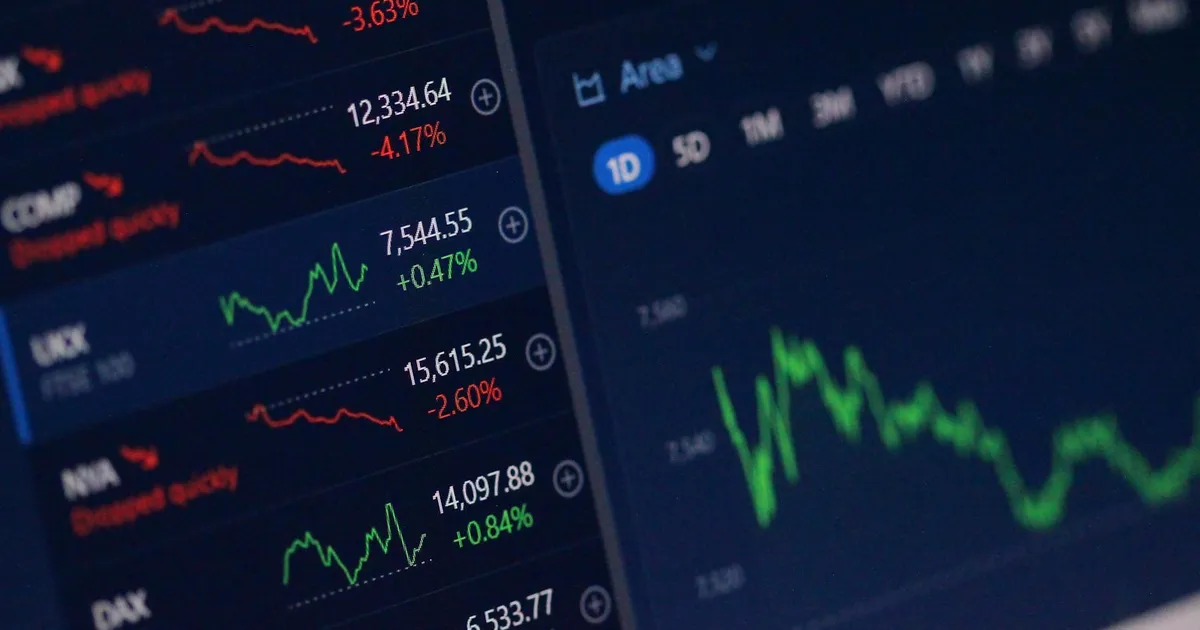
Arbitrage is the practice of profiting from a price difference in the same (or economically equivalent) asset across two markets — buying it where it’s cheap and simultaneously selling it where it’s expensive, pocketing the spread with little to no market risk. It’s one of the oldest concepts in finance, and it plays a quiet but essential role in keeping prices consistent across exchanges, currencies, and related instruments.
The basic mechanic
Suppose a stock trades at $100.00 on one exchange and $100.05 on another at the same instant. An arbitrageur buys on the first exchange and sells on the second, capturing the $0.05 difference per share. The position is opened and closed almost simultaneously, so the trader isn’t betting on where the stock goes next — only on the fact that two prices for the same thing are temporarily out of sync.
That’s the defining feature of true arbitrage: it’s supposed to be risk-free (or very close to it), because both legs of the trade happen at essentially the same moment. Compare that to ordinary trading, where you buy now and hope to sell higher later — that’s speculation, not arbitrage, because time passes and the price can move against you.
Why the opportunity even exists
In an efficient market, identical assets should trade at identical prices everywhere — otherwise arbitrageurs would immediately exploit the gap until it closed. In practice, small gaps open constantly because of:
- Latency — information and orders take time to propagate between markets, and high-frequency trading firms compete to close gaps in fractions of a second.
- Market fragmentation — the same stock, currency pair, or commodity can trade on multiple venues that don’t always update in perfect lockstep.
- Structural frictions — transaction costs, capital requirements, and regulatory barriers mean some price gaps persist because closing them costs more than the gap is worth.
This self-correcting behavior is itself valuable: arbitrage is one of the mechanisms that keeps prices aligned across venues, so the same share of a company doesn’t trade at meaningfully different prices depending on which exchange you use.
Common forms of arbitrage
Spatial (geographic) arbitrage is the simplest form — the same asset priced differently on two exchanges, as in the example above. This is common in currency and commodity markets that trade globally around the clock.
Triangular arbitrage exploits inconsistencies between three related currency pairs. If the implied exchange rate from converting currency A → B → C → A doesn’t return exactly to where you started, a trader can execute all three conversions and pocket the discrepancy.
Merger arbitrage is a less risk-free variant common in equities: when a company announces it’s acquiring another at a fixed price, the target’s stock typically trades slightly below the offer price until the deal closes, reflecting the (usually small) risk the deal falls through. Traders buy the target’s shares and profit from the spread closing as the deal completes — but unlike spatial arbitrage, this carries real deal-completion risk.
Statistical arbitrage uses quantitative models to identify pairs or baskets of related assets whose prices have historically moved together, betting on temporary divergences reverting to their historical relationship. This is a much looser use of the term — it’s a probabilistic strategy with real risk, not a risk-free trade.
Arbitrage vs. speculation
| Arbitrage | Speculation | |
|---|---|---|
| Timing | Both legs execute near-simultaneously | Buy now, sell later |
| Price risk | Minimal — profit is locked in at execution | Real — price can move against the position |
| Source of profit | Existing price discrepancy | Anticipated future price movement |
| Typical holding period | Seconds to minutes | Days to years |
| Who does it | High-frequency and institutional traders | Anyone taking a directional view |
Why it matters even if you never do it
Most individual investors will never execute an arbitrage trade — the opportunities are typically captured in milliseconds by firms with direct market access and low-latency infrastructure, long before a retail order could reach the exchange. But arbitrage activity is part of why markets behave the way they do: it’s why an ETF’s market price rarely strays far from the value of its underlying holdings, and why prices for the same asset stay roughly consistent across venues. Understanding it also clarifies what makes a “risk-free profit” claim suspicious outside of genuine arbitrage — if a strategy sounds like arbitrage but involves real time exposure or price risk, it’s speculation wearing arbitrage’s name.
The takeaway
Arbitrage means capturing a price gap between markets for the same asset, with both sides of the trade executed close enough together that market risk is minimal. Real arbitrage opportunities are narrow and fleeting, closed almost as fast as they open by firms built for speed — but the concept explains a lot about why prices across markets tend to converge, and it’s a useful benchmark for distinguishing genuinely low-risk strategies from speculation dressed up in arbitrage’s reputation.
Tagged
Keep reading

 Kurumi · · 5 min read
 Accretive vs Dilutive Acquisitions: How M&A Affects EPS
An accretive acquisition raises the buyer's earnings per share; a dilutive one lowers it. How accretion/dilution analysis works and where it misleads.
 Kurumi · · 5 min read
 What Is the Cash Conversion Cycle? CCC, Explained
The cash conversion cycle measures how many days a company's cash is tied up in inventory and receivables before it comes back. How to calculate and read it.
 Kurumi · · 5 min read
 What Is a Dual-Class Share Structure?
A dual-class share structure gives some shares more votes than others, so founders keep control with a minority stake. How it works and the trade-offs.