What Is a Margin Call? Margin Trading Risk Explained
A margin call is a broker's demand for more cash or securities after a leveraged position loses value. How maintenance margin works and how it gets triggered.
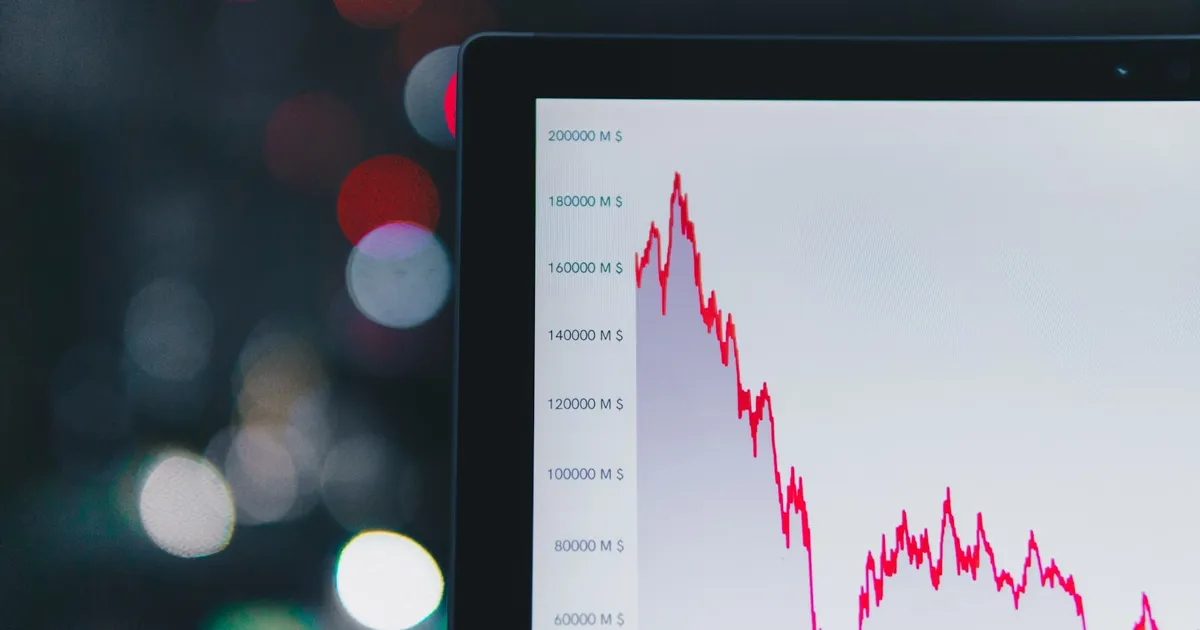
A margin call is a demand from a broker that an investor deposit more cash or securities into a margin account after losses have pushed the account’s equity below a required threshold. It’s the mechanism that keeps leveraged trading from becoming unlimited broker risk — when a bet backed by borrowed money goes wrong, the broker asks for the shortfall back immediately, not whenever the investor feels like covering it.
How margin accounts work
A margin account lets an investor borrow money from a broker to buy securities, using the securities themselves (and other account holdings) as collateral. Buying “on margin” means putting up only a fraction of a position’s value in cash — the rest is the broker’s loan.
Two thresholds matter:
- Initial margin — the minimum percentage of a purchase the investor must fund with their own cash when opening the position.
- Maintenance margin — the minimum percentage of equity the investor must keep in the account as the position’s value fluctuates afterward.
As long as equity stays above the maintenance margin, nothing happens. The trouble starts when it doesn’t.
What triggers the call
Say an investor buys $10,000 of stock, funding $5,000 in cash and borrowing $5,000 on margin. If the stock’s value falls to $6,000, the investor’s equity (value minus loan) has dropped to $1,000 — about 17% of the position, likely below a typical 25-30% maintenance margin. The broker issues a margin call, demanding the account be brought back above that threshold, either with fresh cash or by selling other holdings.
Margin calls compound in falling markets: a broad selloff forces margined investors to sell to meet calls, and that selling adds further downward pressure, which can trigger more calls elsewhere. This dynamic is a recurring feature of sharp market corrections.
What happens if you don’t respond
Brokers set their own deadlines, often just a day or two. If the investor doesn’t deposit funds or sell assets in time, the broker can — and typically will — liquidate positions in the account without further consent, selling whatever is necessary to restore the required equity. The investor doesn’t get to choose which holdings are sold; the broker picks based on its own risk exposure, which can mean selling into a loss at the worst possible moment.
This is the core danger of margin: losses are not capped at the cash originally invested. It’s possible to owe the broker more than the initial deposit if a leveraged position collapses fast enough.
Margin calls vs a normal loss
| Unleveraged position | Margined position | |
|---|---|---|
| Maximum loss | Limited to cash invested | Can exceed cash invested |
| Forced selling | Never | Broker can liquidate without consent |
| Loss speed | Tracks the asset | Amplified by leverage ratio |
| Who decides what to sell | The investor | The broker, at its discretion |
Where margin shows up
Margin isn’t unique to buying stock outright. It’s the same mechanism behind short selling, where an investor borrows shares to sell them, and behind leveraged positions in options and futures. A hedge fund running a leveraged strategy is managing margin exposure constantly — it’s one reason fund managers watch a position’s beta closely, since higher-volatility holdings eat into maintenance margin faster during a drawdown.
Retail brokers typically let investors set a limit order to exit a position automatically before it gets anywhere near a call, which is one of the simpler ways to manage the risk without babysitting an account daily.
Managing margin risk
A few habits reduce the odds of ever seeing a margin call:
- Keep leverage low. The lower the borrowed fraction of a position, the more room prices have to move against it before equity breaches maintenance margin.
- Hold a cash buffer. Extra uncommitted cash in the account absorbs losses before they touch the maintenance threshold.
- Diversify. A margin account tied to one volatile position is far more exposed than one spread across less correlated holdings.
- Watch correlated risk. In a broad selloff, most positions move down together — diversification within equities offers less protection than diversification across asset classes.
- Understand the broker’s terms. Maintenance margin requirements, call deadlines, and which assets get sold first vary by broker and by security; some volatile stocks carry higher maintenance requirements than the exchange minimum.
Margin calls beyond individual accounts
Margin calls aren’t purely an individual investor’s problem — they’re a systemic feature of leveraged markets. Brokers themselves borrow to extend margin, and clearinghouses require brokers to post collateral against the aggregate risk of every margin account they carry. When a sharp, broad market decline triggers margin calls across thousands of accounts simultaneously, the resulting wave of forced selling can itself become a source of further price declines, a feedback loop regulators and risk managers watch closely during periods of high volatility. This is part of why exchanges and clearinghouses periodically raise margin requirements during turbulent stretches — a higher maintenance threshold means smaller, less systemic moves before a call is triggered, at the cost of tying up more capital for every leveraged trader.
The takeaway
A margin call is what happens when a broker’s loan-to-collateral ratio breaches its limit — the investor either adds funds or watches the broker sell positions to close the gap. It’s the natural consequence of trading with borrowed money: gains are amplified, but so are losses, and unlike a cash account, the downside isn’t capped at what was originally put in. Anyone using margin should treat the maintenance threshold as a hard line, not a warning to react to after the fact.
Tagged
Keep reading

 Kurumi · · 5 min read
 Accretive vs Dilutive Acquisitions: How M&A Affects EPS
An accretive acquisition raises the buyer's earnings per share; a dilutive one lowers it. How accretion/dilution analysis works and where it misleads.
 Kurumi · · 5 min read
 What Is the Cash Conversion Cycle? CCC, Explained
The cash conversion cycle measures how many days a company's cash is tied up in inventory and receivables before it comes back. How to calculate and read it.
 Kurumi · · 5 min read
 What Is a Dual-Class Share Structure?
A dual-class share structure gives some shares more votes than others, so founders keep control with a minority stake. How it works and the trade-offs.