What Is Network Segmentation?
Network segmentation splits a network into isolated zones so a breach in one part can't freely reach the rest. How it works and where it fits alongside zero trust.
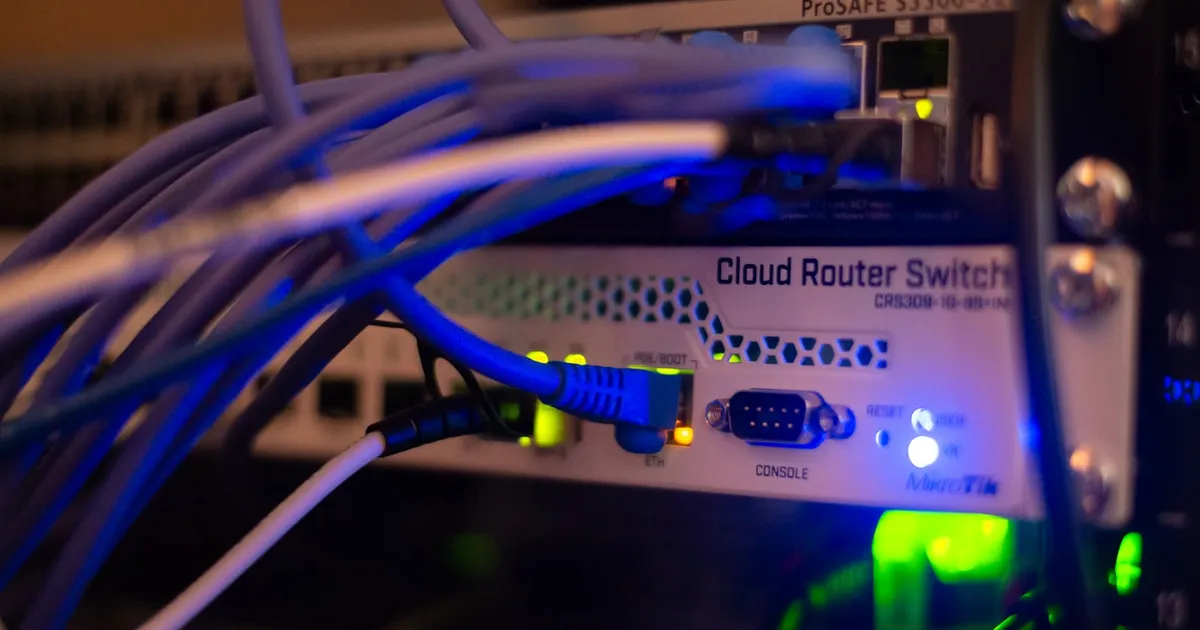
Network segmentation is the practice of dividing a network into smaller, isolated zones so that traffic between them has to pass through a controlled checkpoint rather than flowing freely. The goal is containment: if one segment is compromised, segmentation limits how far an attacker can move before hitting a boundary that requires explicit permission to cross.
Without segmentation, a “flat” network lets any device talk to any other device by default. That’s convenient during setup and a serious liability afterward — a single compromised laptop or exposed service can become a foothold for reaching everything else on the network, a pattern known as lateral movement.
How segmentation actually works
Segmentation is enforced at whatever layer sits between zones — a firewall, a router with access control lists, a switch’s VLAN configuration, or, in cloud environments, subnet and security-group rules inside a VPC. Traffic crossing a segment boundary is inspected against explicit rules; traffic within a segment usually isn’t, which is why the boundaries themselves matter more than anything inside them.
Common segmentation patterns:
- By trust tier. Public-facing web servers in one segment, application servers in another, databases in a third — each tier can only reach the tier immediately behind it, and never skip ahead. A compromised web server can’t talk directly to the database if the segmentation is enforced correctly.
- By function or team. Corporate IT, production infrastructure, and a build/CI environment live in separate segments, so a phished laptop on the corporate network doesn’t have a path to production credentials.
- By sensitivity. Payment processing, systems handling regulated data, or anything in a compliance scope gets its own segment with tighter monitoring and stricter default-deny rules than the rest of the network.
A firewall or a set of network policies is what actually enforces the boundary — segmentation is the architectural pattern; the firewall rules (or their cloud equivalent, like Kubernetes network policies) are the mechanism.
Micro-segmentation
Traditional segmentation draws boundaries between broad zones — a subnet, a VLAN, a whole tier of an application. Micro-segmentation pushes the boundary down to individual workloads: each service, container, or even each process can only talk to the specific other services it’s explicitly allowed to reach, regardless of which broader segment they sit in.
This matters more in modern infrastructure because a single subnet or Kubernetes cluster now often hosts many unrelated services that shouldn’t be able to reach each other at all. A traditional VLAN boundary treats everything inside it as mutually trusted; micro-segmentation doesn’t assume trust just because two things happen to run on the same subnet or cluster. It’s the network-layer expression of the same idea behind zero trust security — trust is granted per-connection based on identity and policy, not based on which network segment a request happens to originate from.
Segmentation and least privilege
Segmentation is really a network-level application of the principle of least privilege: a service should only be able to reach what it actually needs, and nothing else. A default-deny posture — traffic is blocked unless a rule explicitly allows it — is what makes segmentation effective. Default-allow with a list of blocked routes tends to drift over time as new services get added and nobody remembers to add the corresponding deny rule.
Administrative access deserves its own segment, too. A bastion host is a common pattern here: instead of exposing SSH or management interfaces on every internal server, all administrative access routes through one hardened, closely monitored entry point, and internal segments only accept connections originating from it.
Segmentation in cloud vs on-premises networks
On a traditional on-premises network, segmentation is usually physical or VLAN-based: separate switches or tagged VLANs for each zone, with a firewall doing the inspection at the boundary. In a cloud environment, the same idea is expressed through software — separate subnets within a VPC, security groups attached to individual instances, and, for containerized workloads, network policies scoped to a namespace or a set of labeled pods. The enforcement point moves from a physical switch to a piece of configuration, which makes segments easier to create and adjust, but also easier to misconfigure at scale — a single overly permissive security-group rule can quietly undo an otherwise well-designed set of boundaries.
This is part of why segmentation rules are worth treating as code, reviewed the same way application code is: a rule that grants broader access than intended doesn’t announce itself, and the first sign of a problem is often the incident it failed to contain.
What segmentation doesn’t solve
Segmentation limits how far a compromise can spread — it doesn’t prevent the initial compromise, and it doesn’t substitute for strong authentication or application-level access control within a segment. Two services that sit in the same segment can usually still reach each other freely, so segmentation boundaries need to line up with actual trust boundaries, not just physical or network topology. A poorly drawn segment — one that’s too broad, or that groups unrelated services together for convenience — gives a false sense of containment without providing much real one.
It’s also not a replacement for monitoring. A segment boundary that blocks unauthorized traffic is only useful if something is watching for traffic that gets blocked, or for anomalous traffic that’s technically allowed but shouldn’t be happening. Segmentation reduces the blast radius of an incident; it doesn’t detect the incident on its own.
The takeaway
Network segmentation contains the damage a breach can do by dividing a network into zones that can’t freely reach each other, enforced through firewalls, VLANs, cloud security groups, or Kubernetes network policies. Micro-segmentation takes the same idea down to individual workloads rather than broad subnets, which fits how modern, densely shared infrastructure actually runs. Segmentation limits lateral movement after a compromise — it’s not a substitute for strong authentication, least-privilege access rules within a segment, or active monitoring of what the boundaries are blocking.
Tagged
Keep reading

 Chisato · · 4 min read
 IPv4 vs IPv6: What's Actually Different
IPv4's 32-bit address space is exhausted; IPv6 fixes that with 128-bit addresses plus routing and header changes. Here's what differs in practice.
 Chisato · · 4 min read
 CIDR Notation and Subnetting, Explained
CIDR notation like 10.0.0.0/24 packs an IP range and its mask into one string. How prefix length maps to host count, and how subnetting splits a network.
 Chisato · · 4 min read
 What Is a Bastion Host?
A bastion host is a hardened server that acts as the single controlled entry point into a private network, shrinking the attack surface for admins.