What Is a Message Queue? Async Processing Explained
A message queue holds tasks between producers and consumers so work happens asynchronously and reliably. How queues work and when to use one.
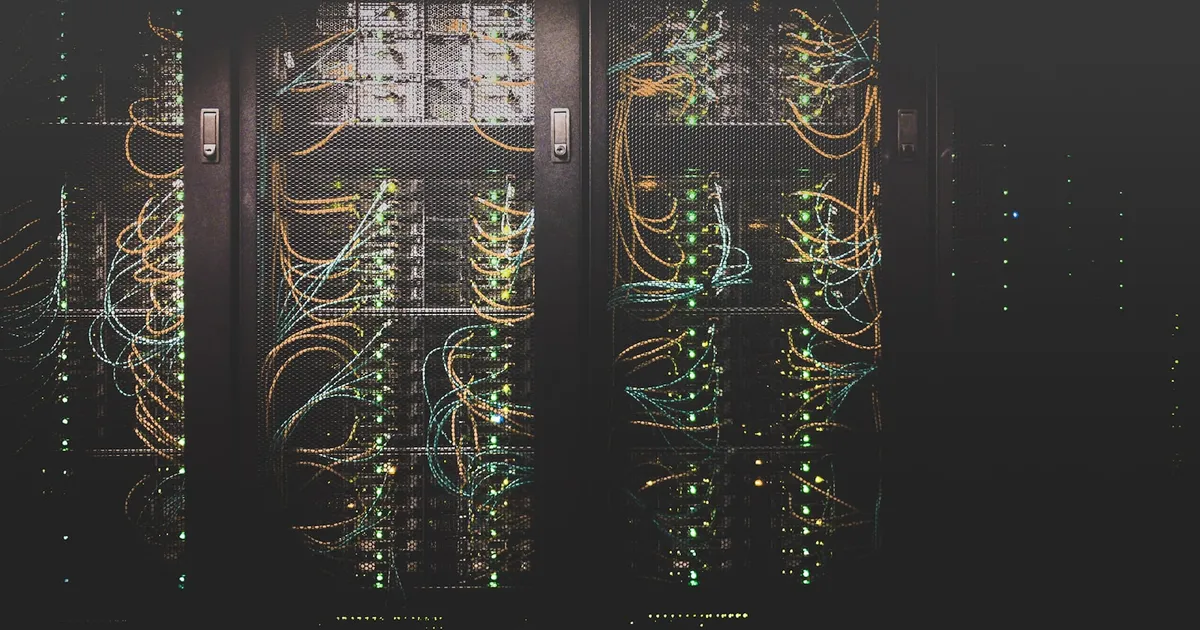
A message queue is a buffer that holds messages — units of work or data — between a producer that creates them and a consumer that processes them, so the two sides don’t need to run in lockstep. Instead of one service calling another directly and waiting for a response, it drops a message on the queue and moves on; the receiving service picks up messages whenever it’s ready. That decoupling is the entire point: producers and consumers can fail, restart, or scale independently without losing work.
The problem it solves
Consider an e-commerce checkout: when an order is placed, the system needs to charge a card, send a confirmation email, update inventory, and notify a shipping partner. Calling all four synchronously means the customer waits for the slowest one, and if the email service is briefly down, the entire checkout fails. A message queue breaks this chain. The checkout service publishes an order-placed message and returns immediately; each downstream task consumes that message on its own schedule and retries independently if it fails.
This same pattern shows up constantly in microservices architectures, where services need to coordinate without being directly coupled to each other’s availability or response time.
Core mechanics
A message queue is built around a small set of concepts that hold regardless of which product implements them:
- Producer. The service that creates a message and publishes it to the queue.
- Queue (or topic). The durable buffer that holds messages until they’re consumed. Durable means the queue survives a restart — messages are written to disk, not just held in memory.
- Consumer. The service that reads messages off the queue and does the actual work.
- Acknowledgment. After a consumer finishes processing a message, it sends an ack back to the queue, which then deletes the message. If the consumer crashes before acknowledging, the message becomes visible again for another consumer to pick up — this is what makes queues resilient to failure.
- Dead-letter queue. A message that fails processing repeatedly (a malformed payload, a bug in the consumer) gets routed to a separate queue after a retry limit, so it doesn’t block the main queue forever while someone investigates.
Delivery guarantees
Queues typically offer one of three delivery guarantees, and the choice matters a lot for how you write consumers:
| Guarantee | Behavior | Consumer requirement |
|---|---|---|
| At-most-once | Message delivered zero or one times | None, but data loss is possible |
| At-least-once | Message delivered one or more times | Consumer must be idempotent |
| Exactly-once | Message delivered exactly once | Hardest to implement; often approximated |
At-least-once is by far the most common default, because guaranteeing exactly-once delivery across a network is genuinely difficult — a consumer that crashes right after processing but before acknowledging will see the message redelivered. The practical fix is designing consumers to be idempotent: processing the same message twice produces the same result as processing it once. Using the order ID as a deduplication key before charging a card, for example, rather than blindly charging on every message received.
Queues vs. event streams
A traditional message queue (RabbitMQ, Amazon SQS) is optimized for task distribution: a message goes to one consumer and disappears once handled. An event-streaming platform like Apache Kafka takes a different approach — it retains every event in an ordered, replayable log, and multiple independent consumer groups can each read the entire stream at their own pace. If you need one worker to pick up one job and forget it, a queue is simpler and sufficient. If multiple systems need to react to the same event, or you need to replay history, an event log fits better.
Some systems blur this line — a webhook fan-out is often backed by a queue internally, buffering deliveries so a slow downstream receiver doesn’t block the producer.
When to introduce a queue
Queues add real operational cost — another system to run, monitor, and reason about — so they’re worth reaching for when a specific pattern shows up:
- Spiky or bursty load. A queue absorbs a burst of requests and lets consumers drain it at a steady rate, rather than a downstream service getting overwhelmed all at once.
- Slow or unreliable downstream work. Sending emails, calling third-party APIs, or generating reports shouldn’t block the request that triggered them.
- Decoupling services. Producers and consumers can be deployed, scaled, and restarted independently.
- Retry semantics you don’t want to hand-roll. Most queue systems handle backoff and redelivery for you.
For request/response calls where the caller genuinely needs an immediate answer — like fetching a resource through a REST API — a queue is the wrong tool; it’s built for fire-and-forget work, not synchronous round trips. Many teams run a managed queue service (SQS, Cloud Pub/Sub, Azure Service Bus) rather than operating one themselves, similar to how they’d lean on managed serverless compute instead of managing servers directly.
The takeaway
A message queue decouples producers from consumers by buffering work between them, so a slow or failing downstream service doesn’t take down the one calling it. Understand your delivery guarantee — at-least-once is the practical default, which means your consumers need to be idempotent — and reach for a queue when you have bursty load, slow background work, or services that need to scale independently of each other.
Tagged
Keep reading
 The Lycoris Team · · 4 min read
 What Is a Dead Letter Queue? Failed Message Handling
A dead letter queue holds messages a system couldn't process after repeated retries, isolating failures so they don't block or silently vanish. How it works.
 The Lycoris Team · · 3 min read
 Kafka vs RabbitMQ: Choosing a Message Broker
Kafka is a durable, replayable log built for high-throughput streams; RabbitMQ is a traditional broker built for flexible routing and task queues.

 Chisato · · 5 min read
 What Is a VPC Endpoint?
A VPC endpoint gives a private network direct access to a cloud service without routing traffic through the public internet or a NAT gateway.