What Is a Market Circuit Breaker?
A market circuit breaker is an automatic trading halt triggered when an index falls a set percentage, giving markets a pause during extreme volatility.
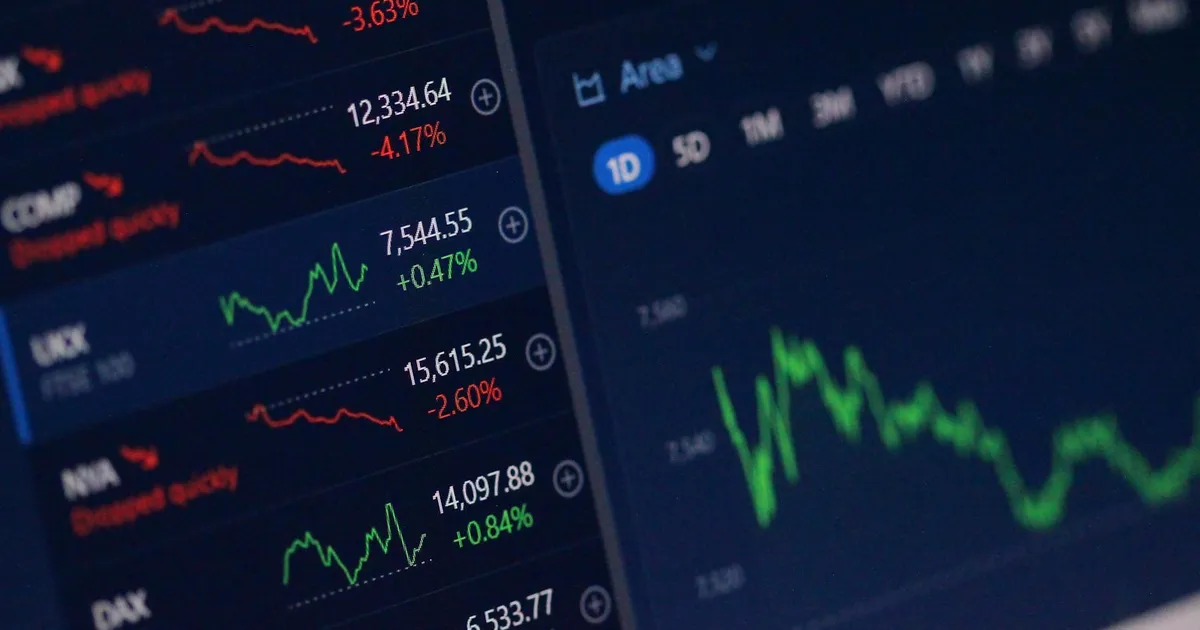
A market circuit breaker is an automatic, exchange-wide trading halt that kicks in when a broad market index falls by a predetermined percentage in a single session, pausing trading for a fixed period so participants have time to absorb information and reassess before continuing. It’s a mechanical, rules-based brake — no human decides in the moment whether to pull it — designed specifically to interrupt runaway, panic-driven selling rather than to prevent losses outright.
Why exchanges built this in
Markets can move very fast when fear takes over — a wave of selling triggers automated stop-losses and algorithmic trading systems, which triggers more selling, in a feedback loop that can compress what might otherwise be a multi-day decline into a matter of minutes. Circuit breakers exist to interrupt that feedback loop mechanically: force a pause, let information be digested, let liquidity providers reassess prices calmly rather than reactively, and let human judgment re-enter a process that algorithms had started running on their own.
This is a design response to specific historical episodes of extremely fast, severe single-day declines, which prompted regulators and exchanges to formalize rules-based halts rather than relying on ad hoc, individually judged decisions about when to stop trading.
How the thresholds work
In U.S. markets, market-wide circuit breakers are tied to declines in a broad index (the S&P 500) from its previous closing level, with three tiers of increasing severity:
- Level 1 — a decline of a moderate percentage triggers a halt of a set number of minutes, but only if it happens before a certain point in the trading day; later in the day, this level doesn’t trigger a halt at all, since there’s less time left for a feedback loop to run away.
- Level 2 — a larger decline triggers a longer halt, again subject to a time-of-day cutoff.
- Level 3 — a severe decline halts trading for the remainder of the trading day entirely, regardless of what time it occurs.
The exact percentage thresholds and halt durations are set by exchange rules and reviewed periodically, but the tiered structure — larger declines earn longer or full-day halts, and the trigger becomes less lenient as the day goes on — is the consistent design across markets that use this mechanism.
Circuit breakers vs trading curbs on individual stocks
Market-wide circuit breakers, which halt an entire exchange, are a different mechanism from single-stock trading halts, which pause trading in one specific security — often triggered by unusually large price moves in that stock alone, pending news, or an order imbalance the exchange wants to let resolve before matching more trades. A single company’s stock can be halted without any market-wide circuit breaker firing at all; the two systems operate independently and are triggered by different conditions.
| Market-wide circuit breaker | Single-stock trading halt | |
|---|---|---|
| Trigger | Broad index decline from prior close | Unusual price move or pending news in one security |
| Scope | Entire exchange, all listed securities | One stock (or a small related group) |
| Purpose | Interrupt market-wide panic selling | Let an individual stock’s price discovery reset |
| Frequency | Rare — reserved for severe, broad declines | Comparatively common |
What actually happens during a halt
Trading stops across the affected market for the halt’s duration — no new trades execute, though existing orders generally remain in the system. When trading resumes, it typically restarts through a reopening auction process rather than immediately matching continuous orders, which is designed to establish a fair reopening price by aggregating buy and sell interest that accumulated during the halt, rather than letting the first orders to arrive set the tone.
Circuit breakers don’t prevent a decline from continuing after trading resumes — a market can still fall further once trading reopens, and a severe enough day can trigger multiple halts in succession as the decline continues past each successive threshold. The mechanism buys time and interrupts momentum; it doesn’t change the underlying reasons prices are falling.
What this means for everyday investors
For someone who isn’t actively day-trading, market circuit breakers are mostly background infrastructure rather than something to actively plan around — they don’t affect a typical buy-and-hold position, and they don’t change the fundamentals of a company or a broader bull or bear market trend. Their practical relevance shows up mainly for anyone placing time-sensitive orders during a fast-moving session, since a halt means an order won’t execute until trading resumes, and market liquidity can look and behave very differently once a session reopens compared to how it was trading right before the halt.
It’s also worth distinguishing circuit breakers from technical chart patterns that traders watch for signs of a coming trend shift, like a golden cross or death cross — those are analytical signals some traders use to anticipate market direction, while a circuit breaker is a mechanical, rules-based halt with no predictive component at all; it only reacts to a decline that has already happened.
The takeaway
A market circuit breaker is an automatic, tiered trading halt triggered by a broad index falling a set percentage from its prior close, built to interrupt fast, feedback-driven selling and give the market time to reset before continuing. It’s distinct from a single-stock trading halt, doesn’t prevent a decline from resuming once trading reopens, and for most long-term investors is simply part of how exchanges are built to behave during rare, severe volatility rather than something that changes day-to-day investing decisions.
Tagged
Keep reading

 Kurumi · · 5 min read
 Accretive vs Dilutive Acquisitions: How M&A Affects EPS
An accretive acquisition raises the buyer's earnings per share; a dilutive one lowers it. How accretion/dilution analysis works and where it misleads.
 Kurumi · · 5 min read
 What Is the Cash Conversion Cycle? CCC, Explained
The cash conversion cycle measures how many days a company's cash is tied up in inventory and receivables before it comes back. How to calculate and read it.
 Kurumi · · 5 min read
 What Is a Dual-Class Share Structure?
A dual-class share structure gives some shares more votes than others, so founders keep control with a minority stake. How it works and the trade-offs.