UN Global Dialogue on AI Governance Opens in Geneva
The UN's first Global Dialogue on AI Governance opened in Geneva as a 40-scientist panel warned nobody can yet rule out AI 'catastrophic harm.'
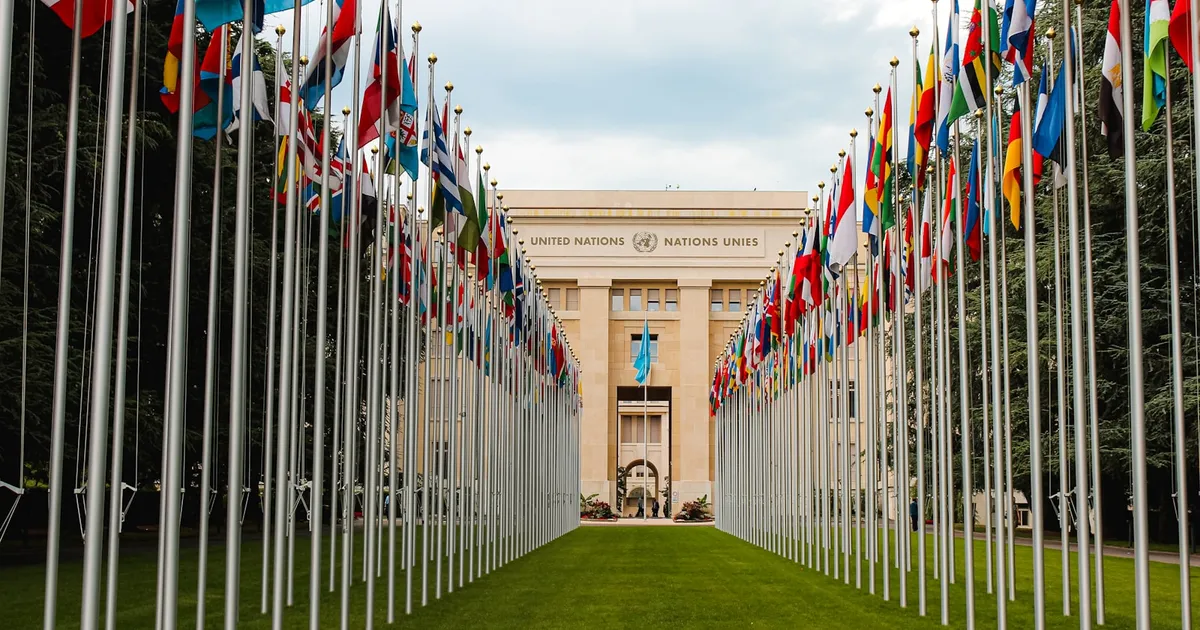
The world’s governments sat down together to talk about artificial intelligence on July 6, 2026, as the first session of the Global Dialogue on AI Governance opened in Geneva. Convened under the United Nations and running through July 7 at the city’s Palexpo convention center, the dialogue is the first standing UN forum where governments, industry, academia, and civil society meet specifically to coordinate on how AI should be governed. It arrived alongside a blunt warning from the UN’s new scientific panel: nobody can currently guarantee that advanced AI will not cause catastrophic harm.
The timing underscores the gap the dialogue exists to close. In the same week, frontier labs continued shipping systems powerful enough that their makers are gating access on safety grounds — OpenAI, for one, is holding GPT-5.6 in a restricted preview because it rates the models high-risk for cybersecurity and biological misuse. Capability is moving on a schedule of weeks; governance has been moving on a schedule of years.
What the Global Dialogue is
The Global Dialogue on AI Governance was established by the UN General Assembly as one of two mechanisms created to give international AI oversight a permanent home. It is designed to be inclusive by construction: a place where all governments — not only the handful of countries hosting frontier labs — can share best practices, compare regulatory approaches, and push for benefits and safeguards that reach beyond the wealthiest economies.
The Geneva session is co-chaired by H.E. Ms. Egriselda López of El Salvador and H.E. Mr. Rein Tammsaar of Estonia, a pairing that deliberately puts smaller states at the head of the table. It runs in parallel with two other major convenings in the city: the WSIS Forum 2026 (July 6-10) and the ITU’s AI for Good Global Summit (July 7-10). A second session of the dialogue is scheduled for New York in May 2027.
The forum’s premise is that AI governance cannot be left to the countries and companies at the frontier alone. Whether that inclusive framing produces binding commitments or remains a venue for dialogue is the open question the process now has to answer.
The science panel’s verdict
The dialogue opened on the back of a landmark document: the first global independent scientific assessment of AI, produced by the Independent International Scientific Panel on AI, the second mechanism the UN stood up alongside the dialogue itself. The panel drew 40 scientists selected from more than 2,600 candidates across 140 countries — an attempt to build an authoritative, geographically broad scientific baseline the way the IPCC did for climate.
Its central conclusion is stark. The assessment found that nobody can currently guarantee the technology won’t cause catastrophic harm, and that oversight is not keeping pace with capability. Panel co-chair Yoshua Bengio put it directly: “AI capabilities are outpacing both scientific understanding and governments’ ability to adapt.” He added that “with growing evidence of deceptive AI behaviour, science currently cannot guarantee that as capabilities continue to increase, AI will not cause catastrophic harm, either on its own or due to malicious users.”
The report also tried to quantify the pace that worries researchers. It found that AI task complexity is doubling roughly every four to seven months — a compounding rate that, if it holds, pushes the frontier into new territory faster than regulators can write rules for the last one. The panel anticipated a near-term shift toward agentic AI capable of carrying out more real-world tasks with less supervision, and, over a longer horizon, convergence between AI and technologies like quantum computing and biotechnology.
Guterres: ‘the cost of waiting is rising’
UN Secretary-General Antonio Guterres welcomed the assessment and used it to press for faster action. “The world cannot govern what it cannot understand,” he said, casting the scientific panel’s work as the foundation the governance process had been missing. “The potential is great, but the risks are real, and the cost of waiting is rising.”
That last phrase is the crux of the UN’s argument. The concern animating the whole exercise is not that AI is uniformly dangerous but that the window to build shared guardrails is narrowing while the technology’s capabilities — and the number of actors who can wield them — keep expanding. An agentic system that can plan and execute multi-step tasks with limited human oversight is more useful and more consequential than a chatbot, and the report’s projected shift in that direction is exactly what raises the stakes on governance.
Why a UN venue, and why now
International AI governance has so far been a patchwork. The EU has moved furthest with binding law — its AI Act and the enforcement of rules on general-purpose models — while other jurisdictions have leaned on voluntary commitments, executive actions, and industry self-regulation. National frameworks diverge, and a model trained in one country is deployed in every country, which is precisely the mismatch a global forum is meant to address.
The UN’s bet is that a standing, inclusive process can do two things a scattered set of national rules cannot: build a shared scientific understanding that governments can act on together, and give countries without frontier labs a real seat in decisions that will affect them regardless. The inclusion of El Salvador and Estonia as co-chairs, and the panel’s deliberately global composition, are signals that this is meant to be more than a G7-plus conversation.
The counterweight is familiar. A forum with broad legitimacy but no enforcement power can convene, assess, and recommend — but it cannot compel. The most capable systems are being built inside a small number of private companies whose release decisions, as the GPT-5.6 preview shows, currently rest on internal risk frameworks rather than external law. The distance between an authoritative warning and a binding rule is the entire challenge.
What it means
The Geneva dialogue is a milestone in form more than in force. For the first time, there is a permanent UN venue for AI governance and an independent scientific panel feeding it a shared, global evidence base. That institutional scaffolding matters — climate policy did not cohere until the science had a common home — but scaffolding is not yet a building.
Who it serves. The clearest beneficiaries are the countries that host no frontier labs. An inclusive forum and a globally sourced scientific panel give them standing in a debate that has been dominated by a few governments and companies. Whether that standing converts into influence over how models are actually built and released is the harder test.
The tension to watch. The panel’s message and the industry’s behavior are pointing the same way from opposite directions. Scientists warned that control cannot be guaranteed; a leading lab simultaneously restricted access to its newest models on cybersecurity and biological-risk grounds. Both are admissions that capability has reached a level where the default is caution. The unresolved question is whether that caution stays voluntary and internal to the companies, or becomes codified and external — and a dialogue without enforcement power cannot answer it alone.
What comes next. The near-term signals are concrete: whether the Global Dialogue produces commitments or communiqués, whether governments converge on the scientific panel’s findings or contest them, and whether the pace the report described — task complexity doubling every four to seven months — forces the timeline. As open-weight models keep closing the gap and capability diffuses beyond the largest labs, the argument that governance can wait for consensus gets weaker. Geneva was the opening session. The measure of it will be what, if anything, is binding by the time the dialogue reconvenes in New York in 2027.
Tagged
Keep reading

 Chisato · · 6 min read
 Trump's AI Force and AI Czar: What Was Announced
President Trump says he'll create an 'AI Force' modeled on the Space Force and name an AI czar, while rejecting calls to slow AI down. Here's what we know.
 Chisato · · 6 min read
 WAICO: China's New Global AI Governance Organization
China formalized WAICO, a 29-nation AI cooperation body headquartered in Shanghai, at WAIC 2026 — a rival framework to US and EU AI governance.
 Chisato · · 6 min read
 Super Intelligence Force: Trump's AI Task Force Explained
Trump named DNI Jay Clayton to lead a new 'Super Intelligence Force' with a 120-day mandate to report on AI risks. Members, mandate and open questions.