SpaceX Stock Falls Below IPO Price for First Time
SpaceX shares dipped below their $135 IPO price for the first time on July 15, down about 34% from their peak. What's driving the slide and what to watch.
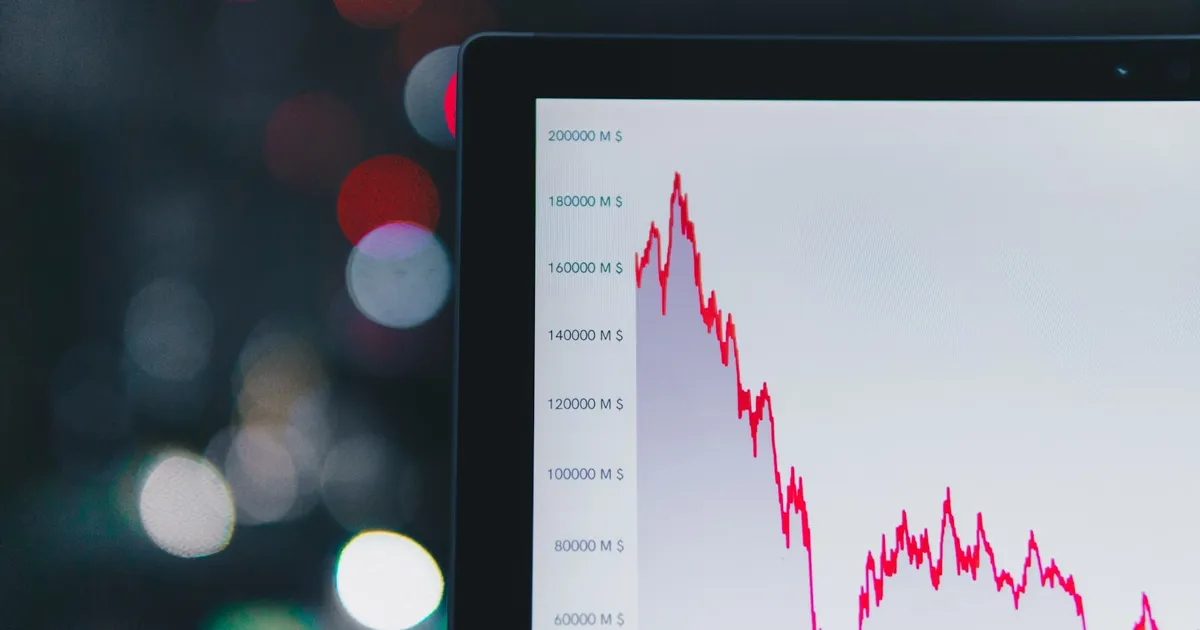
The most hyped public offering of the year just gave back all of its post-IPO gains. On Wednesday, July 15, 2026, shares of SpaceX fell for a fourth straight session and briefly dropped below their $135 initial public offering price for the first time, dipping under $133 intraday before recovering to close at $135.27. The move erases the entire premium the stock built after its record June debut and marks a sharp reversal for a company that, weeks earlier, briefly rivaled the largest firms in the world by market value.
The slide arrives one day before SpaceX is scheduled to fly its Starship rocket for the first time since going public — a test that will put the company’s engineering narrative back in front of investors just as the financial one wobbles.
From record debut to round trip
SpaceX completed the largest IPO in history on June 12, 2026, pricing shares at $135 and raising roughly $75 billion at a valuation approaching $1.8 trillion. The stock opened around $150, a roughly 11% pop, and closed its first session near $161, up about 19%. In the days that followed it ran above $200, briefly lifting SpaceX’s market capitalization to around $2.1 trillion and making it one of the most valuable U.S.-listed companies.
That peak did not hold. The stock has lost ground in nearly every week since, and Wednesday’s decline leaves it roughly 34% below its all-time high. Trading back down to the $135 offering price means investors who bought the IPO allocation are, on paper, back to breakeven — and anyone who bought into the early rally is underwater.
What’s pressuring the stock
Two dynamics have dominated the post-IPO trade, and both cut against a stable share price.
The financials. SpaceX disclosed a $4.9 billion net loss for the prior year, a figure that sharpened investor questions about the company’s path to profitability. The business spans two very different engines — a maturing, cash-generative satellite-internet operation in Starlink, and a capital-hungry launch and deep-space program anchored by Starship. The loss underscored how much the latter still consumes, and public markets have proven less patient with that spending than SpaceX’s private backers were.
The float. Only about 4% of SpaceX’s total shares trade on the Nasdaq under the ticker SPCX. A small public float concentrated against enormous investor attention has produced outsized volatility: with so few shares available relative to demand and sentiment, the stock has swung hard in both directions during its first month of trading. The same thin float that helped fuel the debut spike has amplified the descent.
The combination — a headline-grabbing loss and a structurally jumpy share count — has made SpaceX one of the most closely watched and least predictable large-cap stocks since it listed. Readers looking to understand why a small float magnifies price moves may find our primer on what market cap is a useful starting point, since a company’s market value and the number of shares actually trading can tell very different stories.
The Starship test hanging over the tape
The timing is conspicuous. SpaceX is set to launch Starship Flight 13 no earlier than Thursday, July 16, at 6:45 p.m. EDT from Starbase, Texas — its first flight since the IPO. The mission is the second launch of the vehicle’s Version 3 configuration, with objectives that include deploying 20 Starlink V3 satellites, relighting a single Raptor engine in space, and a controlled entry and splashdown in the Indian Ocean.
For a company whose valuation rests heavily on the promise of fully reusable heavy-lift launch, the flight is more than an engineering milestone — it’s a market event. A clean success would hand bulls a concrete data point to counter the profitability worries; a failure or scrub would do the opposite at a delicate moment for the stock.
A cautionary chapter for the IPO class of 2026
SpaceX’s round trip lands amid a busy year for high-profile listings and market debuts. It follows a stretch in which investors have been sorting winners from casualties across a crowded pipeline — from humanoid robotics via Agility Robotics’ SPAC deal to the long-anticipated public-market test of the AI leaders, including Anthropic’s confidential IPO filing. SpaceX’s slide is a reminder that even the most heavily subscribed offering can give back its gains once the lockup of hype meets the arithmetic of losses.
It also underscores how much a debut’s first-day fireworks can obscure. A blockbuster pricing and a 19% pop generate headlines; they do not settle the question of what a company is worth once the broad market — not just the allocation buyers — sets the price. For SpaceX, that price discovery is now happening in real time, and the market’s initial answer has been to mark the stock back to where it started.
What it means
The near-term story is straightforward: the SpaceX trade has round-tripped, and the $135 IPO price has become the level everyone is watching. Holding it would suggest the offering found a floor; breaking decisively below it would confirm that the early-June enthusiasm was a liquidity-driven spike rather than a durable repricing.
The medium-term story is about credibility on two fronts. On the financial side, investors want evidence that Starlink’s cash generation can increasingly fund — rather than merely offset — the cost of the Starship program, narrowing that $4.9 billion loss over time. On the operational side, a successful Flight 13 would help; a string of them would help more. The bull case has always been that reusable heavy lift and a global satellite network are worth a trillion-plus dollars. The bear case is that public markets will demand to see the profits before paying for the vision.
For the wider IPO market, the lesson is about float and expectations. A tiny public float can manufacture a spectacular debut and an equally spectacular unwind, neither of which reveals much about intrinsic value. As more marquee names test the public markets, SpaceX’s first month is a live case study in how quickly a record-setting listing can hand its gains back — and how much of the real verdict waits on execution.
What to watch next: whether SPCX holds the $135 line in the sessions ahead; the outcome of Thursday’s Starship launch and how the stock trades around it; any additional disclosure on Starlink’s standalone economics; and whether SpaceX’s volatility eases as more shares eventually reach the market and the float widens.
Keep reading
 Kurumi · · 5 min read
 Moonshot AI IPO: Hong Kong Filing, $50B Valuation
Moonshot AI confidentially filed for a Hong Kong IPO, targeting about $3B on the strength of its Kimi K3 model and a $50 billion private valuation. Here's the breakdown.
 Kurumi · · 6 min read
 Anthropic $30 Trillion TAM: The IPO Pitch, Explained
Anthropic is pitching IPO investors a $30 trillion total addressable market and a valuation near $2 trillion. Here's what's behind the number and the risks.
 Kurumi · · 6 min read
 Anthropic Hits $65B Run Rate Ahead of Its Fall IPO
Anthropic told investors its annualized revenue run rate reached $65 billion in July, up from $47B in May, as it lines up a record fall IPO. The numbers.