IDS vs IPS: Intrusion Detection vs Prevention
An IDS watches network traffic and alerts on threats; an IPS sits inline and blocks them automatically. How the two compare and when to use each.
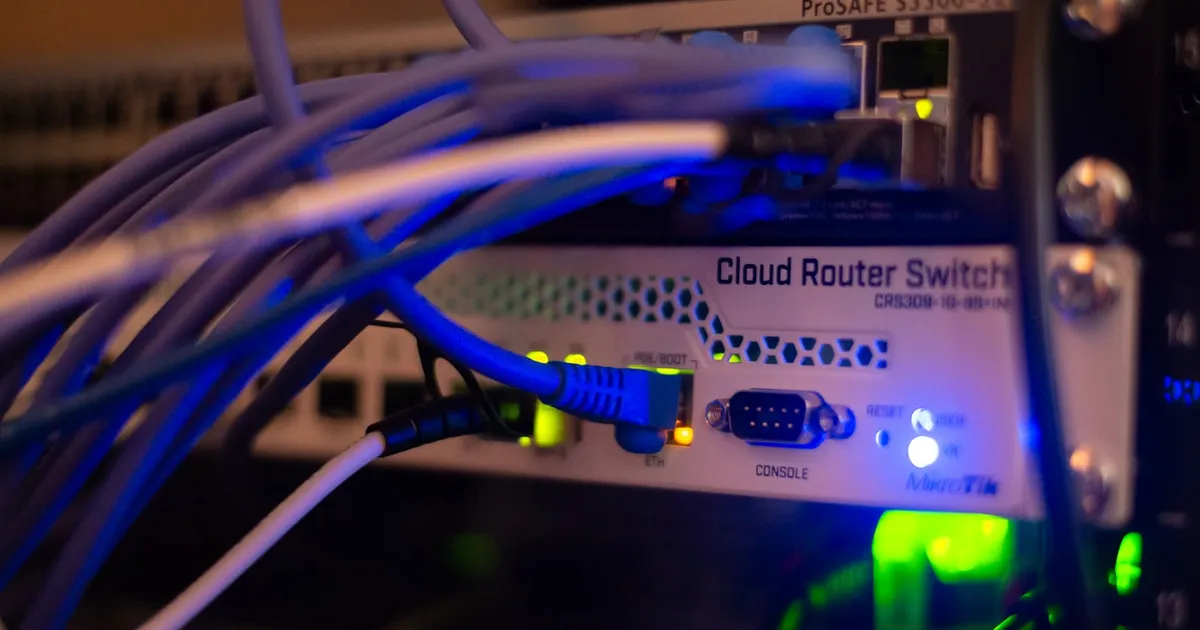
An IDS (intrusion detection system) watches network or host activity and raises an alert when it spots something malicious; an IPS (intrusion prevention system) sits inline in the traffic path and can drop, block, or reset a connection the moment it makes the same judgment. The difference isn’t the detection logic — both typically use similar signatures, anomaly models, or behavioral rules — it’s what happens next: an IDS tells a human, an IPS acts on its own.
Where each one sits in the network
An IDS is usually deployed out-of-band, off a mirrored switch port (a SPAN port) or a network tap, so it sees a copy of the traffic without sitting in its path. If it goes down or falls behind, traffic keeps flowing — the IDS just stops seeing it. That passive position is exactly why it can only detect, not stop: by the time it’s flagged a packet, the original has already reached its destination.
An IPS is deployed inline, directly between the segments it protects, the same way a WAF sits inline in front of a web application or a reverse proxy sits in front of a backend. Every packet passes through it before continuing, which is what lets it block traffic in real time — and also what makes it a single point of failure: if the IPS misbehaves or falls over, it can take the traffic path down with it, or force a fail-open/fail-closed decision that has real availability consequences.
Detection methods, shared between both
Neither IDS nor IPS is one detection technique — most products layer several:
- Signature-based — matches traffic against known attack patterns, similar in spirit to antivirus signatures. Fast and low false-positive, but blind to anything novel.
- Anomaly-based — builds a baseline of normal traffic and flags deviations. Catches unknown attacks but tends toward more false positives, since “unusual” isn’t always “malicious.”
- Stateful protocol analysis — checks whether traffic actually conforms to the protocol it claims to be (a “DNS” packet that isn’t valid DNS, for instance).
Modern network-monitoring stacks increasingly layer eBPF-based sensors into this mix, since eBPF lets you inspect kernel-level network and syscall activity with much lower overhead than traditional packet capture, feeding the same signature and anomaly engines with richer data.
IDS vs IPS at a glance
| IDS | IPS | |
|---|---|---|
| Position | Out-of-band (monitors a copy) | Inline (in the traffic path) |
| Action on detection | Alerts, logs | Blocks, drops, resets connection |
| Latency impact | None — doesn’t touch live traffic | Adds processing latency to every packet |
| Failure mode | Fails silently — traffic unaffected | Can become a bottleneck or outage point |
| False positives | Annoying, but harmless to traffic | Can block legitimate traffic |
| Best for | Visibility, forensics, tuning rules | Active defense against known threats |
Why false positives matter more for an IPS
The stakes of a false positive are completely different between the two. An IDS false positive produces a noisy alert that a security analyst dismisses. An IPS false positive drops or resets a legitimate connection — potentially a customer transaction, an internal service call, or a partner’s API request. That’s why teams often run new detection rules in IDS (“alert only”) mode first, watch them against real traffic for a period, and only promote a rule to IPS (“block”) mode once it’s proven not to catch legitimate traffic.
This staged rollout is the same instinct behind canary deployments in software delivery — change something, watch it against a subset of real traffic, then widen the blast radius once it’s trusted.
Where they fit alongside other defenses
IDS/IPS is one layer, not the whole security posture. A WAF focuses specifically on HTTP-level application attacks — SQL injection payloads, malformed requests — while an IDS/IPS typically works at the network layer across all protocols, not just HTTP. A VPN protects traffic confidentiality between two points but says nothing about whether the traffic itself is malicious. And DDoS mitigation is usually a separate, volume-focused defense, since a flood of legitimate-looking requests can overwhelm a target long before any single packet trips a signature.
Many organizations layer IDS/IPS on top of a zero trust architecture rather than in place of it: zero trust assumes no network segment is inherently safe and verifies every request regardless of origin, while IDS/IPS provides the traffic-level visibility and blocking that makes violations of that model detectable in the first place. A honeypot plays a related but distinct role — instead of watching real traffic, it’s a deliberately exposed decoy system designed to attract and study attackers, often feeding the same detection pipeline with fresh signatures.
Choosing between them in practice
Most production environments run both, at different points in the stack: IDS for broad visibility and forensic logging across the network, IPS at chokepoints — the perimeter, the segment boundary in front of a sensitive database — where blocking known-bad traffic outweighs the risk of an occasional false block. Pure IDS deployments are common in environments where uptime is paramount and any automated blocking is considered too risky without a human in the loop; pure IPS deployments are common at the network edge, where the traffic entering is inherently less trusted and inline blocking is the whole point.
The choice isn’t permanent, either. It’s common to start a new detection capability in IDS mode, build confidence in its accuracy against real traffic, and graduate the rules that prove reliable to IPS mode — keeping the ones that are too noisy or too risky to block automatically running in observe-only mode indefinitely.
The takeaway
IDS and IPS often share the same detection engine underneath; what differs is placement and authority. An IDS watches a copy of traffic and alerts, so a false positive costs you a noisy log line. An IPS sits inline and blocks, so a false positive costs you a dropped connection. Most real deployments use both — broad IDS visibility for logging and tuning, inline IPS enforcement at the specific chokepoints where blocking known-bad traffic is worth the risk of the occasional false block.
Tagged
Keep reading

 Chisato · · 4 min read
 What Is Clickjacking? UI Redress Attacks Explained
Clickjacking tricks a user into clicking something they can't see, hidden inside an invisible iframe. How the attack works and how to stop it.
 Chisato · · 4 min read
 What Is Subresource Integrity (SRI)?
Subresource Integrity lets a browser verify a fetched script or stylesheet matches an expected hash, blocking a tampered CDN asset from running.
Chisato · · 4 min read What Is DNS over HTTPS (DoH)? Encrypted DNS Explained
DNS over HTTPS encrypts domain name lookups inside HTTPS traffic, hiding queries from network eavesdroppers. How DoH works and how it differs from DNSSEC.