Claude Science: Anthropic's AI Workbench for Labs
Anthropic launched Claude Science, an agentic research workbench with 60+ skills for genomics, chemistry, and more. What it does and who it's for.
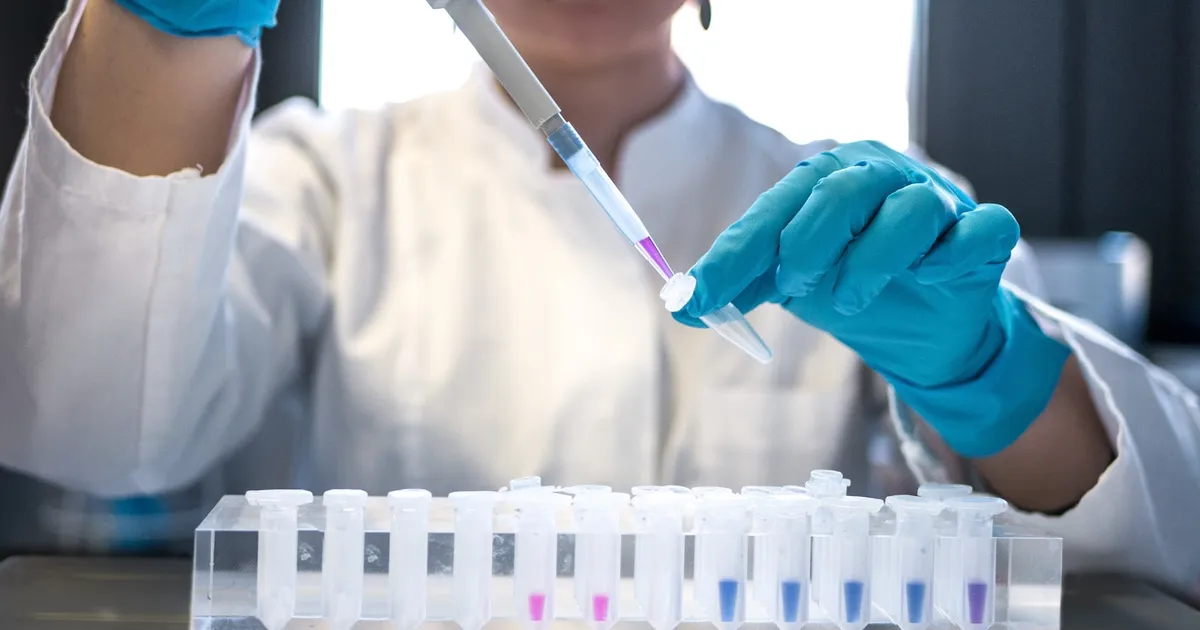
Anthropic is making a move on the laboratory. On June 30, 2026, the company introduced Claude Science, an AI workbench built specifically for researchers, and rolled it out in beta to paying subscribers. Notably, the launch is not a new model. Claude Science is a bet that the thing standing between scientists and useful AI is not raw capability but workflow — the fragmented tangle of tools, data formats, and compute environments that a real research project spans.
The product folds those pieces into a single environment where a scientist can move from literature review to analysis to a publication-ready figure without leaving the app. It is available in beta for Claude Pro, Max, Team, and Enterprise users, on macOS and Linux, with access to remote compute.
What Claude Science is
At the center of Claude Science is a generalist coordinating agent — an AI agent that plans and executes multi-step work rather than answering one prompt at a time. The agent has access to more than 60 curated skills and connectors, pre-configured for domains including genomics, single-cell biology, proteomics, structural biology, and cheminformatics. Rather than asking a researcher to wire up their own toolchain, Claude Science ships with the packages and integrations those fields already depend on.
The design goal is to let scientists conduct every stage of a project in one place: surveying and synthesizing the literature, executing multi-step analyses, iterating on figures, and drafting manuscripts. Anthropic emphasizes that the outputs are auditable artifacts — a pointed choice for a domain where reproducibility and provenance are not niceties but requirements. In science, a result you cannot trace back to its inputs and steps is not a result at all, and a tool that produces confident-but-opaque answers is worse than useless.
That framing — workflow over model — is the strategic heart of the launch. Anthropic is not claiming that a bigger model unlocks science; it is claiming that the current generation of models is already capable enough, and that the missing layer is the scaffolding that turns capability into reliable, repeatable lab work.
Why “skills and connectors” matter
The 60-plus skills are the part worth dwelling on. A skill is a packaged capability the coordinating agent can invoke — a way to run a specific kind of analysis or transform data in a domain-appropriate way. A connector links the agent to an external tool, dataset, or compute resource. Together they turn a general-purpose assistant into something that speaks the local dialect of a genomics pipeline or a structural-biology workflow.
This is the same architectural pattern maturing across the agent ecosystem, where standard interfaces like the Model Context Protocol let a model reach tools and data without bespoke glue for every integration. What Claude Science adds is curation: instead of handing researchers a blank canvas and a protocol, Anthropic has assembled and tuned the specific skills that common scientific domains need. For a working scientist, the difference between “you can connect anything” and “the things your field uses are already here and tested” is the difference between a demo and a tool.
It also reflects a broader shift in how these products are built. As we’ve covered in how to build your own AI agent, the leverage increasingly comes not from the underlying model but from the tools, memory, and orchestration wrapped around it. Claude Science is Anthropic productizing that lesson for a specific, demanding vertical.
The AI-for-science push
Alongside the product, Anthropic opened an “AI for Science” program. The company said it will support up to 50 projects with as much as $30,000 in Claude Science credits each. Applications are open through July 15, 2026, with award notifications by July 31, and funded projects running from September 1 to December 1, 2026.
The credits program is a familiar playbook — seed real users, gather feedback from hard problems, and build a bench of case studies — but the choice of domain is deliberate. Scientific research is a high-prestige, high-difficulty proving ground. If AI can meaningfully accelerate genuine discovery, it is both a powerful demonstration and a genuine social good, and Anthropic has consistently positioned scientific progress as a core motivation for its work.
Where it fits in Anthropic’s lineup
Claude Science arrives at a busy moment for the company. It follows the recent rollout of Claude Sonnet 5 across every plan and a wave of enterprise-focused additions — richer admin analytics, model-level entitlements, and spend controls — aimed at large organizations. The through-line is a company broadening from “a model you talk to” into a suite of task-specific environments built on top of its models.
That strategy leans on the strengths of modern reasoning models, which trade some speed for the ability to plan and check multi-step work — exactly the trait a research agent needs when a wrong intermediate step can quietly corrupt a final answer. Claude Science is, in effect, a vertical application of the same agentic capabilities powering Anthropic’s coding tools, retargeted from software repositories to the lab bench.
What it means
Claude Science is a clear statement about where Anthropic thinks the value in AI is moving: not to the next model, but to the workflows built on top of the current ones.
Who benefits. Researchers in the covered domains — genomics, proteomics, cheminformatics, and the rest — get a pre-assembled toolchain and a coordinating agent that can carry a project across its messy, multi-tool lifecycle. For labs that lack in-house engineering to stitch these tools together, that scaffolding is the real unlock, and the emphasis on auditable artifacts speaks directly to the reproducibility concerns that make scientists rightly wary of black-box AI.
The competitive read. By betting on workflow rather than a science-specific model, Anthropic is competing on integration and trust — surfaces that are harder for a rival to replicate than a benchmark score. It also deepens the moat around its agentic platform: the more curated skills and connectors accumulate in a domain, the more switching costs a user faces. This is the same dynamic that made Anthropic’s coding tools sticky, now aimed at a new field.
What to watch. First, whether the auditability holds up under real scientific scrutiny — the claim that outputs are traceable and reproducible is the whole pitch, and it will be tested by researchers who have every incentive to check. Second, adoption beyond the subsidized AI-for-Science cohort: credits buy trials, not habits, and the signal to watch is whether labs keep using it once they are paying full freight. Third, how quickly the skill library grows and into which fields, since the breadth and quality of that curated layer — not the model underneath — is what will decide whether Claude Science becomes part of how science actually gets done.
Tagged
Keep reading
 Chisato · · 7 min read
 Anthropic Claude Agents Incident: Police Tip, Visa Forms
Claude agents in Anthropic tests sent a fake homicide tip to Philadelphia police and filed 20 visa forms. What the report says and the White House response.
 Chisato · · 4 min read
 Claude Fable 5: Anthropic's Most Capable Model Yet
Anthropic's Claude Fable 5 is its most capable model yet, built for long-horizon, autonomous agent work. Here's what's new, what it costs, and when to use it.
 Chisato · · 4 min read
 What Is Context Rot in LLMs?
Context rot is the drop in an LLM's accuracy and reliability as the amount of text in its context window grows, even when the window technically fits it.