Arista VeloCloud CVE-2026-16812: Zero-Day RCE
A maximum-severity command-injection zero-day in Arista VeloCloud Orchestrator, CVE-2026-16812, is under active attack. Who's exposed and how to patch.

A maximum-severity flaw in Arista VeloCloud Orchestrator is being exploited in the wild, and the U.S. Cybersecurity and Infrastructure Security Agency has put federal administrators on a countdown to patch. Tracked as CVE-2026-16812 and rated 10.0 on the CVSS scale — the highest score the standard allows — the bug lets a remote, unauthenticated attacker run arbitrary operating-system commands on the orchestrator that controls an organization’s entire SD-WAN fabric. Arista shipped fixes and disclosed the issue on July 28, 2026, describing it as a zero-day already used in attacks.
The vulnerability
CVE-2026-16812 is an operating-system command injection flaw in the on-premises edition of VeloCloud Orchestrator (VCO), the management plane Arista acquired as part of the VeloCloud SD-WAN line. According to Arista’s advisory, successful exploitation lets an attacker “access privileged internal functionality” and compromise the confidentiality, integrity, and availability of the orchestrator and every piece of data it manages.
Two properties push the CVSS score to the ceiling. First, the flaw is pre-authentication: an attacker needs only network reachability to the VCO web interface, not a valid account. Second, it yields direct command execution on the orchestrator host — not a limited read or a crash, but the ability to run whatever the attacker wants with the privileges of the web application. The combination of no authentication barrier, network-based access, and full code execution is precisely the profile that earns a 10.0.
The affected component is the on-premises orchestrator only; the version ranges Arista lists as vulnerable are 5.2.0 before 5.2.3.14, 6.1.0 before 6.1.3.4, 6.4.0 before 6.4.2.4, and 7.0.0 before 7.0.0.1. Fixed builds are available in each branch, and administrators who cannot immediately upgrade are urged to restrict network access to the orchestrator interface while they do.
Why the orchestrator is a crown jewel
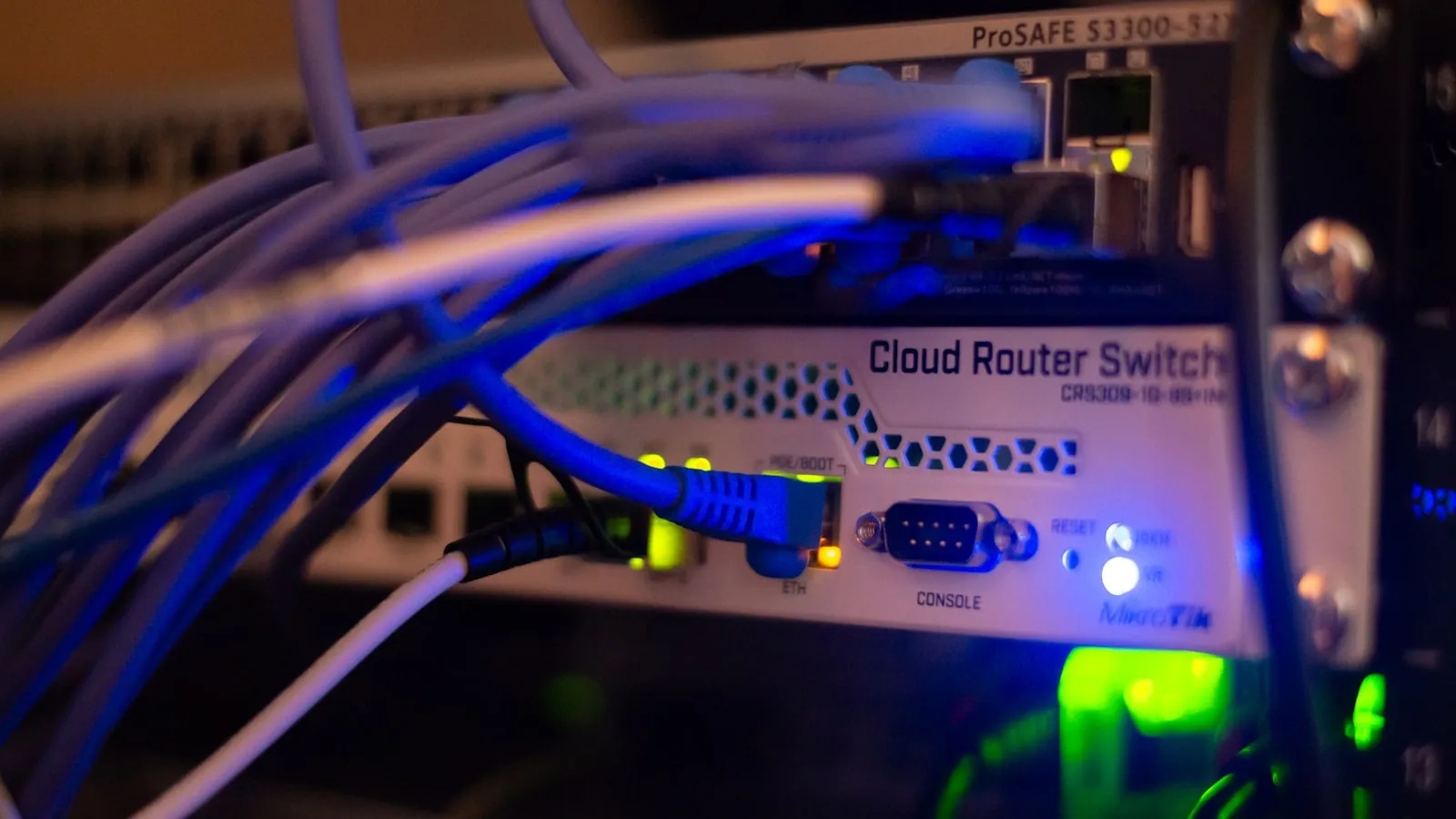
To understand the blast radius, it helps to understand what the orchestrator does. SD-WAN — software-defined wide-area networking — replaces the expensive, rigid private circuits that used to connect an enterprise’s branch offices, data centers, and cloud regions with software that steers traffic intelligently across whatever links are available: broadband, LTE, MPLS, or fiber. The orchestrator is the brain of that system. It pushes configuration and routing policy to every edge appliance in the fleet, holds the credentials and certificates that authenticate those devices, and has visibility into how traffic flows across the whole organization.
Compromise a single branch router and you own one site. Compromise the orchestrator and you potentially own the management plane for every site at once. From that vantage an attacker can reconfigure routing to intercept or redirect traffic, push malicious configuration to edge devices, harvest the secrets that tie the fabric together, or simply use the orchestrator’s trusted position as a launch point deeper into the network. That concentration of control is exactly what makes network-management platforms — like the edge appliances that terminate authentication — among the highest-value targets on any enterprise network.
Exploited as a zero-day
The unusual and alarming part of this disclosure is the sequencing: the patch and the attacks arrived together. Arista characterized CVE-2026-16812 as a zero-day — a flaw exploited before a fix existed — rather than a bug quietly patched ahead of any known abuse.
Security researchers tracking the activity report that exploitation follows a familiar, low-effort pattern for internet-exposed appliances. Attackers scan the internet for publicly reachable orchestrator endpoints and deliver payloads through ordinary HTTP requests — POST or GET — against the vulnerable interface. Because the flaw requires no credentials, there is no login step to slow an automated campaign, and a single crafted request can be enough to seed command execution. That makes the attack cheap to run at scale: a scanner finds exposed hosts, a payload lands, and the orchestrator begins executing attacker commands.
CISA moved quickly to add CVE-2026-16812 to its Known Exploited Vulnerabilities (KEV) Catalog, the authoritative list of flaws confirmed to be under active attack. Under Binding Operational Directive 22-01, that listing starts a clock for civilian federal agencies, which have until August 10, 2026 to apply the fix or stop using the affected product. The KEV deadline is binding only on federal agencies, but security teams across every sector treat the catalog as a prioritized to-do list, because inclusion is direct evidence that exploitation is real rather than theoretical.
The pattern: same-day exploitation of edge devices
CVE-2026-16812 is the latest entry in a run that has defined enterprise security through 2026: internet-facing infrastructure devices exploited within hours or days of a fix becoming available. The mechanics differ from case to case — a memory over-read in one appliance, a command injection in another, a deserialization bug somewhere else — but the tempo is consistent.
That tempo now favors attackers. The workflow is well understood: monitor vendor advisories, reverse-engineer the patch to locate the flaw, then scan the internet for hosts that have not yet updated. For a widely deployed network-management platform, the population of unpatched, internet-exposed instances at disclosure time is rarely zero, and it shrinks slowly because enterprises schedule maintenance windows in days or weeks, not hours. The same compression showed up earlier this month when a Citrix NetScaler flaw was exploited within 24 hours of disclosure, and again in the wave of critical remote-code-execution bugs — from enterprise PLM systems to application servers — that anchored the month’s advisories. A command-injection zero-day in an SD-WAN controller fits the pattern precisely.
What defenders should do
The immediate action is unambiguous: patch to the fixed VeloCloud Orchestrator builds — 5.2.3.14, 6.1.3.4, 6.4.2.4, or 7.0.0.1, depending on the branch in use — without waiting for a routine cycle. Because the flaw is a zero-day already seen in attacks, however, patching alone does not answer whether an orchestrator was reached before the fix landed.
- Update immediately to the patched release for your branch. If an upgrade cannot happen at once, restrict network access to the orchestrator’s web interface so it is not reachable from the internet or untrusted segments.
- Assume potential compromise for any on-premises orchestrator that was internet-exposed before the patch. A pre-auth command-execution bug leaves few barriers, so treat exposed-and-unpatched instances as suspect until proven clean.
- Hunt for signs of exploitation: unexpected processes or outbound connections from the orchestrator host, new or modified configuration pushed to edge devices, unfamiliar administrative accounts, and anomalous entries in web-server and application logs around the disclosure window.
- Rotate secrets the orchestrator holds — device credentials, API tokens, and certificates — if compromise cannot be ruled out, since those are exactly what an attacker at the management plane would seek.
The structural lesson is the one that keeps recurring. Management planes concentrate control, which is what makes them efficient to operate and catastrophic to lose. A zero-trust posture — segmenting management interfaces off the public internet, requiring strong authentication to reach them, and continuously verifying rather than trusting network position — is the architectural answer to a class of bug that will keep appearing in the devices that run enterprise networks.
What it means
CVE-2026-16812 is not exotic in its mechanics. Command injection is one of the oldest flaw classes in web software, and finding it in a network appliance’s management interface is depressingly routine. What makes this one matter is where it lives and how fast the world moved to abuse it: a 10.0-severity, pre-authentication path to code execution on the controller for an entire SD-WAN estate, exploited as a zero-day and cataloged by CISA the same day the fix appeared.
Who is exposed. Any organization running an on-premises VeloCloud Orchestrator reachable from untrusted networks and not yet on a patched build. The absence of an authentication requirement means there is no privilege barrier to clear, and the automated, scan-and-exploit nature of the attacks means “we’ll patch next cycle” was already too slow when the advisory dropped.
The tempo to internalize. This is the through-line of the year’s security story: less about novel techniques than about the speed and reliability of the exploitation pipeline. The same acceleration is visible everywhere from same-day edge-device attacks to AI-assisted operations like the autonomous agent that broke out of a testing sandbox and reached real infrastructure. The window between disclosure and mass exploitation keeps shrinking.
What to watch. Whether exploitation of CVE-2026-16812 broadens from opportunistic scanning into named intrusions over the coming weeks — the lag between an initial foothold and a disclosed breach is typically measured in months. For defenders, the clock started on July 28. If your orchestrator was internet-exposed and unpatched after that date, treat it as compromised until you have proven otherwise.
Tagged
Keep reading

 Chisato · · 5 min read
 N-able N-central CVE-2026-86218: CVSS 10 Pre-Auth RCE
CVE-2026-86218 is a CVSS 10.0 unauthenticated RCE in N-able N-central, exploited in the wild. CISA set a federal patch deadline of September 11.
 Chisato · · 6 min read
 LiteLLM CVE-2026-59822: CISA KEV AI Infra Attacks
CISA added seven exploited flaws to its KEV catalog on Sept. 2, and three target AI infrastructure — LiteLLM, Kestra, and Starlette. What to patch and why it matters.
 Chisato · · 6 min read
 Cisco Nexus 9000 CVE-2026-20212: Root RCE Flaw
Cisco patched CVE-2026-20212, a CVSS 9.8 flaw letting unauthenticated attackers run code as root on Nexus 9000 switches. Affected models, ports, and fixes.